August 6, 2025–Northeast Odyssey, Part 1: Greensboro, Georgia to Fancy Gap, Virginia

On Sunday, August 3rd, we began yet another exciting adventure in Vanna White beginning in Greensboro, Georgia, heading to North Carolina, Virginia, Pennsylvania, New York and on to Canada. After that we head down the eastern seaboard to Maine and points south until we reach Georgetown, South Carolina, and then on back to Greensboro. It was raining when we left, and it has rained off and on the last four days thanks to Tropical Storm Debbie.  Or is it Dexter?  Can’t remember.  Surprisingly, we get the tail end of many hurricanes and tropical depressions in the southeast, even though we are about 200 miles from any coast.   

We spent the first two nights in Asheville, North Carolina at the Grove Park Inn.  The Grove Park Inn was built in 1913 in the arts and crafts style, originally with 153 rooms, which was quite large for that time.  It has a storied history, complete with resident ghosts and visiting authors, movie stars and presidents.  F. Scott Fitzgerald spent the summers of 1935 and 1936 at the Grove Park while Zelda was in a psychiatric facility in Asheville.  Poor Zelda.  

The most famous ghost of Grove Park Inn is the “Pink Lady,” a young woman who fell from the fifth floor balcony in the 20’s and died on the Palm Court Floor.  The “Pink Lady” ghost version is often described as a blonde woman in a pink sequined dress, sometimes enveloped in a pink mist or glow.  She is said to be friendly and may offer assistance, particularly to children. Sometimes she plays harmless pranks, like turning lights and electronics on and off, rearranging items and tickling people’s feet. Her room was #545.  We stayed in room #546. 

If you ever visit Asheville, you just have to see the Biltmore Mansion and Gardens.   The house is a Chateau style mansion built for George Washington Vanderbilt II between 1889 and 1895.  It is the largest privately owned house in the United States at 178,926 sq ft of floor space and 135,280 sq ft of living area.  It is still owned by George Vanderbilt’s descendants and is one of the most prominent examples of the Gilded Age Mansions.  We did not go in the house this time because it’s huge, exhausting and we have already seen it several times.  But it is impressive. We did walk the gardens and visit the winery.  

In case you are wondering, the after effects of Helene from September 27th, 2024 are still quite evident in and around Asheville.  For instance, Biltmore Village, which is close to the Biltmore House, is a sweet little historic area with an old village church, historic buildings, and locally owned shops and restaurants.  Helene just completely wiped the town out.  All of the buildings are still there but they are now empty.  The cobblestone streets are empty.  It’s like a ghost town. So sad.  

Last night we spent the night in Vanna at the Fancy Gap KOA campground in Fancy Gap, Virginia right off the Blue Ridge Parkway. As a side note, Fancy Gap is not all that fancy. We planned to take the Parkway from Asheville to Fancy Gap, but there was a lot of damage to the Parkway from Helene and most of the Parkway is closed in North Carolina. A section of it will open this fall, but a large part won’t be repaired for at least another year.

Next stop: Charlottesville, Virginia.

January 18, 2025–Aruba to Fort Lauderdale

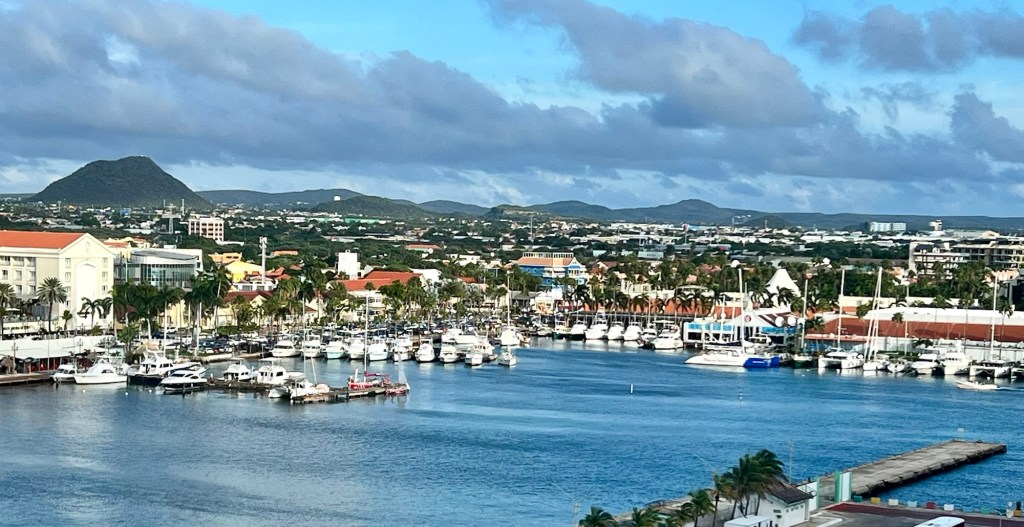
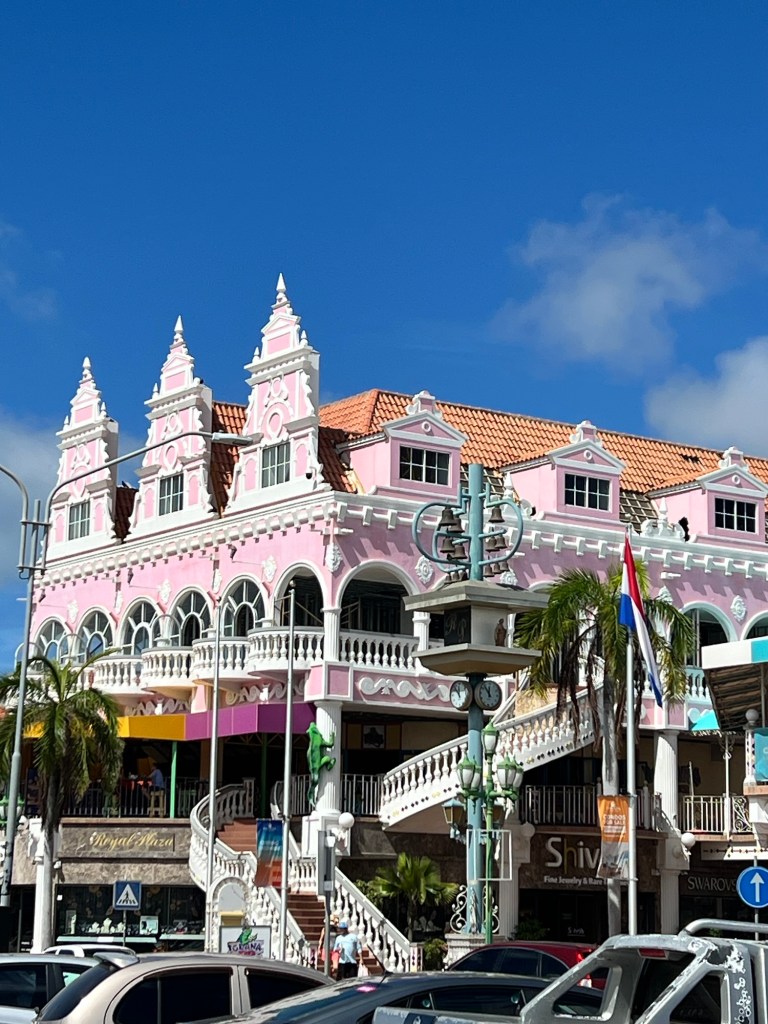
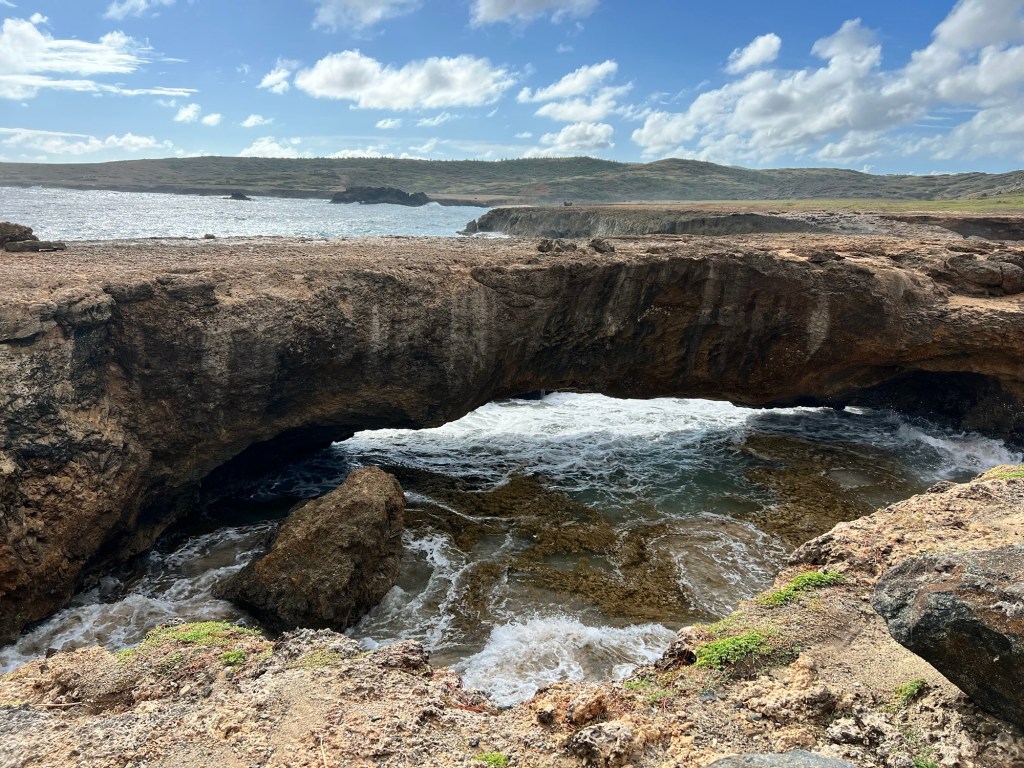
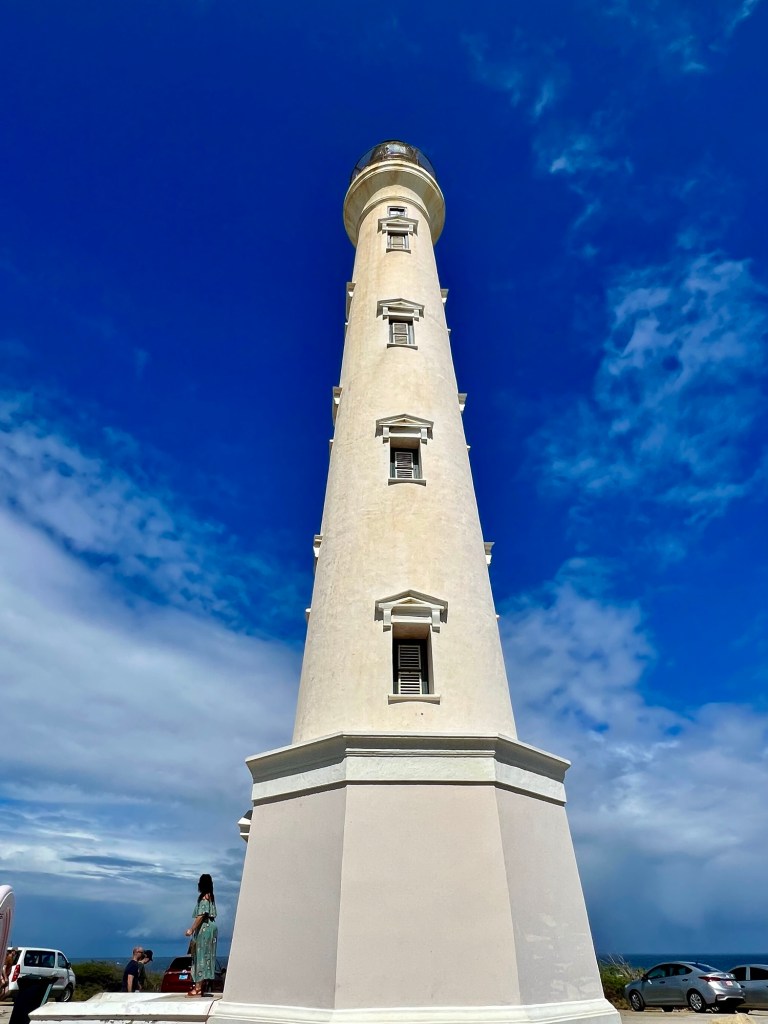
On Wednesday we were in Aruba, a Caribbean island that is part of the Kingdom of the Netherlands.  Unlike many Caribbean islands which are lush and mountainous, Aruba is flat and desert like. And Aruba is also tiny—only about 6 miles wide and 20 miles long, with a population of about 108,000 people.  Geographically, it’s about 18 miles off the coast of Venezuela.  The official language of Aruba is Dutch, but the local people speak Creole or English.  The major industry is tourism, so the beaches are lined with hotels and restaurants.  I think the biggest draw is the beach and water sports.  

We went on our usual tour of the history of Aruba and truthfully, I didn’t absorb much.  In a nutshell, it was the same old story of the Spanish conquistadors marauding the island, enslaving the natives, and sending all of the gold they found back to Spain.  Later on, the Dutch ended up occupying Aruba.  

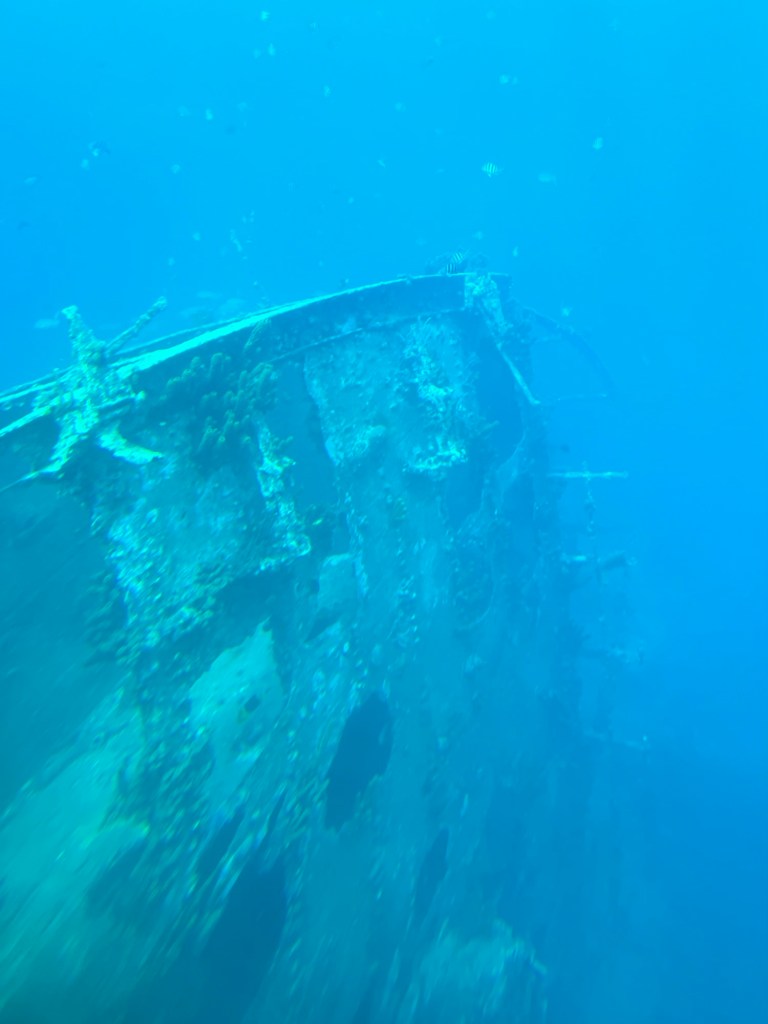
The “highlight” of our tour was a ride in a semi-submarine to look at the shipwreck of a German cargo ship, the ES Antilla, which sank off the coast of Aruba in 1940.  The ship was in the harbor on May 10 when Germany invaded the Netherlands, so the Dutch government ordered the seizure of all German ships in the Dutch Antilles.  The Germans didn’t want the ship to fall into enemy hands, so the crew scuttled the ship by opening the seacocks and setting it on fire in several places.  (It isn’t often that one gets to use the word scuttle.)  The German crew of 35 men were sent to Jamaica and interned for the remainder of the war.  

I had to look up all of this information about the shipwreck, because the tour guide on the semi sub was too involved in performing a standup comedy routine directed at an elementary school audience. She actually told the “Why are fish smart?” joke.  And then she told some super hilarious jokes about the movie “Jaws” set to the music from “Jaws.”  It was so dumb that I felt like booing or throwing rotten tomatoes at her.  Anyway, you are probably wondering if the semi sub was claustrophobic and a little eerie.  Why, yes, it was.  I wasn’t a huge fan.  The pictures below illustrate why.

We saw Heather at lunch and she informed us that she played bridge this morning and was off to play again this afternoon.  The woman is obsessed with bridge.  I’m not even sure she has gotten off the ship since Lima.  Apparently, a lot of cruise lines offer bridge programs on ships, including beginner and intermediate lessons, along with supervised games.  It seems to me there would be cheaper options than going on a two week cruise to play bridge, but maybe I don’t understand the obsession.  

Tonight we met all of the Machu Picchu people at 6:30 in one of the bars on the ship, and then went to dinner together. Actually, there were 14 of the original 22 people there. We don’t have each other’s phone numbers, so it was all word of mouth—you just had to tell people when and if we saw them around the ship.  I know I claim to be an introvert, but dinner was fun. We all agreed that the Machu Picchu trip was the best ever. By the way, when I saw Heather earlier today, she was in such a hurry I forgot to tell her about the meeting tonight.

January 15, 2025–Romancing the Stone: Cartagena

Remember the movie, “Romancing the Stone?”  Kathleen Turner got a message that her sister had been kidnapped in Cartagena, so she went there to rescue her?  When she gets there, she hooks up with Michael Douglas, a brash mercenary, and they have numerous run ins with the bad guy, Danny Devito. Before we visited Cartagena, my knowledge pretty much began and ended with that one movie.  

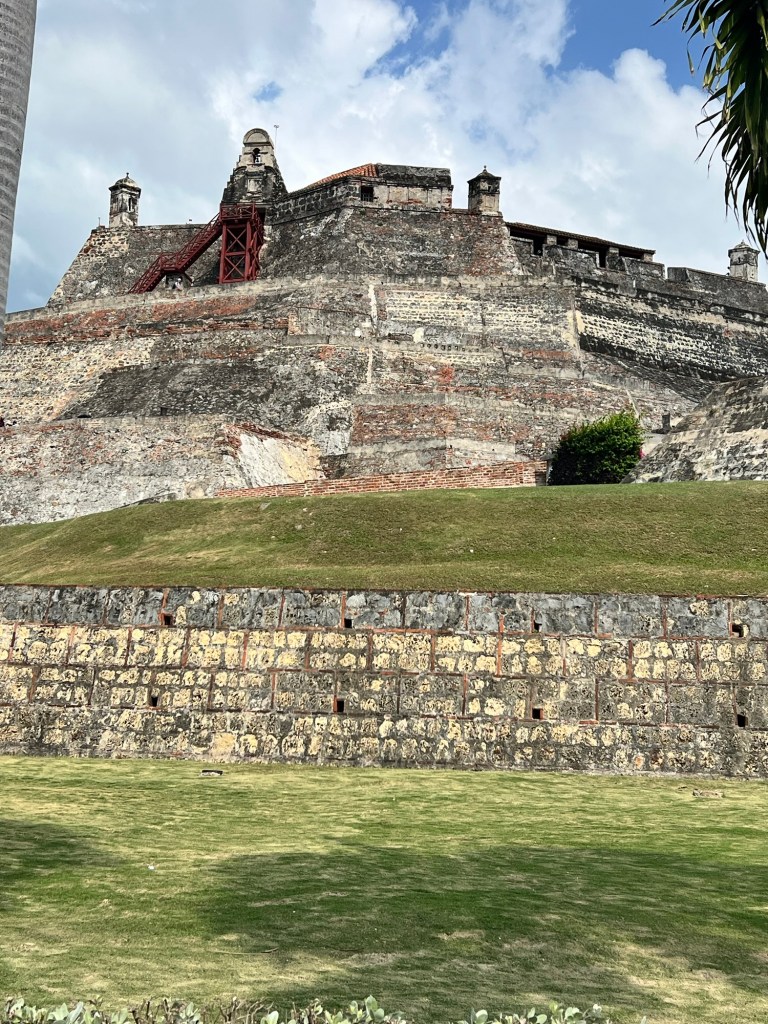
So on Monday, we went on a tour about the history of Cartagena and the first place we visited was the Castillo de San Felipe de Barajas, which is located just outside of the historic walled city.  When our tour guide, Daily (her real name), pointed out they filmed one of the final action scenes for “Romancing the Stone” there I thought, “I remember that scene!”  Alas, when I looked it up I found that although the movie was set in Cartagena, it was shot in Mexico and Zion National Park in Utah. So the fort in the movie is actually San Juan de Ulúa in Veracruz, Mexico. Daily wasn’t completely honest with us, but I guess it made for a better story.  

Castillo de San Felipe in Cartagena, Where no Filming Took Place

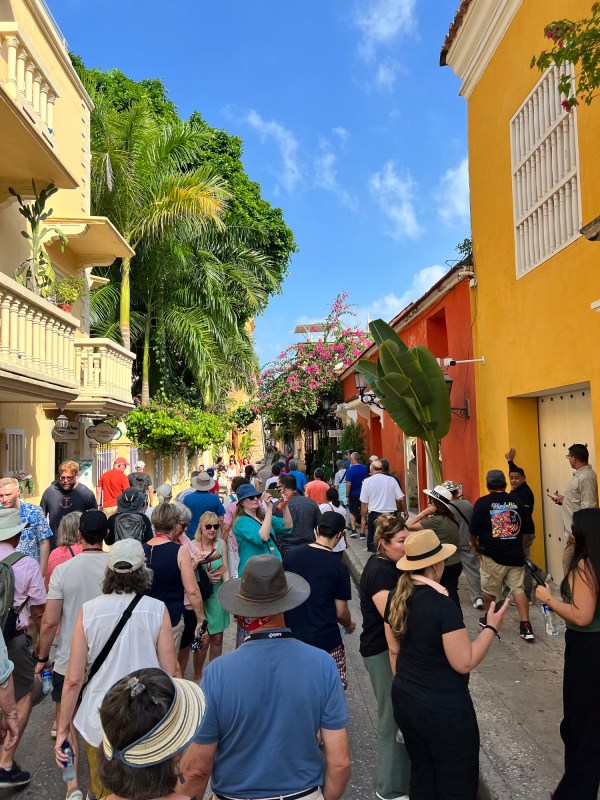
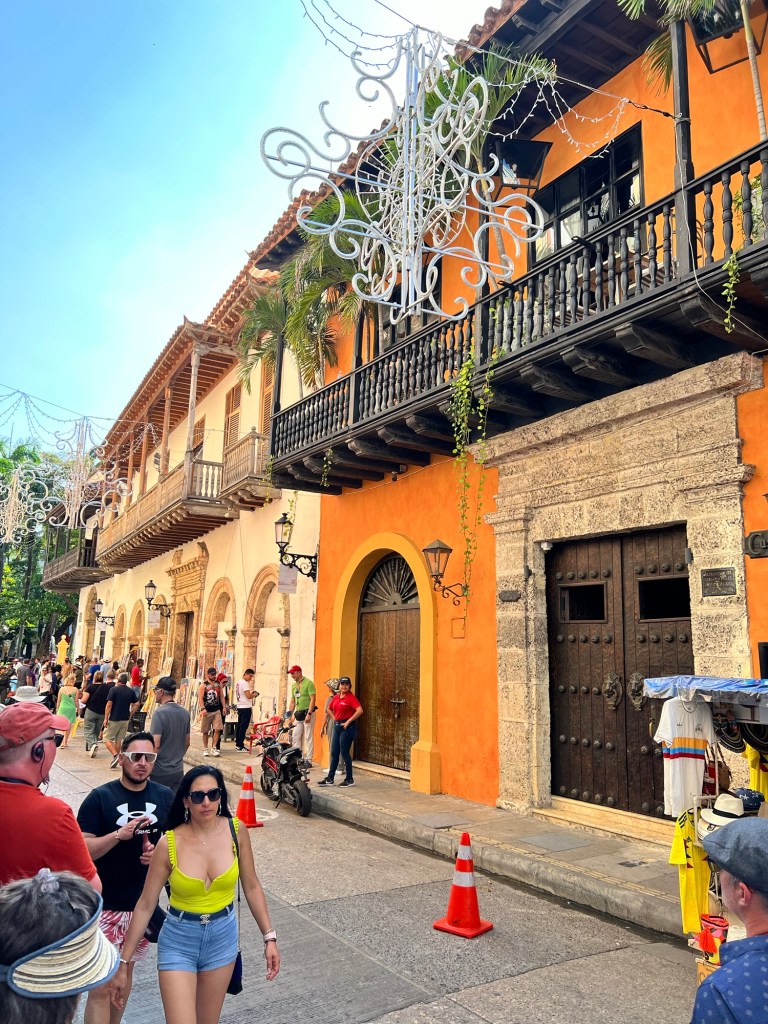
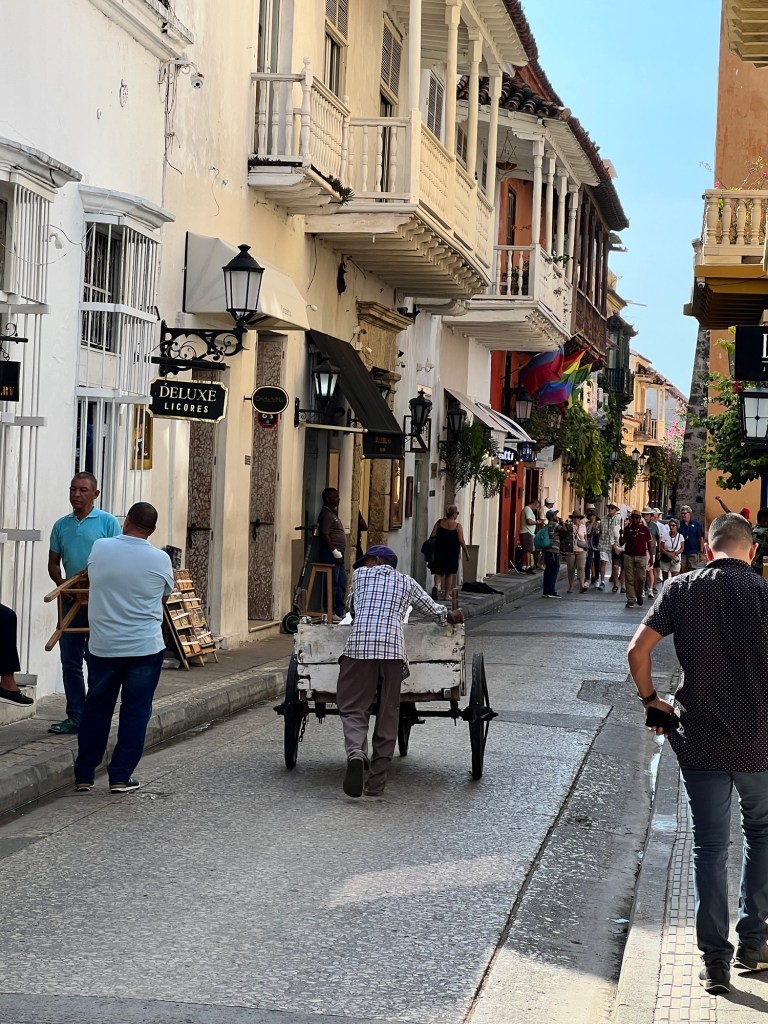
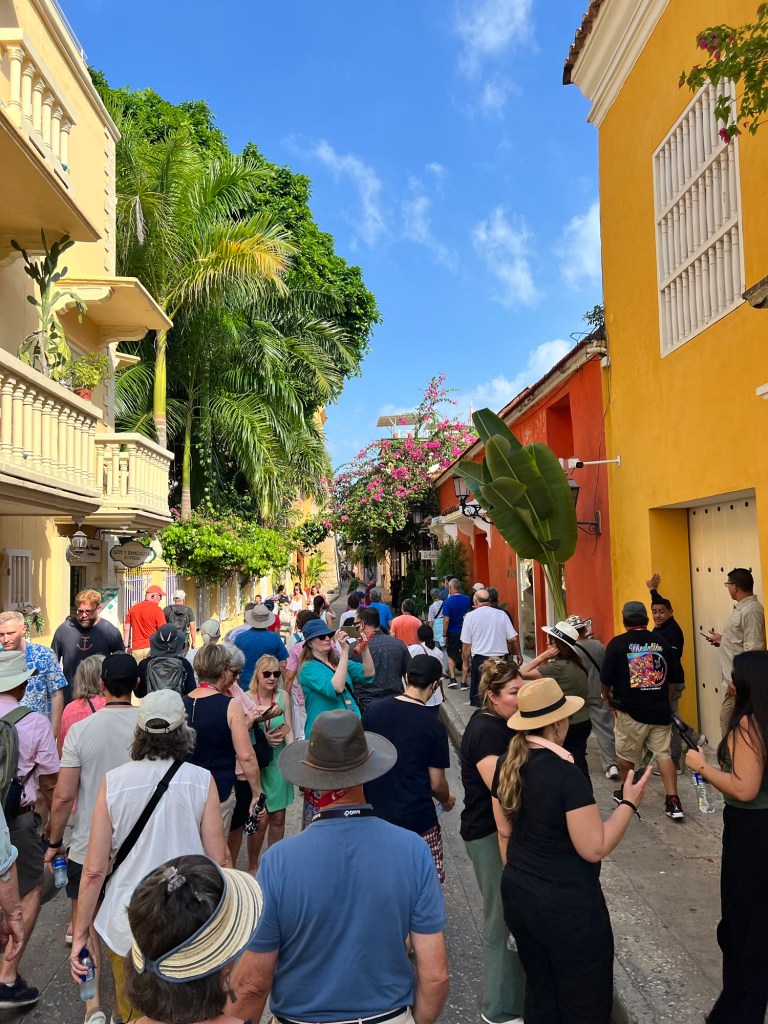
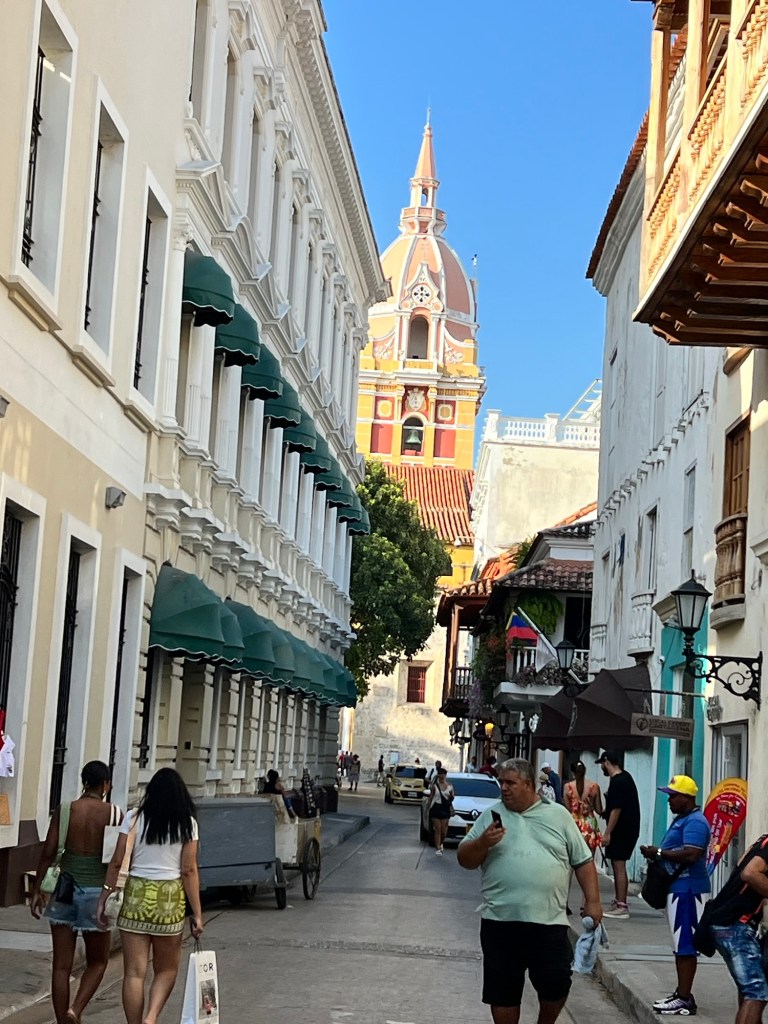
We walked around the old town for a bit and the city was really beautiful and quite colorful, but it was so hot and crowded. The year round temperatures hover around 90 degrees, and the humidity is at least 80%.  Another place we visited was the Palace of the Inquisition, an eighteenth-century seat of the Holy Office of the Inquisition. The museum displays replicas of torture equipment used on witches and infidels during the Spanish inquisition.   Pretty brutal looking, so no pictures of the torture devices, but some pictures of the old town.

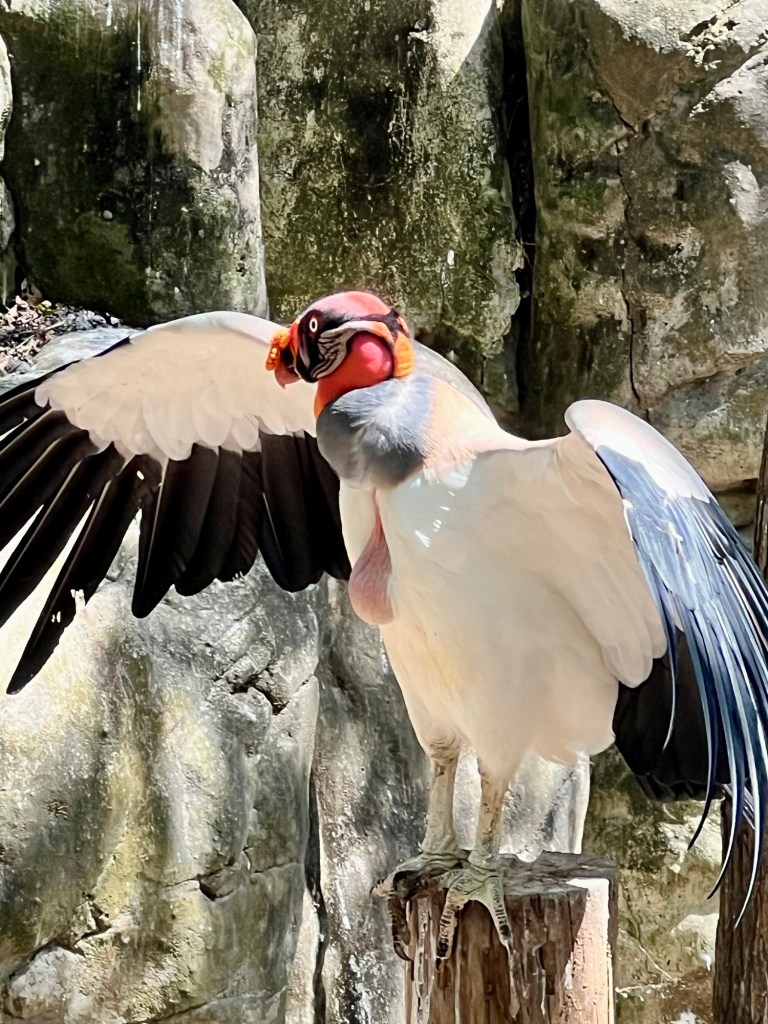
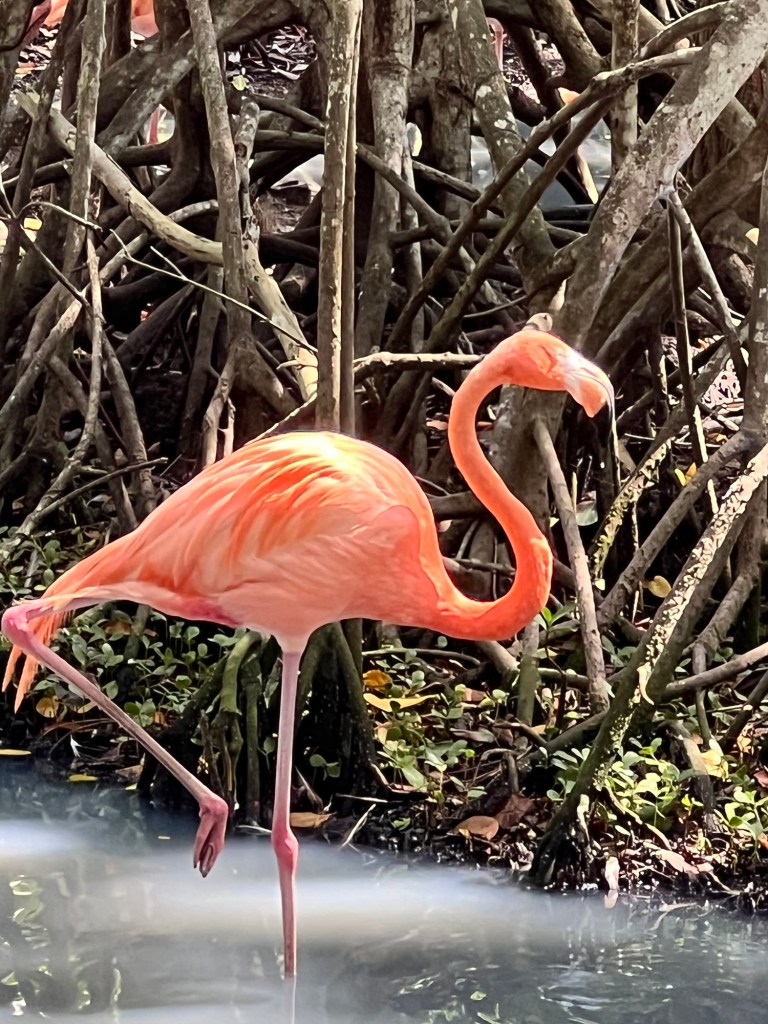
Yesterday, we took another tour to the National Aviary of Colombia, located on the Isla Baru, about an hour outside of Cartagena.  The 17 acre facility is the biggest in the Americas and the 6th biggest in the world, and counts more than 1,800 birds from more than 138 distinct species. Sounds impressive, right?  The problem is that aviaries really creep me out.  The birds are cool, but I don’t want them flying around me, ready to peck at me or crap on my head at a moment’s notice.  Yuck.

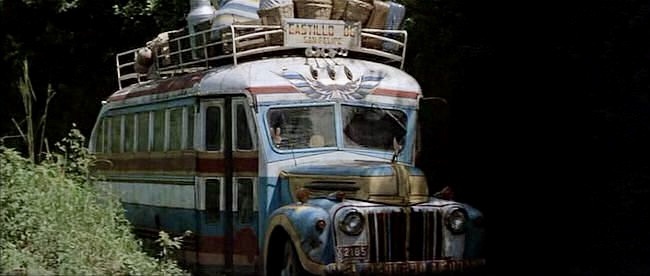
To get to the Aviary, we had to take the bus ride from hell from the Port of Cartagena.  The streets and roads are narrow, crowded and have huge potholes.  No one drives on their side of the road.  A lot of stretches aren’t even paved, so dust boils up everywhere.  A million motorcyclists zip in and out of traffic, defying death or a permanent maiming.  The shock absorbers on the bus were gone. It was pretty much like the bus ride Kathleen Turner took in the movie except there were no pigs or chickens.  

Not Our Bus, But Close

On the trip there our poor tour guide, Carlos, had to point out the scenery of a concrete factory, a petroleum processing plant, a huge fuel station where truckers refuel, and a plastics manufacturing plant.  No wonder he seemed dispirited.  But maybe Carlos just didn’t give a rip about anything. When we got to Aviary, he only knew the names of the most common birds, like flamingos.  He said there were too many species to learn the names.  Guess what, Carlos?  Tour guides are supposed to learn stuff.

Trivia question of the day: Do you remember what the stone is in “Romancing the Stone?”

January 13, 2025–At Port in Cartagena, Columbia After Navigating the Panama Canal

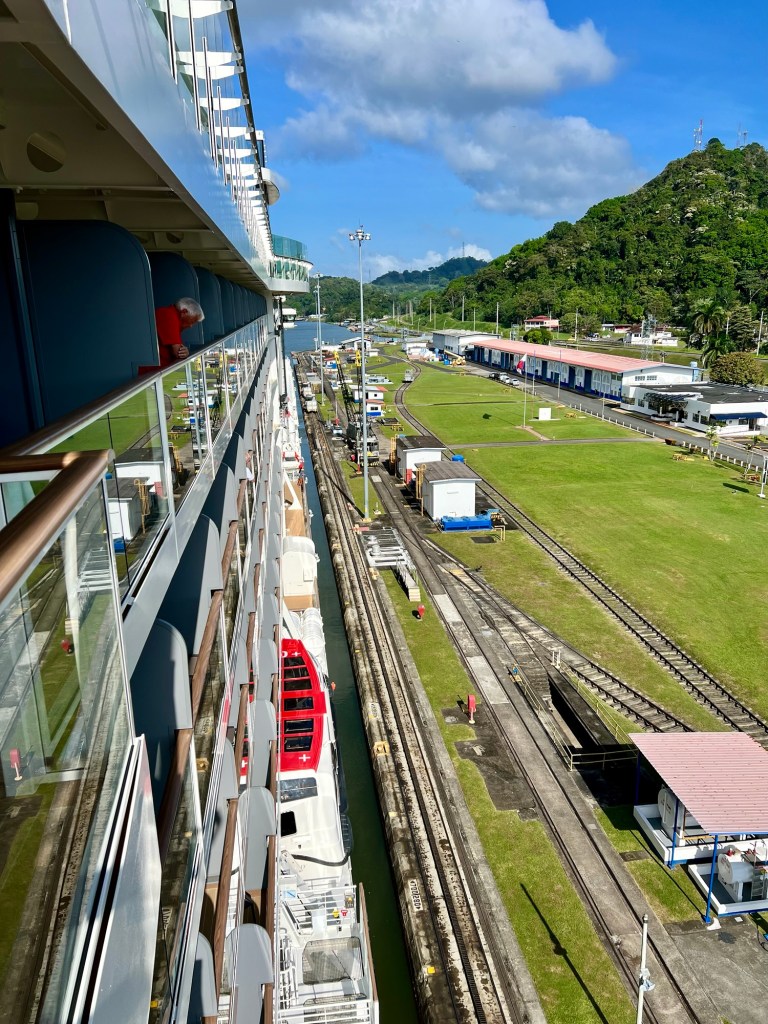
As you know, we traversed the Panama Canal yesterday.  It took most of the day and it was pretty amazing. We didn’t sit and watch the entire day, but we watched as we were going through the locks. The bridge in the background of the first picture is the Centennial Bridge, which was finished in 2004. It was built to supplement the overcrowded Bridge of the Americas (in the second picture) that the United States built in 1959-1962 at the cost of about 20 million dollars. The Centennial Bridge is on the Atlantic side. The Bridge of the Americas is on the Pacific side. The next pictures are of the locks and what the the side of our ship looked like when we were crossing through.

Also, when we had finally navigated the locks on the Atlantic side, we took a picture of a lighthouse to send to my brother, Don.  If you know Don, you know that one of his hobbies is visiting and photographing historic lighthouses.  Actually, there were 46 lighthouses built on the Canal, 36 of which are still standing.  The first one was built by the French in 1881.  The one we saw was the Atlantic Entrance Range Middle Lighthouse, which was built in 1914.  The lighthouses were built to assist the pilots through the canal.  About 1959, lighting was installed along the Canal, and the lighthouses were no longer as important. After the lighting was added, the Canal could operate 24/7 instead of just in daylight hours.  

After we left the Canal, we saw this freighter, which is indicative of most of the ships that use the Canal. For perspective, each of the cubes on this ship is a full semi load, so you can imagine how huge as this was.

We keep running into Machu Picchu people. Nancy and Don from Australia seem to be on almost every tour we take. When we go to a bar on the ship, Sylvie and Phillip from Belgium are there. When we go up to the pool deck, Stuart and Maxine from Boston are there. When we go to one of the entertainment venues, Melissa and Mike from California are there. When we play bridge, Heather is there. No wait, we don’t play bridge. We only see Heather (sometimes she is with her husband Bill) when she is rushing off for another rubber of contract bridge. Or whatever you call it. Dearest Heather.

January 11, 2025–The Panama Canal

Today our ship is at port on the Pacific Ocean side of the Panama Canal near Panama City.  We are waiting overnight to go through the Canal beginning at 5:30 tomorrow morning.  It takes about ten hours to traverse the lock system and come out on the Atlantic side.  Some people are getting up at 5:30 to watch, but that seems rather excessive.

Today we went on a tour that was called something like “Behind the Scenes:  The Panama Canal.”  First we traveled by bus across the Panama Isthmus to Colon (pronounced cologne), which is close to the Atlantic Ocean side of the Canal.  (Actually, Colon is by the Caribbean Sea which then turns into the Atlantic.)  Our tour guide, Jorge, told us the entire history of the Canal, which is interesting, but much too complicated to go into in much detail here.  A shortened version is that in the 1800’s, several countries had an interest in building a canal because all ships had to make the harrowing and long journey around Cape Horn at the southern tip of South America.  The French were the first to start building the Canal in 1891, but gave up after nine years due to engineering problems and a high mortality rate.  Something like 20,000 people died either from accidents or malaria and other tropical diseases.   

The Panama Canal Begins at Panama City and Ends at Colon—About 51 Miles (Or Vice Versa)

After the French gave up, the United States bought the rights in 1904 and finally finished the Canal in 1914.  An interesting fact is that French engineers were trying to dig deep enough to build the Canal at sea level.  This was almost impossible because the Canal goes across the continental divide, and the center of the Isthmus is higher.  The lead American engineer on the project had the idea to make the locks like stairs.  The system of locks at each end of the Canal lifts ships up 85 feet above sea level to an artificial lake, Gatun Lake.  Gatun Lake was created by damming the Chagres River.  There are no pumps—it is all about gravity.  No shade on the French, but it was an amazing engineering feat by the American engineers.  

In the pictures below, the first one is a picture of an electric “mule” that runs on tracks along the Pacific side of the Canal. Cables are attached from the mules to the ships to pull them through the Canal and make sure they don’t crash into the sides. There can be 4 to 8 mules pulling a ship, depending on how big it is. The last picture is on the Atlantic side of,the Canal, where the Canal is wider and tug boats move the ships.

In case you are wondering, Jorge, our tour guide, was extremely defensive about both the idea Trump floated about taking back the Canal and the idea that the Chinese have too much influence.  I couldn’t hear everything that was going on when we were walking around looking at the lock systems, but someone must have asked him some hot button questions.  When we got back on the bus, he gave a little speech and categorically denied that the Chinese are involved. He also said several times that the Panama Canal belongs to the people of Panama, not to the government of Panama.  (Not to split hairs, Jorge, but the government does run it.) And he did fail to mention that in 1996, the government of Panama granted a concession to operate the ports of Balboa and Cristobal, on the Pacific and Atlantic sides of the Canal, to the Hong Kong company Hutcheson-Whampoa. I liked Jorge because he was young and idealistic.  He apparently wasn’t a huge fan of the Panamanian government. And I thought it was tacky for my fellow travelers to challenge him, but that’s what happens in tour groups.  There’s always someone with a big mouth.

Last night on the ship we ate at a restaurant where you cooked your own food on a hot stone. I opted to have the kitchen cook mine, but Doug chose to cook his own shrimp. They gave him an apron/bib thing. When I saw him in it, I asked if he had just recently stepped out to take the vows for priesthood.

Oh, I saw Heather yesterday, and she couldn’t even stop to chat because she was off to play some more Bridge.  Oh, Heather.

January 8, 2025–Guayaquil, Ecuador

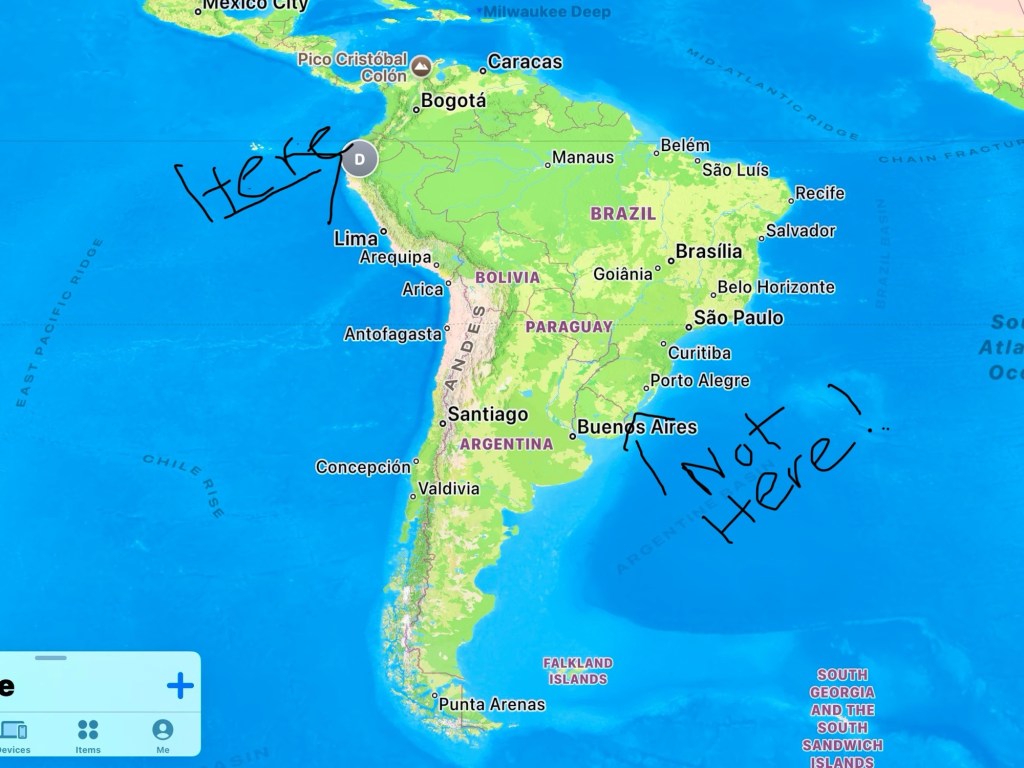
Yes, we are in Ecuador, not Uruguay. My post from yesterday said we were headed to Uruguay, which is about 5,000 nautical miles from here, and would probably take about 23 days to reach on this ship. So, my apologies. I do know better, but I usually write my blogs at night when I’m tired, and sometimes my proofreading skills are sketchy then. The arrow marks our location on the map below.

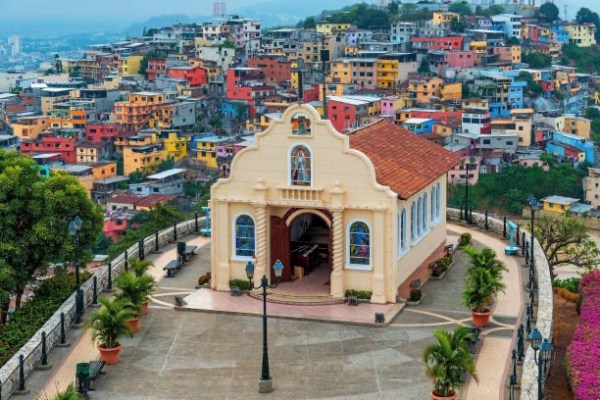
Guayaquil (Spanish pronunciation: gwajakil) is the largest city in Ecuador and also the nation’s economic capital and main port. The city is located on the west bank of the Guayas River, which is where we are at port. Guayaquil was founded on 25 July 1538 by Spanish conqueror Francisco de Orellana.

Ecuador is located barely 125 miles from the Pacific Ring of Fire, the most seismically and volcanically active zone in the world. Earthquakes are a constant threat here. In 2016 Ecuador was rocked by a 7.8 magnitude earthquake that killed at least 676 people and injured 16,500 others. Over 250 buildings in Guayaquil were damaged and power and water supply to the city were disrupted.

Today we were supposed to go on a beach and lunch excursion, but when we looked at our excursion tickets last night, there were none in the envelope for today. Apparently, they cancelled our excursion and failed to let us know. By the time we looked, all of the other excursions were either full or for weird things like erotic art museums or bird watching tours. (Just kidding about the erotic art museums.) So, we were thinking about taking a shuttle bus into town, but what I read about Guayaquil was a bit off-putting. Something like “The murder rate in Guayaquil is very high, but it’s mainly gang-related.” Well, gosh that makes me feel a lot better. Also, we were warned to be particularly cautious in Guayaquil city centre, southern parts of the city and port areas. Plus, we needed to watch out for pickpockets. All in all, getting out in 92 degree heat with the sun blazing and tromping around, all the while worrying about pickpockets and gang shootings just didn’t seem very appealing. I’m not even sure why we stopped here, but I’m guessing that it’s just so they can fuel up and load on supplies before heading to the Panama Canal tomorrow.

It’s blog light today.

January 7, 2025–Heading to Guayaquil, Ecuador

It’s a slow blog day.  We have spent the last couple of days at sea, and will be in Guayaquil, Ecuador tomorrow.  The water has been completely calm, which is always a good thing when you are on a ship.  After 7 days of planes, trains and buses, sitting still for a while feels really great.  And this ship has a lot of pretty places to sit.

There are about 700 passengers on this ship, so it seemed like we might not ever see the other 20 people who were at Machu Picchu with us.  However, we have been on here only 3 days and have seen most of them several times.  I have only seen the infamous Heather of “lost on the trail” fame once.  Strangely, she went to Machu Picchu on her own while her husband, Bill, chilled out at the hotel in Lima for 4 days.  Guess Bill wasn’t up for it.  Oh, wait, neither was Heather.  Apparently, Heather and Bill are heavily into the bridge club on the ship (the card game, not the captain’s bridge).  So, I guess they pretty much sit around all day and play bridge with other bridge lovers.  Sorry, but that seems boring.  But I digress.  I was going to point out that I actually enjoy seeing and chatting with the other 19 people from the Machu Picchu adventure, which is surprising.  I think we might have possibly bonded.  Of course not for life, or anything like that.  Just a temporary January 2025 bond until the cruise ends.   

Machu Picchu Group

In the picture above, Heather is the woman holding the white hat. At the last minute she barged in front of Doug and me, so we are almost hidden. By now you are probably thinking, “Ann needs to give it a dang rest about Heather.” I will eventually.

Oh, and another thing.  Remember the cute baby alpaca picture I posted a few days ago?  At least a couple of people in our group booked a restaurant so they could eat some alpaca.  They said it was delicious.  No, thanks.  I can’t eat cute animals.  

By the way, If you download an app called “Jetpack for WordPress” it’s much easier to see my blogs and comment on them.  As you know, WordPress blogs can be difficult to comment on.  

As a final thought, I listen to a podcast called Family Trips (hosted by Seth Meyers) and at the end of each podcast he asks the guest if they prefer their trips to be educational, relaxing or adventurous. I think I lean towards relaxing and educational, but Doug pushes me towards adventurous.  Which do you prefer?  

January 5th, 2025–Lima, Peru and the Silver Ray

Yesterday we flew from Cusco to back to Lima.  When we arrived at the airport, we boarded a bus and headed to Museo Larco (Larco Museum) for lunch and a tour.  I didn’t do any research ahead of time, but later I googled the website, and part of the blurb says “This major collection of pre-Columbian erotic art offers a different and interesting perspective on ancient Peruvian sexuality.”  Wait, no one told us that!  Of course, not all of the artifacts were erotic, but some of them were pretty vulgar.  Lunch was good, though, and the gardens were beautiful.   (We took pictures of the gardens, but not of the erotic art.)

After that, uh, interesting experience we boarded the Silver Ray, a cruise ship from the Silver Sea Cruise Lines.  We cruise for the next couple of days until we arrive at our next stop, Guayaquil, Ecuador. After that we transit the Panama Canal and stop in Panama City.  Then we move on to Cartagena, Columbia and Aruba, with our final destination as Fort Lauderdale.  Pictures of our room:

If you are wondering, our excursion to Machu Picchu was a Silver Sea pre-cruise option.  We usually don’t do the pre-cruise or post-cruise tours, but we decided if we were going to be this close, it would be a shame to miss Machu Picchu.  And although it was fast-paced and exhausting, I’m glad we made that choice.  Our tour group to Machu Picchu consisted of 22 people from all over the US and the world: California, Massachusetts, Washington DC, Missouri, Rhode Island, Florida, Australia, Canada, Portugal, and Belgium (these are just the places I remember).  It was a diverse group of people for sure.  Over the course of 4 days, we were thrown together constantly, which can be a lot, especially for us introverts.  However, it actually worked pretty well.  No complainers, everyone was polite and friendly, and we had only one lady wander off the trail in Machu Picchu and get lost.   

In case you are wondering about the lost Machu Picchu lady, let me tell you about it.  First of all, we were split into two groups of 11 to hike in Machu Picchu.  Each group had a guide.  As, I have mentioned it was rainy and the stone steps were steep, slick and treacherous.  Heather, an older lady from Canada (maybe about my age, haha), seemed to be having trouble navigating the trail. At some point on the way  down, someone in our group said, “Hey, where’s Heather?” Roger, our Spaniard hating tour guide, counted only 10 people and then immediately leapt into action.  We were on a flat spot with several buildings around, so he said, “Look around here and I will go back to look for her.”  As he ran out of sight, I almost screamed, “But, Roger, it’s pouring down rain, we are soaking wet and there’s no shelter!”  But, I refrained. After a few stunned seconds, some people wanted to revolt and hike down immediately, while others thought we should wait.   I said, “Why don’t we give it until 4 PM, and then we will hike down if Roger is still gone?”  It was 3:45 then, so we waited.  Roger showed up at 4 PM sharp.  Heather seemed to have vanished into thin air, so we proceeded with our hike.  Then voila, she showed up several hours later at dinner.  Nancy, the outspoken Australian, asked, “Heather, what happened to you?  We had to stand there in the driving rain for 20 minutes while Roger went to look for you!”  Everyone at the table looked at Heather.  She said in a defiant voice, “Well, I got a little behind.  But I’m an adult and I can take care of myself.”  Really, Heather?  

So, here’s my theory on Heather’s disappearance.  The last time any of us remember seeing her was somewhere at the beginning of the trail.  I think Heather lagged behind unnoticed, then turned around and went back to the Sanctuary Lodge and hid until dinner.  My evidence is that we walked very slowly and stopped often.  And when we did stop, Roger’s lectures were long and detailed.  No one can make me believe she was back there somewhere unless she was crawling.  She just didn’t want to admit deserting the group and inconveniencing everyone, so she gave a defensive non-answer.  She will probably go home and tell all of her friends that she did the hike and it was fabulous.  The nerve.  

January 3, 2025–Machu Picchu, Peru

Yesterday we got up at the crack of dawn to travel to Machu Picchu.  The first part of the trip was an hour and a half bus ride from Cusco to the Poroy Train Station where we boarded the historic Hiram-Bingham Luxury Pullman Train. The Hiram-Bingham train follows the Urubamba River through the Sacred Valley of the Incas.  The two hour trip includes brunch, complimentary cocktails and live music.  Pretty cool. 

When we arrived at the Machu Picchu Station, we jumped in a bus to travel for about 30 minutes up 13 switchbacks to finally reach the Sanctuary Hotel where we stayed last night.  The Sanctuary Hotel is walking distance to the entrance of Machu Picchu. 

Switchbacks

When you finally arrive after all of the traveling, you walk about 100 yards around the corner through the entrance and there it is:  Machu Picchu, one of the most amazing places I have ever seen.  Only pictures can tell the story. 

Roger was in full form with his lectures yesterday, as well as still really mad at the Spanish conquistadors.  He knows his stuff, though.  The history of Machu Picchu is so complicated that I can’t begin to fill in the entire story here.  Basically, the Inca civilization was powerful from 1438 to 1532.   The Incas had no written language, only oral tradition, so there are only theories of why they built Machu Picchu.  Roger said that one of its main uses was probably that of a royal estate for the Inca emperor Pachacuti and his family. The emperor may have used it to host feasts, perform ceremonies, and manage the empire.  Secondly, it is believed that it was a place for religious pilgrimage and sanctuary for the Inca people.  A third theory is Machu Picchu’s location between the Andes and the Amazon jungle may have allowed the Incas to observe astronomical events. The Temple of the Sun and the Intihuatana stone may have been used to observe astronomical phenomena that governed the Incas’ calendar, agricultural seasons, and society.  

When the Incas were conquered and had to retreat to the jungle in 1532, they destroyed the part of the Inca trail that led to Machu Picchu so the Spaniards could not find it and loot or burn it.  There it sat unknown until Hiram Bingham, a Yale University professor of Latin American history, rediscovered Machu Picchu on July 24, 1911.  Bingham was led to the Inca city by locals and was amazed by the temples, palaces, and fountains he found. He called it the “Lost City of the Incas.”  It had been hidden for close to 400 years.  It was covered with vegetation and the thatch roofs were gone, but the stone work is so perfect that the buildings have stayed largely intact. 

Picture Bingham Took in 1911

Of course the human element in this story is that although it was warm and sunny when we left the Sanctuary Lodge to hike in Machu Picchu yesterday, it started to rain somewhere up the 745 stone steps (our fellow traveler, Stacy, counted the steps, but that did not include the ramps).  At first it was a light rain, then it turned into a heavy rain.  It was muddy, slick and heavy going.  Also, we were at 12,000 feet and not acclimated.  Brutal.  We were asked to bring only light luggage up there, so we had one pair of pants, one jacket, one pair of shoes, a clean shirt and a clean pair of socks and underwear.  By the time we got back to the Sanctuary Lodge at 4 PM, we were all soaked and cold.  We put on the terry cloth robes in the room and hung our soaking wet clothes up.  They didn’t dry at all after a couple of hours, so I used the blow dryer to get them as dry as possible so we could go to dinner.  Miserable.

This morning we visited Machu Picchu again, and tonight we are back in Cusco after a long reverse version of the trip up. 

December 30, 2024 to January 1, 2025:  Atlanta, Georgia to Lima, Peru and on to Cusco, Peru

Well, once again I am determined to write a travel blog to chronicle our latest travel adventures.  I have to get in blog mode and actually force myself to write this thing, but once I get in the groove, it becomes a little easier each day.   Or anyway, I hope so.  A side note to my mostly appreciative audience: Comments are nice. I know WordPress can be difficult to comment on, but if you find it trying, you can always text me. No pressure.

Now onward and upward! On Monday we flew to Lima, Peru from Atlanta, Georgia, a direct flight on Delta Airlines of just under seven hours.  We spent the last couple of nights in a hotel in Lima to rest up and prepare for our trip early this morning to Cusco, a city in the Peruvian Andes that was once the capital of the Inca Empire.  To get to Cusco we had to take another flight from Lima, because the drive would take about 19 hours and the flight is just over an hour.  Then tomorrow morning we board a train, which takes us the last 74 miles or so to Machu Picchu, the “Lost City of the Incas.”  To be truthful, I came into this trip knowing very little about the Incan civilization or Mach Picchu, so I’m a novice.  

New Year’s Eve in Lima

Roger, our guide for today in Cusco and for the next two days in Machu Picchu, is of Incan descent.  Roger understandably has a giant axe to grind with the Spanish conquistadors who conquered the Incas back in 1532, and most notably with Francisco Pizarro, who was the lead conquistador.  Yes, Roger is still mad after 500 years, and I can’t say that I blame him.  Apparently, Pizarro sprang a trap on the last Incan emperor, Atahualpa.  He befriended him, lured Atahualpa to a feast in the emperor’s honor and then opened fire on the unarmed Incans.  With fewer than 200 men against several thousand Spaniards, the Incans never had a chance.  

Today, we toured the city of Cuscos.  Roger’s accent and his flare for drama were a little difficult to follow at times, but we did learn some stuff.  First we visited the Plaza de Armas, the central square in the old city, with arcades, carved wooden balconies and Incan wall ruins. Then we toured the Temple of the Sun, or Qoricancha, which was the most important temple in the Inca Empire.  Most of the temple was destroyed after the 16th century war with the Conquistadors (another beef of Roger’s) because the Spanish settlers took it apart to build their own churches and residences.  However, much of the Inca stonework was used as the foundation for the seventeenth-century Santo Domingo Convent that was built in 1538 by the Dominicans, so there’s still evidence of the early Incas.

The animal in the last picture is an alpaca. I think. Alpacas have fluffy heads with flatter snouts, softer features and short ears. Llamas are larger and have distinctive banana-shaped or devil horn ears and longer faces. Alpacas have the far superior wool, so there is an alpaca boutique on practically every corner.

After the Temple, we visited the Cathedral of Cuscos, or the Cathedral Basilica of the Virgin of the Assumption, which is the main temple of the city of Cusco.  I was so tired by that point that all I remember is Roger mentioning that some of the chapels in the basilica had a black or dark Jesus to represent the native Incas, and some had a white Jesus.  This was, indeed, true.  They did not allow pictures inside the Cathedral, so the picture below is not mine, but it gives you a good idea of what a small part of it it was like.

At the end of the day we were brought to an historic hotel that was once a monastery, aptly named the Belmond Monasterio.  Predictably, the rooms are quite monasterial, but adequate.  I’m not sure why, but we entered through a door to the chapel adjacent to the hotel. (I think it was for dramatic effect.)

The Entrance to the Hotel

Blog at WordPress.com.

Up ↑