Leaving Vanna in Montana: Glacier National Park via Swan Lake to Missoula—July 10, 2024

On Monday we drove from the Many Glacier Hotel on the east side of Glacier National Park to Lake McDonald Lodge on the west side of the park where we spent the night. Glacier Park is a lot more undeveloped and rugged than Yellowstone, so there is only one road that traverses the park, Going-to-the-Sun Road. A short road goes into Many Glacier, but all of the other roads are on the edge of the park. Since the park itself is roughly the size of Rhode Island, the interior is largely inaccessible. To use Going-to-the-Sun Road you must have a reservation, plus they don’t allow RV’s. Vanna is often ostracized in this manner. (I guess Vanna must be getting used to being ostracized by now.)

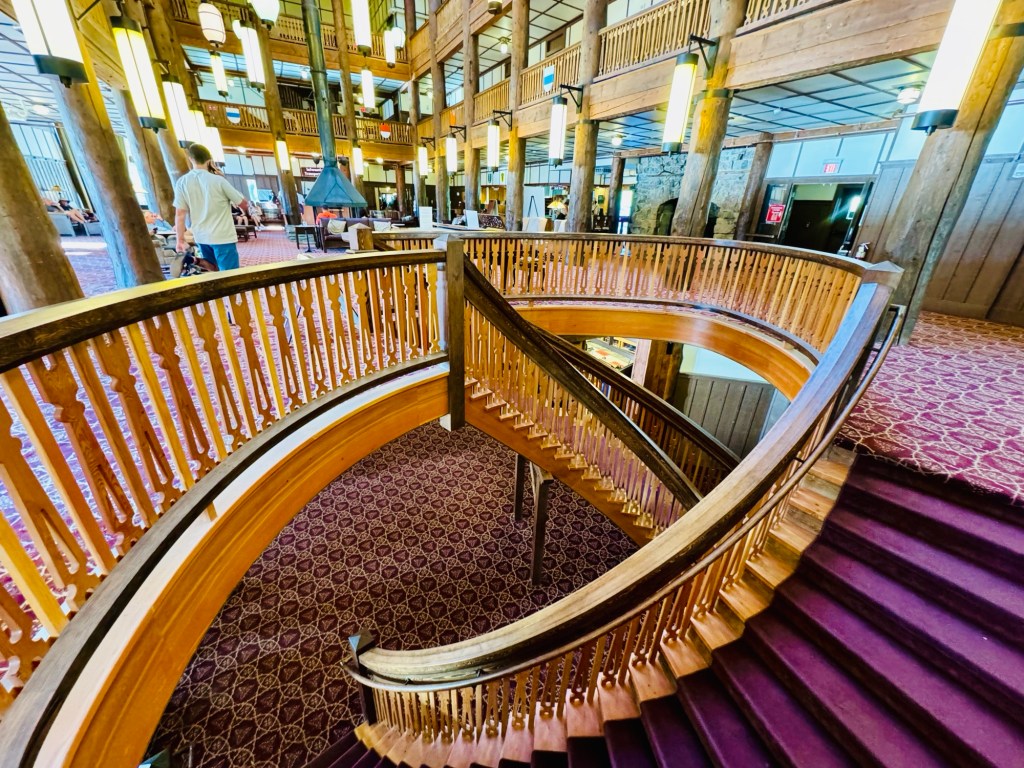
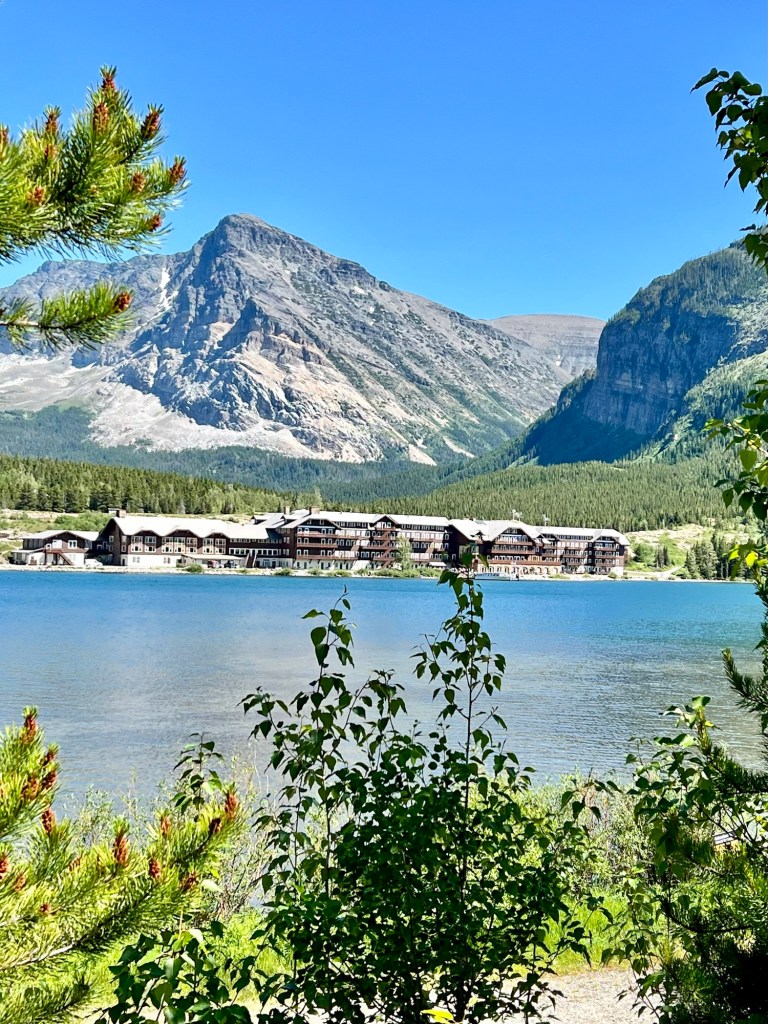
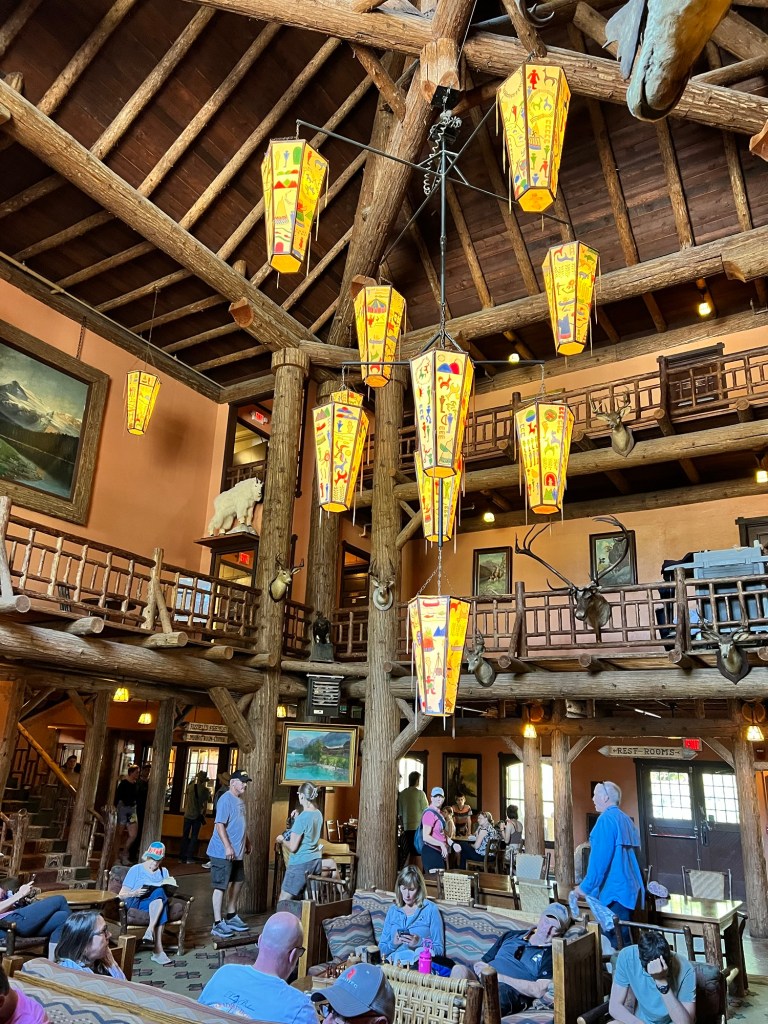
Lake McDonald Lodge was built in 1913 in the same Swiss Chalet style of the other two lodges we have visited. It’s fittingly located right next to Lake McDonald. However, this lodge was not built by the Great Northern Railway like the other two, but rather by a private developer named John Lewis. At the beginning of the Great Depression, Great Northern Railway took over the hotel and added several wings. The public areas at Lake McDonald are smaller than the other lodges, but are still quite stunning. Also, the rooms seemed more spacious and well appointed (at least our room), so that’s a plus.
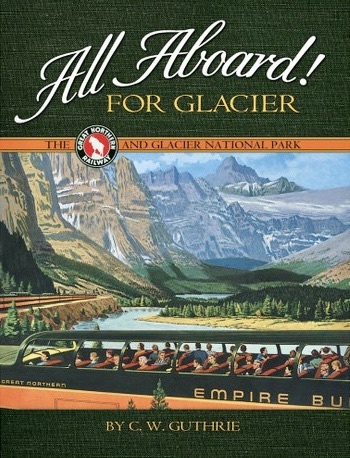
I wondered why the railway built so many hotels in Glacier and apparently, the movement was part of a trend by railways during that time to build destination resorts in areas of exceptional scenic value. For instance, the Santa Fe Railway built El Tovar Lodge in the Grand Canyon. Also what I didn’t realize was that railways played a big part in establishing and promoting national parks in general, particularly Yellowstone, Glacier, Grand Canyon, Yosemite, Bryce, Zion and others. They wanted to entice people to travel out west, so they had a monetary interest, but it also helped the parks. There are even several books about the subject.
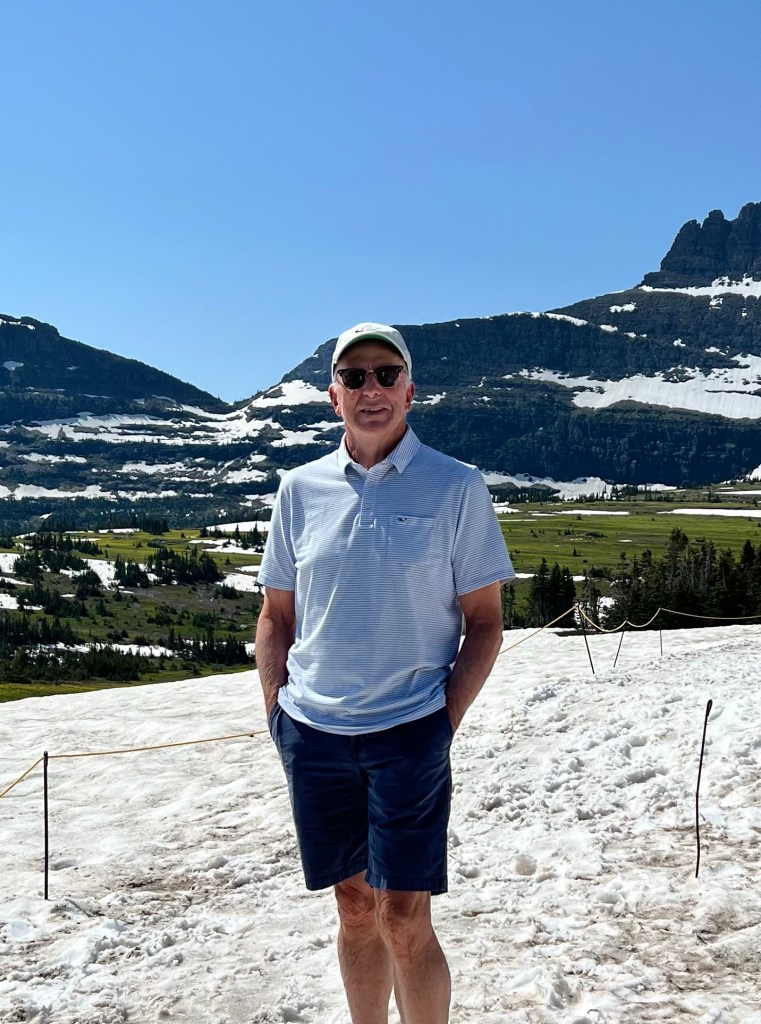
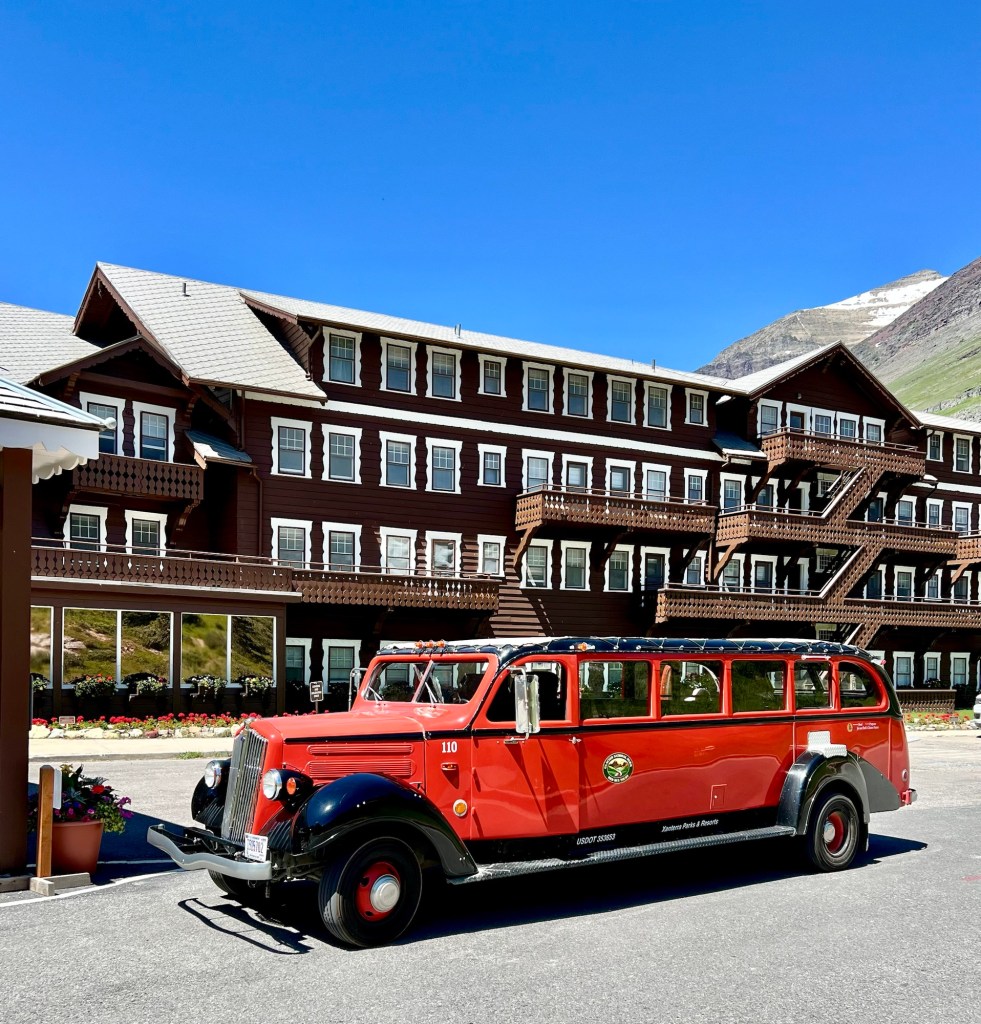
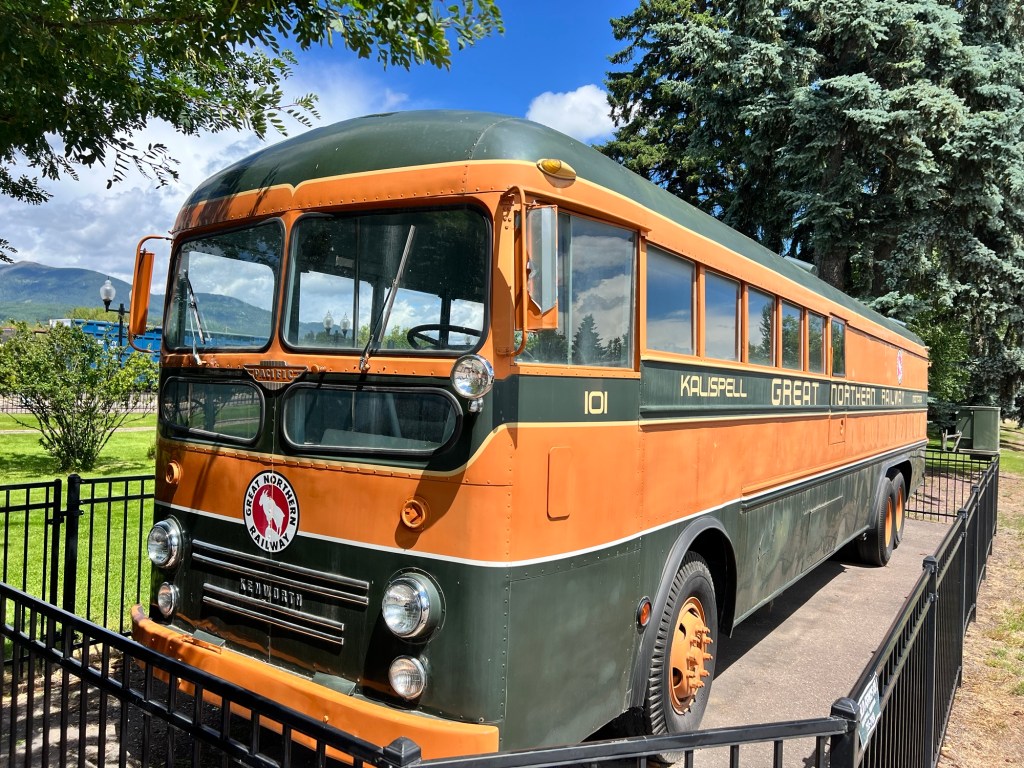
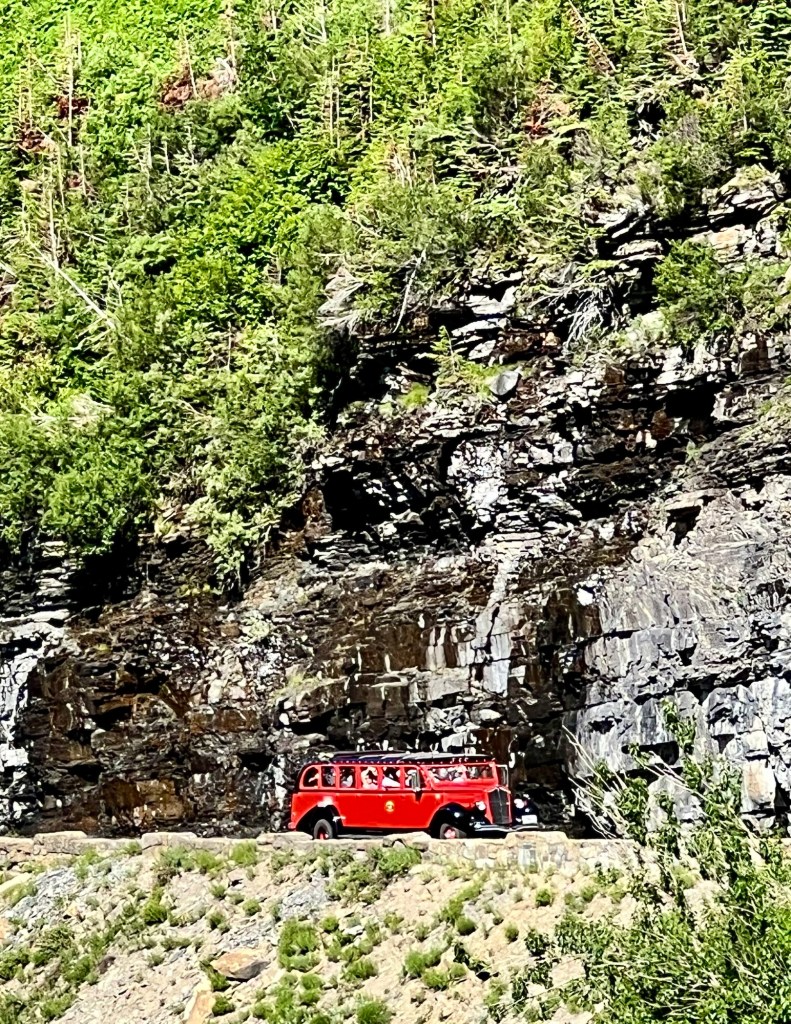
Yesterday before we left Glacier we took the Western Alpine Red Bus tour up to Logan Pass. I could totally see why Vanna couldn’t go up there because the road is narrow, winding and goes right up against a sheer rock face at times. We rode in a 1937 touring bus with John as our driver and tour guide. There are 35 of these buses that were built by the White Motor Company in the early 30’s especially for Glacier. They were originally owned by a private company, but by 2000 were in grave disrepair. In 2000, Ford Motor Company spent 6 million dollars refurbishing the touring buses—new motors, chassis, driveshafts, etc. They did it as a charitable contribution and the deal was that they had to be deeded to the National Park Service. So, now the NPS keeps them restored. They are really cool.
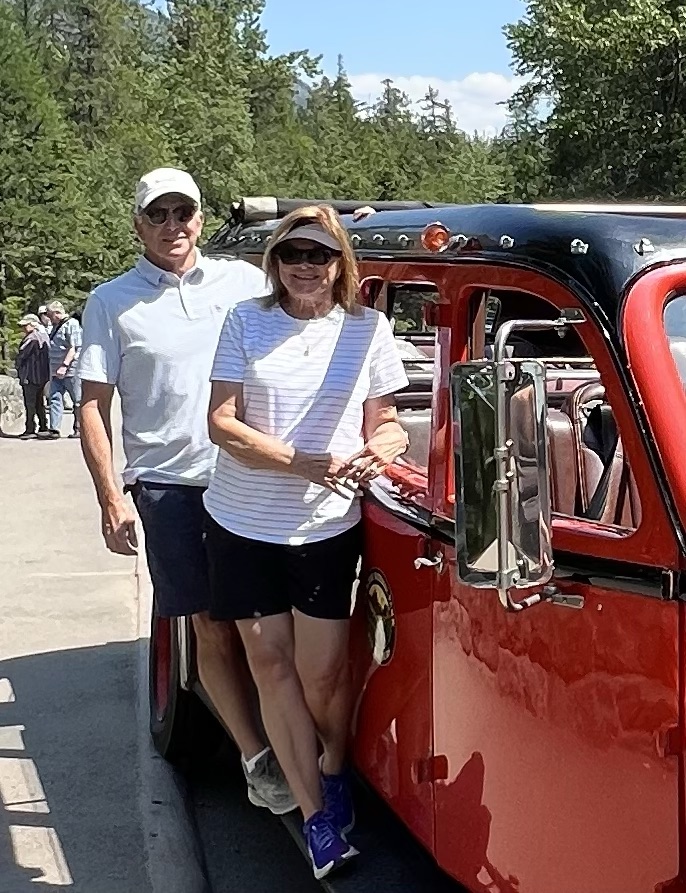
John, our tour guide/driver was a retired landscaper from central Illinois who decided to come here this summer and be a tour director. So far, it seems that there are basically three types of people who work in the parks: the large percentage are college students who are looking for a summer adventure out west; the second group are retirees like John who also want to try something fun for the summer; the third group are called “Parkies,” people who work in parks all year round, but are seasonal—for instance, they are at Glacier for the summer and the Grand Canyon in the winter.

I liked John. He had a headset for commentary, but instead of a non-stop serious commentary about the park, he had a lot of opinions. He couldn’t understand why the National Park Service didn’t replace the faded and bent-up sign at Logan’s Pass. Agreed. And he consistently talked to other drivers as in, “Hey, buddy, can’t you read the no parking sign?” Or, “Are you kidding me about pulling over there by that sheer wall?” My favorite was, “Wait, I’m going to blast my horn right at the moment we go by the guy parked by the sheer wall. That way it will really give him a start.” And he did blast his horn.

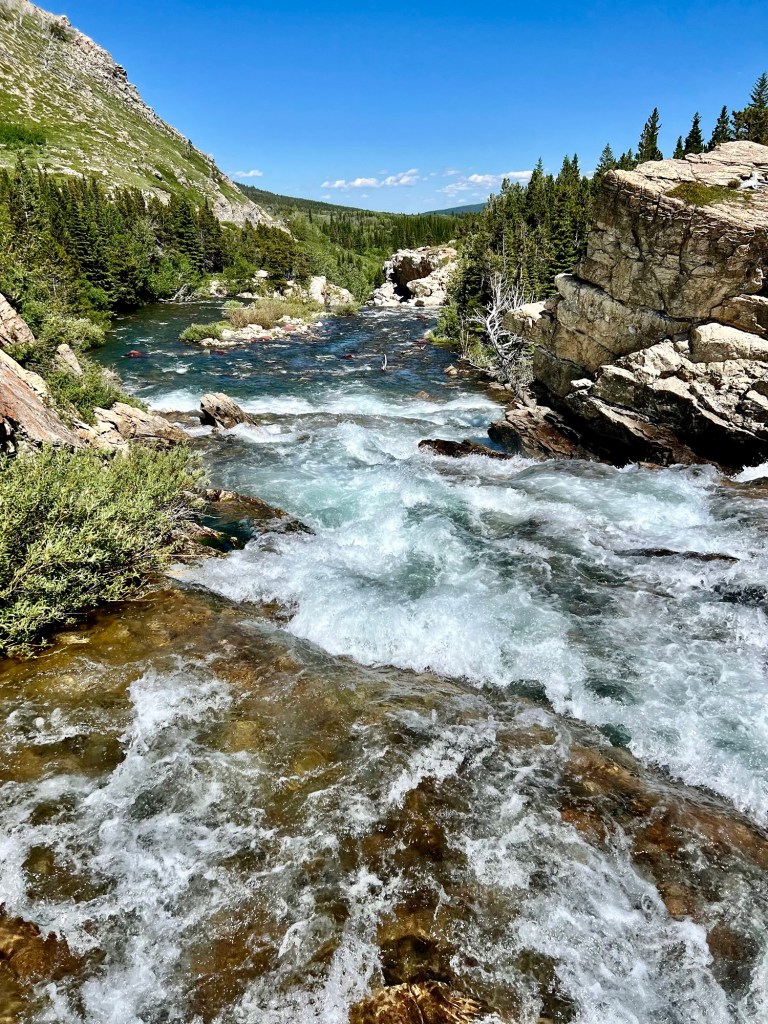
The streams and lakes in Glacier are the most startling color of aqua green to turquoise imaginable. The turquoise blue of the lakes in Glacier are caused by ground up bits of rock and sediment called “glacial flour.” The “flour” is produced by movement as the nearby glaciers erode the bedrock. The flour doesn’t sink or float, but rather remains suspended in the water, thus producing the bright color. Pictures do not really capture the color.
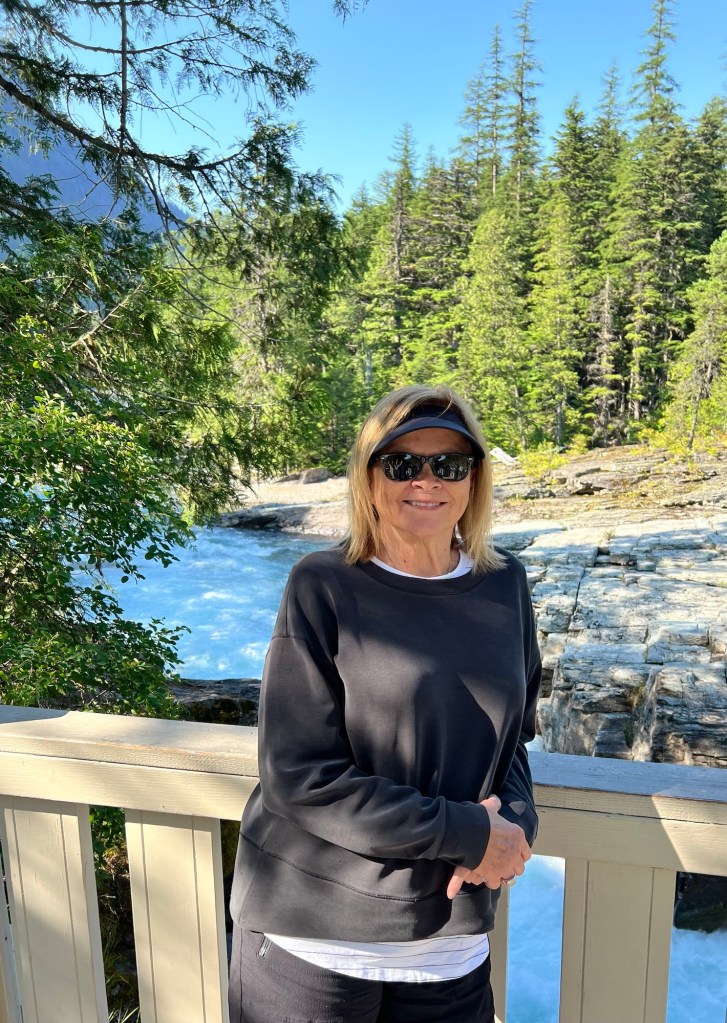
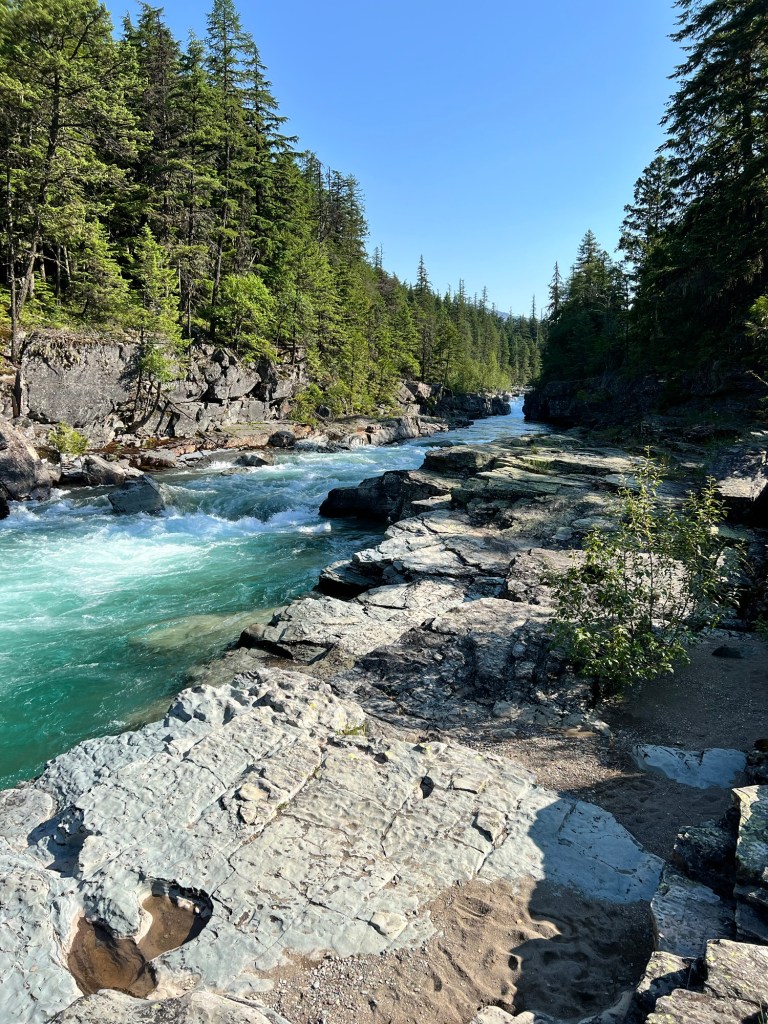
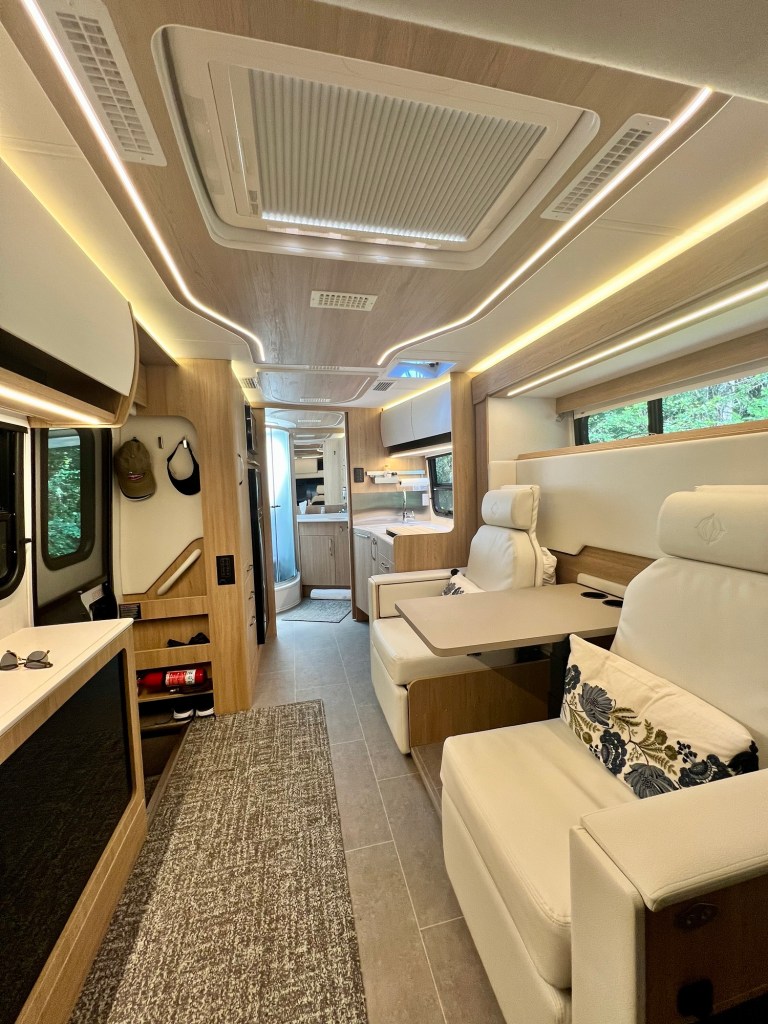
Last night we camped for one more night at Swan Lake. It was hot. We had maybe one or two cool days in Wyoming, but the rest of this trip has been hot. Not hot like humid Georgia, but a hot with no air-conditioning hot that finally gets okay by four AM when you have almost given up on getting any decent sleep for the night. For those of you who haven’t seen Vanna, this is a picture of the interior (it’s really not as spacious as it looks—it’s a wide angle shot). The two chairs are recliners, and they fold down and the table lowers for the Murphy bed that drops down from the wall behind them. The television on the left pops up out of the cabinet.
Tonight we are in Missoula, Montana. When we arrived the thermometer reading was 100 degrees. We left Vanna at Jellystone Park RV and Boat Storage where she will languish until mid September when we come back for the second part of our great western adventure. Tomorrow morning we fly out of Missoula to Atlanta. Nice trip, but it is high time we go home for a bit.
Many Glacier Hotel, Glacier National Park—July 7, 2024

Last night we stayed in Glacier Lodge, a rustic lodge at the east entrance of Glacier National Park that was built in 1913 by the Great Northern Railroad. Huge Douglas fir timbers were brought to East Glacier by train from the Pacific Northwest to construct the lobby. There is a railroad station across the road that is part of the original railroad that has been going through East Glacier since the late 1800’s. They still have excursions on the passenger trains that are part of the Empire Builder itinerary, which goes from Washington state to Chicago.

Tonight we are at the Many Glacier Hotel, which was built in 1914 on the shores of Swiftcurrent Lake. The hotel has a Swiss Alpine theme, which was part of an effort by Louis W. Hill, president of the Great Northern Railway, to establish Glacier National Park as a destination resort and to promote the area as the “American Alps” In fact, back in the early 1900’s Glacier was touted as America’s Switzerland, so all of the lodges in the park have the Alpine/Chalet theme. It could be a bit kitschy, but it’s built on such a grand scale that it works.

One thing to remember if you decide to stay in a national park lodge is although the lobbies are quite stunning, the rooms are quite basic and spartan. Very small rooms, minimal furniture, bare wood floors, and tiny bathrooms with showers even smaller than Vanna’s. The sheets are muslin and the towels are basic white terry cloth. There is no air-conditioning or television, and limited cell and Wi-Fi service. You have to be here for the charm and history, because these are not five star hotels. At times the sink is out in the room as below.

Our Room at Many Glacier Hotel

As I walk around these lodges built at the turn of the century I keep getting the feeling that I’m in the Overlook Hotel on the set of the movie, “The Shining.” Long wide hallways, cavernous rooms, heavy dark furniture, huge stone fireplaces, ornate carpets, curved staircases and giant iron light fixtures that burn dim lightbulbs. Sometimes I expect to see dead people in the empty lounges dressed in 20’s period costumes drinking and laughing. (If you haven’t seen the movie, disregard the last paragraph because it won’t make much sense.)

One thing we have noticed is how many huckleberry items are on the menus at all of the restaurants—huckleberry ice cream, huckleberry bread pudding, huckleberry martinis, huckleberry pancakes—the list goes on and on. Huckleberries are big in Montana and Wyoming because they grow on bushes at elevations above 5,000 feet. They are wild and cannot be commercially grown. If you don’t know what a huckleberry is, they look a lot like blueberries but are usually redder, smaller and a bit more tart. I looked up the saying “I’m your huckleberry” and it seems to have come from the American west in the 1880’s and means, “I’m your man,” or “I’m the one for the job.” It’s probably a lot more complicated than that, but that’s a rabbit hole I won’t go down right now.

There’s a 2.6 mile trail that goes around the lake that we walked today and the views are quite stunning. People kayak and canoe on the lake, plus there is a passenger excursion that cruises around the shore at regular intervals.

Irritation of the day: This afternoon some guy left his (could have been a woman, but I doubt it) car parked in the Porte Cache that is for check-ins only for a long time—far longer than it took to check in. The alarm system was apparently super touchy, so every time someone even got close to the the car, it honked for 30 seconds. This happened at least 10 times, thus breaking the serenity of a lazy sunny afternoon in one of the most gorgeous spots ever. What a putz. Or putzette if that fits.

Still Hanging Around in Whitefish, Montana—July 5, 2024

Yesterday we decided that we may have extended our trip one day too long here in Whitefish. It’s a small town and we have pretty much seen all of it. We thought we would go see the city fireworks last night, but they were not until 10:30 PM, a bit late for us. The sun doesn’t set until about 9:45, so it wasn’t all that dark even at 10:30. Too late and too many people, so we were lame and watched them over the rooftops from our balcony. Pictures of fireworks are usually dull, but here’s one anyway. And also a picture of downtown and the city beach.

Every night at 10 PM a really loud siren goes off in Whitefish. It began in 1919 when the “Ding-Dong Ordinance,” (a curfew for children), was made law. When children 16 and under heard it, they had to rush home. Back in 2009, they discontinued the siren because OSHA said it was too loud for the firefighters and EMTs who were trying to rest between emergencies. However, in 2010 they built a new fancy city hall on the main drag, and the firefighters and EMTs were moved elsewhere. For some reason, probably tradition, the city council voted to bring back the curfew siren and it goes off every night at 10 PM again. Not sure what the function is, but it is extremely loud and startling.

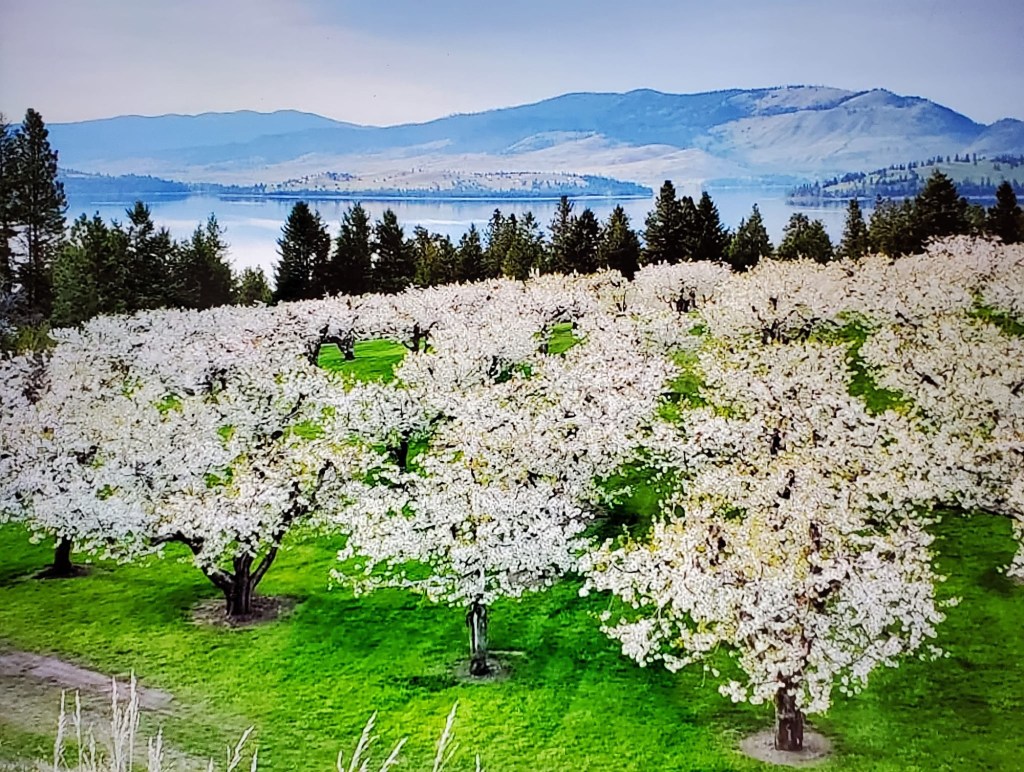
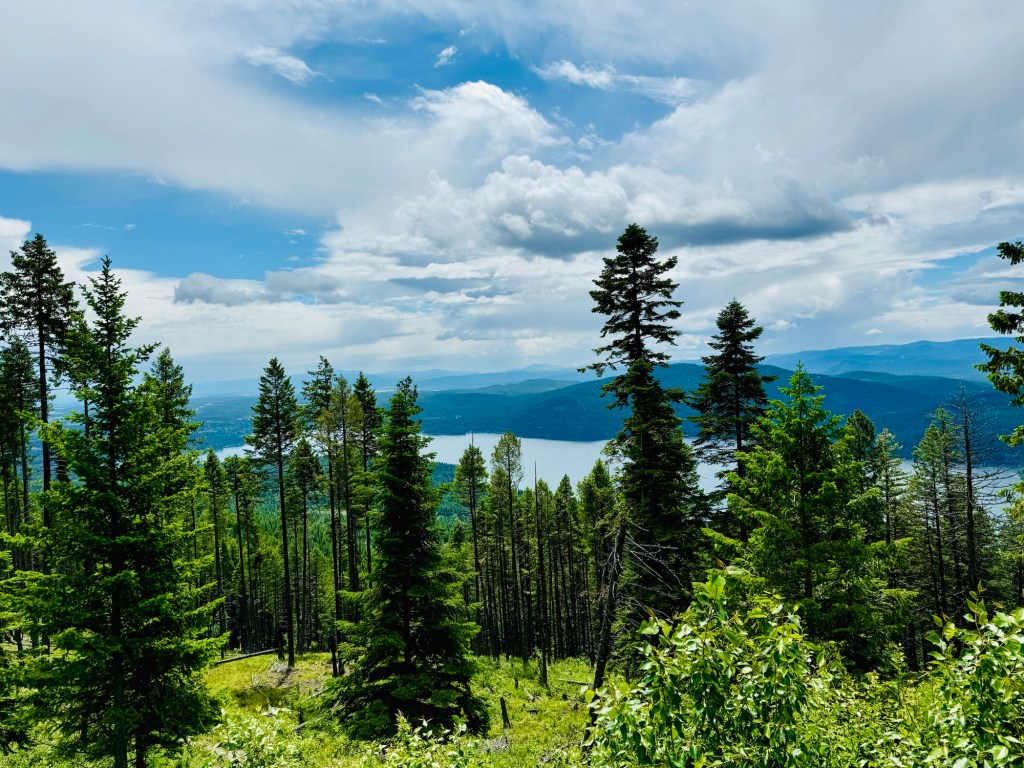
We drove around Flathead Lake yesterday just south of Kalispell for views of yet more mountains and more water. Absolutely stunning. Flathead is the largest natural freshwater lake (by surface area) in the United States west of the Mississippi. (Lake Tahoe has more water because it’s deeper.) Apparently, the east shore of the lake is known for its cherry orchards. People found that Flathead Valley was the perfect climate for growing sweet cherries, mostly Lamberts and Lapins, because of the long warm days with plenty of sunshine and night temperatures of 40-50 degrees. It’s kind of a microclimate. We didn’t buy any cherries because they won’t be ripe until the middle of July. Disclaimer: The following picture is from spring when the cherries were blooming, so I did not take it.

Cherry Trees Along Flathead Lake

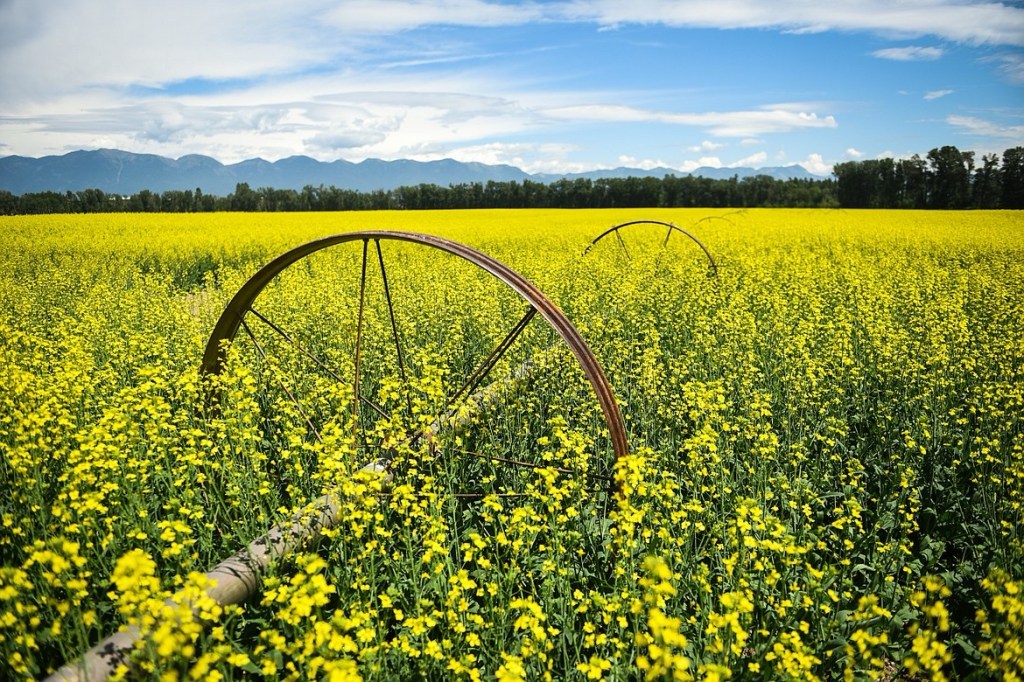
Another crop we have seen in Montana is canola. Canola is grown in huge fields and is the most vivid color of yellow ever. I was thrown by canola fields. I see canola oil in the grocery store and have always thought it was some kind of fake, healthy cooking oil. But it’s a natural oil, just more processed and less flavorful than olive oil. The reason it seems new is because the canola plant was developed in the 70’s by Canadian scientists. (Yes, I understand that was 54 years ago which isn’t really new, just new to me). The name canola comes from Canada, can, and oil, ola. The fields are pretty, but I think I will stick to olive oil.

Canola Field

Oh, and there is supposed to be a Flathead Lake Monster, but we didn’t catch site of it. There have been more than 115 reported sightings of the monster, as well as a few sketchy photos of something people claim is the monster. Eyewitnesses typically describe the beast as eel-shaped, from 20 to 40 feet in length, sometimes with four flippers. Of course it’s an urban myth, possibly handed down from the Salish Indians who once populated the area. I guess it is kind of the Loch Ness monster of the American West. I won’t post pictures I found because they look super fake to me.

Tomorrow we pick up Vanna, say goodbye to Whitefish, and head 35 miles northeast to Glacier National Park where we will spend a few days.

Whitefish, Montana—July 3, 2024

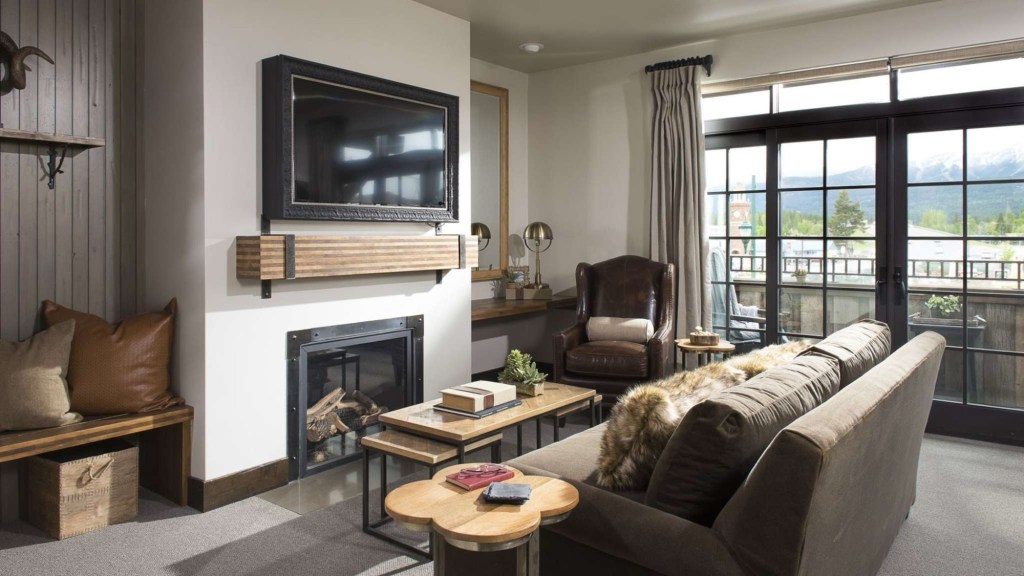
We are in Whitefish, Montana staying downtown in a cute condo. Whitefish is a picturesque little town nestled in the mountains of northwestern Montana, with Whitefish Lake, numerous hiking trails and snow skiing in the winter all near by. It’s only about 50 miles from the entrance of Glacier National Park. The town is already packed for the 4th of July, so it’s nice to be within walking distance of restaurants and shopping.

After our ordeal with Vanna in Jackson, Doug called the rental company here last week just to make sure we could park an oversized vehicle easily close to our condo. Jerod, the property manager, said “No problem. There is plenty of parking, and then he went on to name some options.” Au contraire, Jerod. When we arrived here yesterday afternoon, our situation looked bleak. Small town, tons of traffic, and no overnight parking. Not a nice surprise. So, we called the only rental car company in town and rented their last available car, a Toyota Forerunner. After that we called Mountain View RV Park and rented their last available camping spot. Actually, they were booked solid, but they had a last minute cancellation. So Vanna is hanging out several miles away at an RV park while we are enjoying downtown Whitefish.

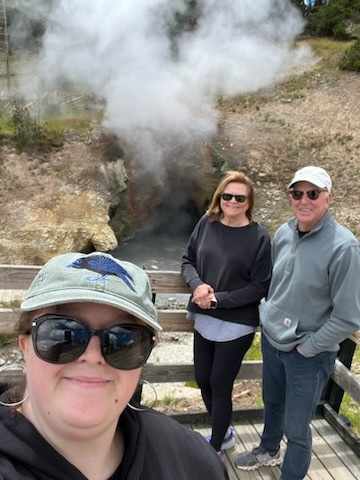
I have been reading a fascinating book titled “Death in Yellowstone.” Yellowstone National Park has the most extraordinary collection of hot springs, geysers, mudpots, and fumaroles on earth—more than 10,000 hydrothermal features—and it is absolutely amazing how many people are burned in the hot springs every year. In the park’s history, 22 people have actually died from either falling or jumping into one of the springs, but many more have been injured. While large animals might seem a more obvious hazard, the thermal waters are a far more frequent cause of death and injury. Most injuries are due to human error: people going off trail, not heeding warning signs or letting children run ahead without supervision. Some of them are caused by an illegal activity called “hot potting,” or soaking in the hot springs.

There is a cool old train station and museum in Whitefish that was built by the Great Northern Railroad in 1928. The Great Northern Railway was created in September 1889 and eventually stretched from Lake Superior at Duluth and Minneapolis/St. Paul west through North Dakota, Montana and Northern Idaho to Washington State at Everett and Seattle. The original Tudor revival station is still in use and is owned and preserved by the Stumptown Historical Society. An Amtrak passenger train stops at the station and pretty much has the same route as it did in 1889. If you are wondering where the name Stumptown came from, it was the original name for the town because so many trees had to be cleared for the train station and surrounding town, leaving stumps all over the place.

Somewhere in Montana—July 1, 2024

We have spent the last couple of days driving through Montana. Montana is huge and kind of empty. It’s the 4th largest state in size, but only the 8th most populous state. I quote these statistics to illustrate just how few and far between towns and people are in these wide open western states. You can drive for miles and miles without services, which is why it’s so convenient to travel in a vehicle like Vanna.

Last night we camped about 10 miles north of Big Sky, Montana in a little primitive campground by Swan Creek. Today we are driving around 280 miles north to stay in a campground near Swan Lake, Montana. I guess there are a lot of swans in Montana. Tomorrow, we will drive just another 50 miles and end up in Whitefish, Montana, where we will rent a VRBO for four nights. Whitefish is on the edge of Glacier National Park.

Camping is fun if you are prepared for all eventualities. Last night we ran out of water, which was not so fun. I am a big fan of a campground with hookups, wifi and cell service. Doug likes more primitive camping. So staying in a nice condo or hotel for part of the trip is how we compromise.

Today’s trip down memory lane: In the early 80’s we brought our three little girls out west in a motorhome. We borrowed a motorhome from Doug’s Dad that he had bought damaged and then “fixed up.” The brand name was Titan, but we called it the Titanic. And believe me, Titanic was an apt name.

One day we were headed to camp by some river at some god-forsaken campground in Colorado, and Doug found a “shortcut”to the campground that was off the main highway (Doug just loves shortcuts). Unfortunately, once we got on said “shortcut,” we found that the asphalt ended pretty quickly and we were left with a gravel road with a fine, white dust boiling up if you went over 10 miles per hour. Also, every part of the Titanic and every single thing in the Titanic rattled. I wanted to turn around immediately (Doug may remember this differently, but this is my story), but he hates to backtrack equally as much as he loves shortcuts. He just won’t do it. In his mind, everything loops around.

So, by the time we reached said campground (and listened to the din of a rattling rattrap for miles on end), the dust had come in through every nook and cranny of the Titanic and coated everything with a fine, white powder: our dishes, our pots and pans, our towels, our beds and bedding, our clothes. You get the picture. If you know me even a little bit, you know that I am an extremely tidy, neat person. I hate dirt. I was beside myself. As it happens there was a tiny convenience store and laundry mat on the premises. I spent the rest of the day and evening washing all of our clothes, towels and bed linens at the laundry mat (for a family of five), plus wiping down and washing every surface in the Titanic. In the meantime, Doug took the girls down to the river and they fished or skipped stones or something equally as lovely. What a day that was!

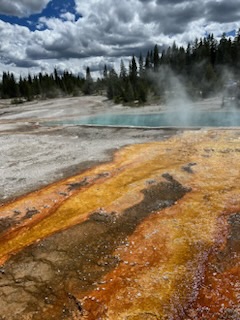
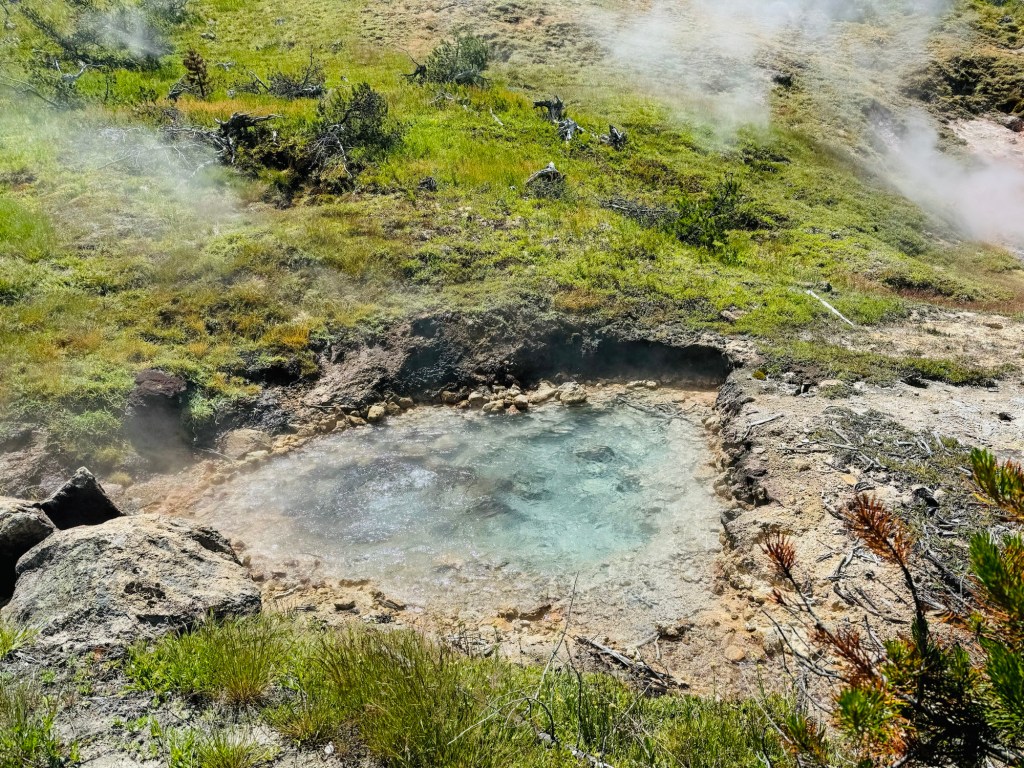
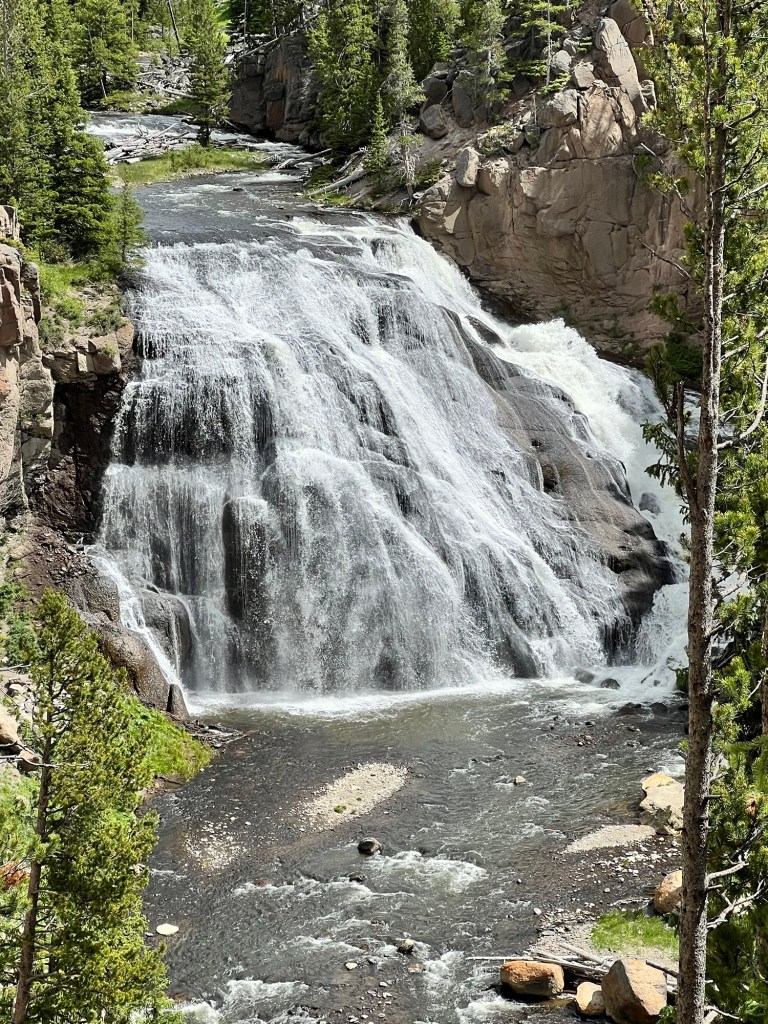
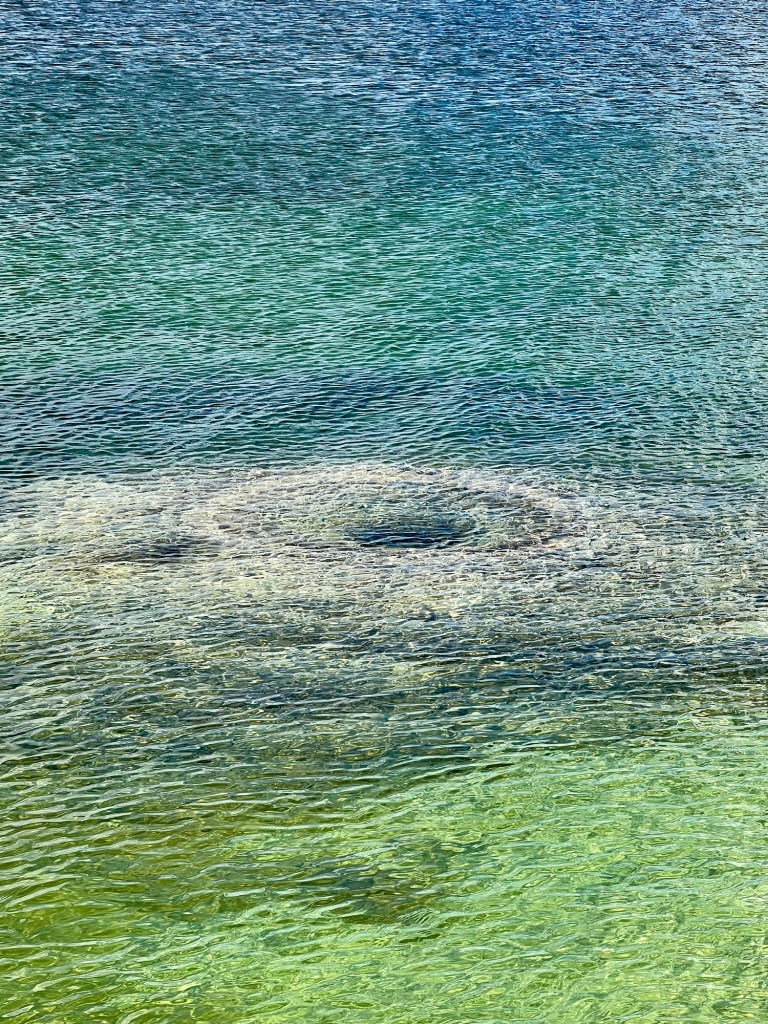
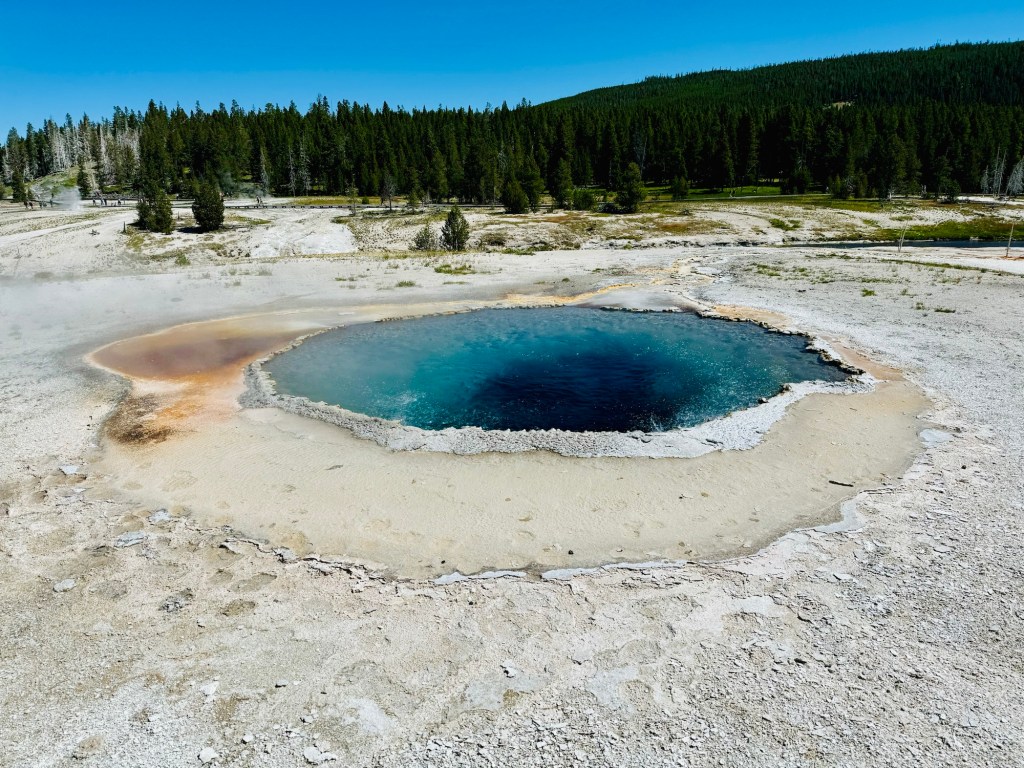
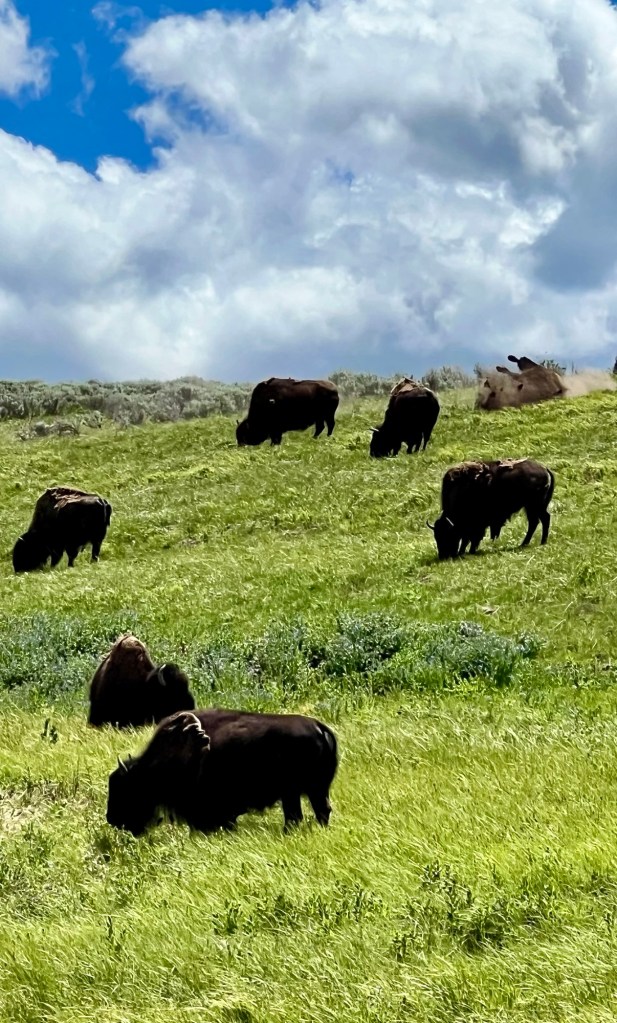
No pictures of Montana, but some more of Yellowstone:

Last Day in Yellowstone National Park—June 29, 2024

Yesterday we met our oldest granddaughter, Lillie, and drove the south loop in the park. It was great day! Lillie is here because she is working at Canyon Village in Yellowstone this summer. Every year, Yellowstone National Park Lodges hires more than 3,000 summer seasonal workers for in-park operations. Many of the seasonal workers are college students who want a summer adventure, and that’s Lillie’s story. We saw a lot of sights and took tons of cool pictures. It was certainly a day to remember.

Today we drove the north loop of the park up to Mammoth Springs and the Grand Canyon of the Yellowstone. It made me think of the time we came here in the 70’s with Doug’s parents. We had never seen anything like Yellowstone and wanted to stop at every single place and take a million pictures. About the third day, Doug’s mother, Florence, was fed up with our constant stops. She said, “Do we have to stop again? If you’ve seen one geyser, you’ve seen them all!” I really miss her. She was just so real and so, so funny. And after the last couple of days, I see what she was saying. There are more than 500 geysers in Yellowstone. This time we probably saw about 50 of them.

We have seen both bison and bears today, and people are nuts. They walk right up to wild animals like they are in a petting zoo. If there’s a bear close to the road, there is always a park ranger there making sure everyone is keeping their distance. But if it is a bison, there are no rangers to police the situation and people are out of control. Made me wonder how many people have been trampled or gored by bison? Apparently, it happens fairly often. Bison have injured more people in Yellowstone than any other animal, according to park records. On average, there are one to to two reported incidents of of bison injuring visitors annually. However, bison at the park have not killed any people in the last five years. Good to know!

I am kind of at the end of my rope with the large summer crowds at Yellowstone. It’s not the screaming children or the people who don’t give you even half the walkway or sidewalk. It’s not even the people who stand smack dab in the middle of a busy sidewalk looking at their phone. I reached my limit tonight at Lake Yellowstone Lodge in the large lobby looking out over gorgeous Lake Yellowstone listening to a string quartet that was playing the most beautiful, heart-rending music ever. The people at the table next to us were playing some stupid card game and were whooping and hollering. They didn’t even see the view or hear the music. They didn’t care about other people who were trying to enjoy both. That bugged me to no end.

Lake Yellowstone from West Thumb

Yellowstone National Park, Old Faithful Inn—June 27th, 2024

Yesterday in Jackson Hole we had a clean-up and maintenance day. Doug washed Vanna, cleaned up inside and filled her up with all necessary fuels and fluids: propane, diesel, oil and DEF (Diesel Exhaust Fluid). Vanna, as we have learned, is quite high maintenance.

We enjoyed our stay in Jackson Hole, but this morning it was time to move on down the road. We reclaimed Vanna from Judy’s house and headed out to the Old Faithful Inn in Yellowstone, which is about 97 miles up the road. By the way, I have always thought that Jackson Hole was the name of the town, but the town is actually just named Jackson. Jackson Hole is the entire valley and wilderness recreation area.

Doug’s Bike Ride—Last Day in Jackson Hole

I remembered today that JoJo, our Snake River raft pilot/guide, told us that Canada geese aren’t called Canadian geese, but rather Canada geese. (I already knew this, having done earlier research on Canada geese. Not really. I just heard it somewhere.) He also said that they aren’t named after the country Canada, but rather were named by John Canada, an ornithologist. I did not contradict JoJo, but at the time his story seemed a bit suspect. So today I did some research and could not find any ornithologist ever named John Canada. Maybe JoJo needs to check his sources.

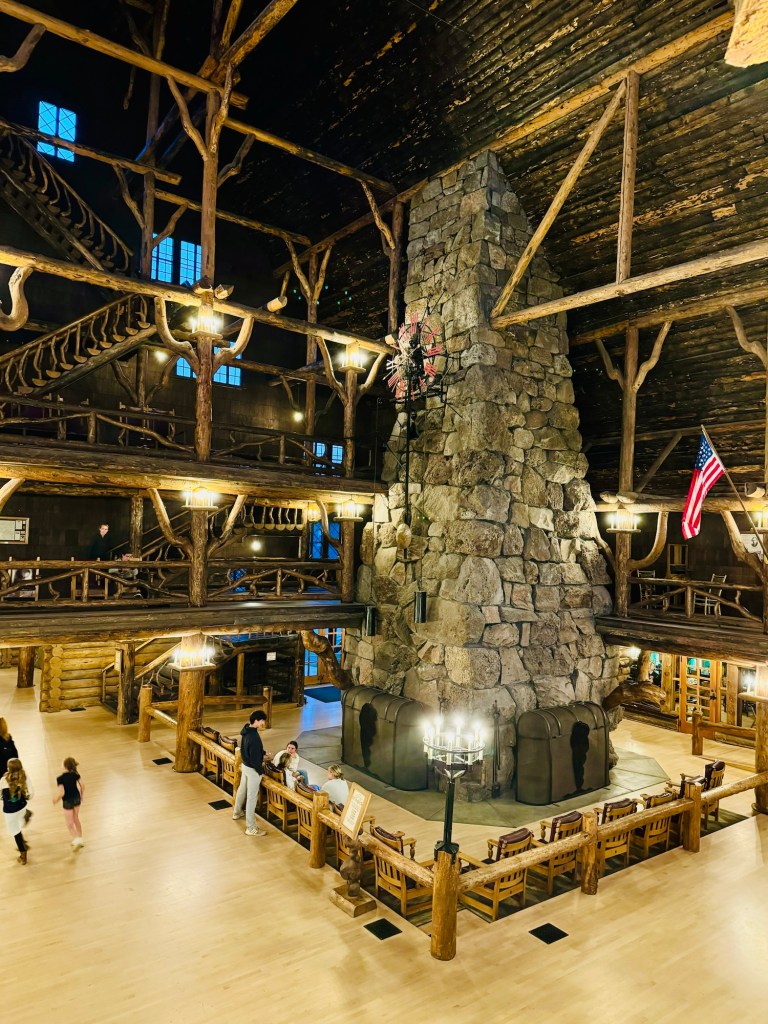
For the next three nights we are staying at the Old Faithful Inn. The Inn opened in the spring of 1904, and boasted the modern conveniences of electric lights and steam heat (the radiators are still here. We have one in our room). It was constructed using local materials of lodgepole pine and rhyolite stone, and is the largest log hotel in the world. In a 2007 survey by the American Institute of Architects, it was voted number 36 out of 150 favorite buildings in America. The lobby is 3 1/2 stories with balconies all the way around on every floor, so it’s a great place to hang out. There is no air conditioning, no television and no Wi-Fi.

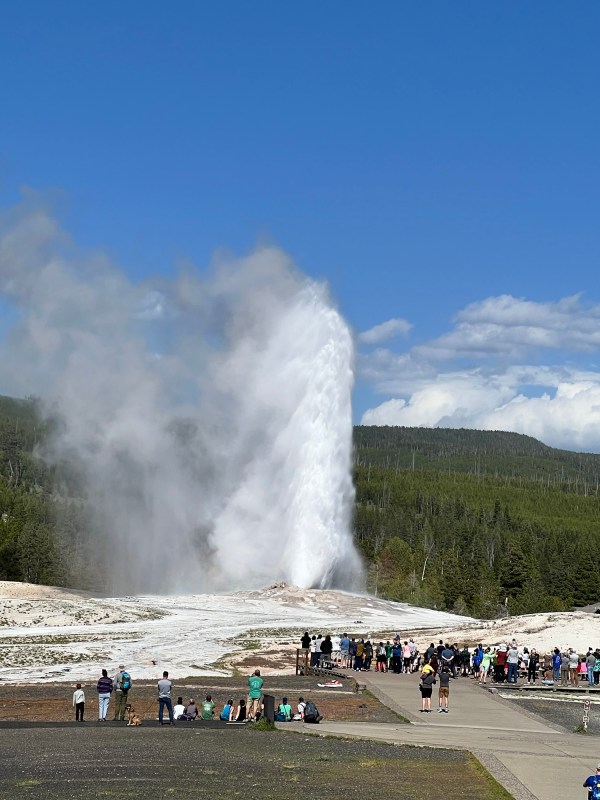
Since we are here, we of course were compelled to watch Old Faithful erupt this evening at 5 PM. An Old Faithful eruption lasts 1.5 to 5 minutes and reaches a height of 90-184 feet. The period of time between Old Faithful’s eruptions ranges from 35 to 120 minutes, though the average is 92 minutes. So, people stand around for an hour or so waiting on it and then it’s very short-lived. It is pretty amazing, though. What Doug and I both thought of when we were watching it was what happened when we brought our little girls here in the early 80’s. As it was erupting, a streaker (a tall, skinny young man with shaggy blonde hair) raced across the front of the benches where we were sitting. Streakers were a bit of a thing then (Google it if you are too young to remember them). We were kind of mortified that our little girls witnessed such a thing, but I guess it didn’t scar them for life. A park ranger was following close on the streaker’s (bare) tail, but I’m not sure if the ranger ever caught up with him.

Jackson Hole, Wyoming: The Snake River—June 25, 2024

Yesterday we drove through Grand Teton National Park and then stopped for dinner at Jackson Lake Lodge. We both remembered the Lodge from years ago when we came through here. It was built in 1955 by John D. Rockefeller Jr., and at the time, was more modern than other park lodges so was highly criticized for its lack of rusticity and “lodginess.” However, the architecture has held up over time because it’s such an eclectic mix of wood, stone and concrete and seems to fit in so well with the landscape. The grand lobby is stunning.

Jackson Lake Lodge with View of Mt Moran

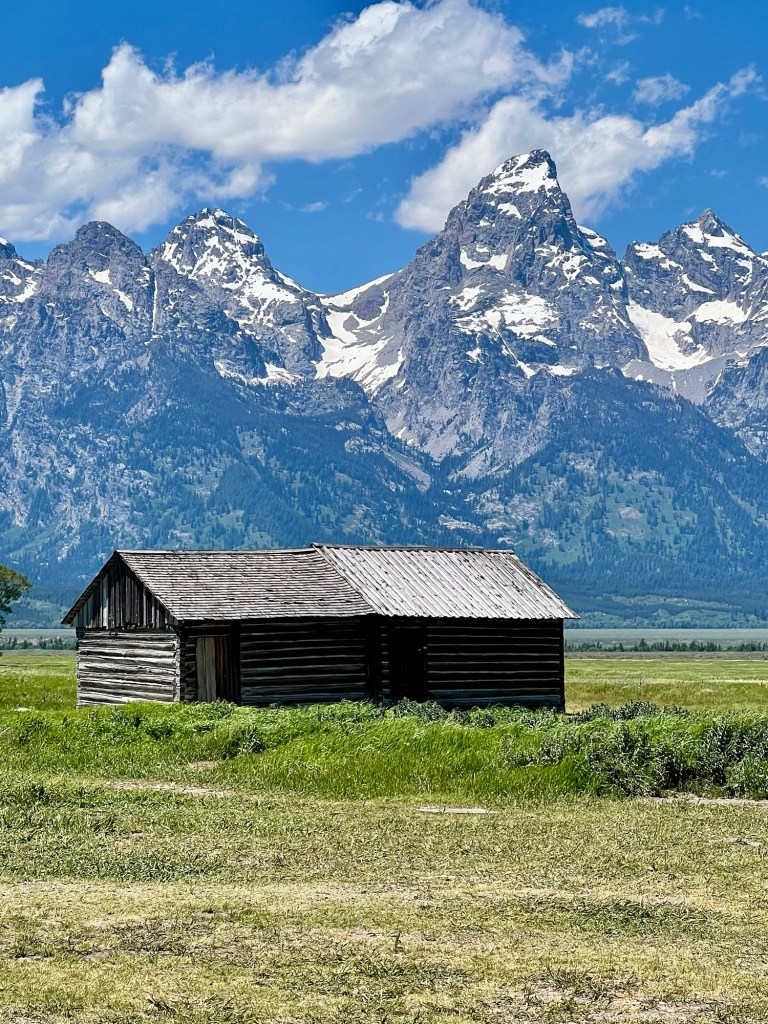
We also visited Mormon Row, which is an historic Mormon settlement at the southeast corner of the park. This settlement was largely constructed starting in the late 1890’s and many of the buildings are still standing. If you think about settling in Wyoming in the late 1890’s, it had to be really tough. The weather was brutal and there was no reliable water source, so the settlers grew crops using irrigation. Between 1896 and 1937, they dug ditches by hand and with teams of horses, building an intricate network of levees and dikes to funnel water from central ditches to their fields. In the winter, the ditches froze.

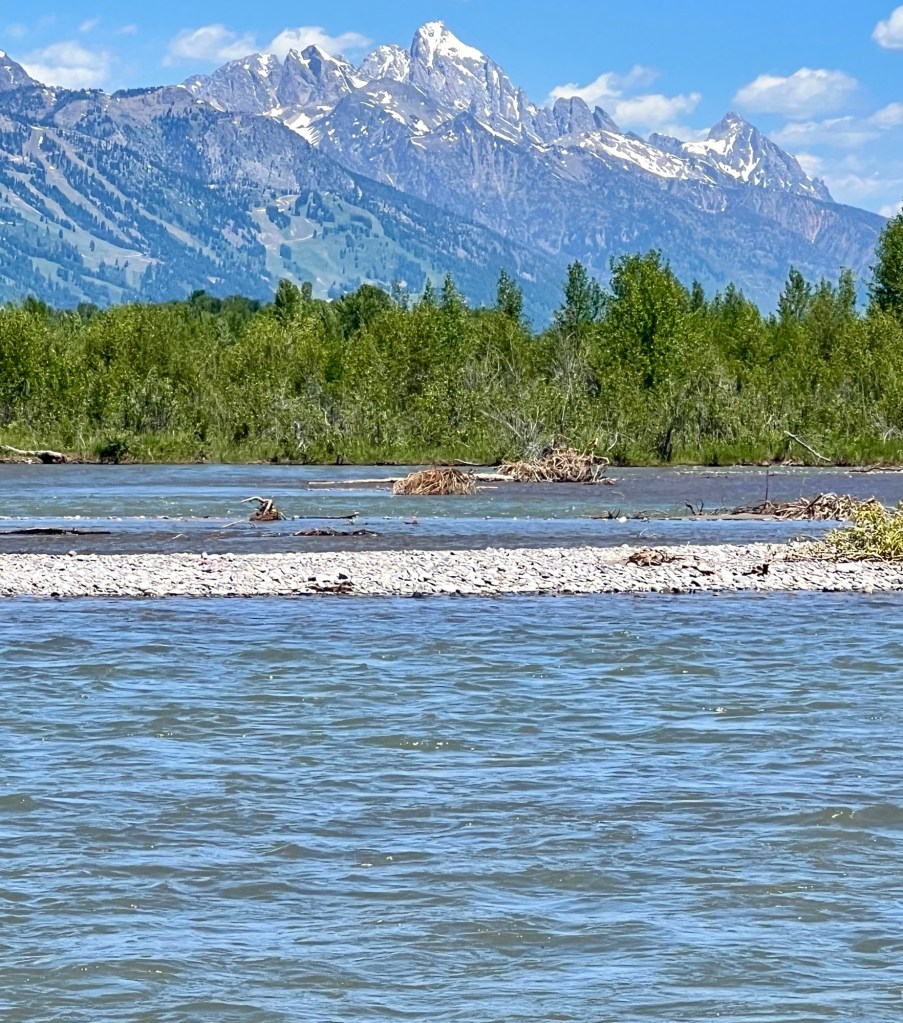
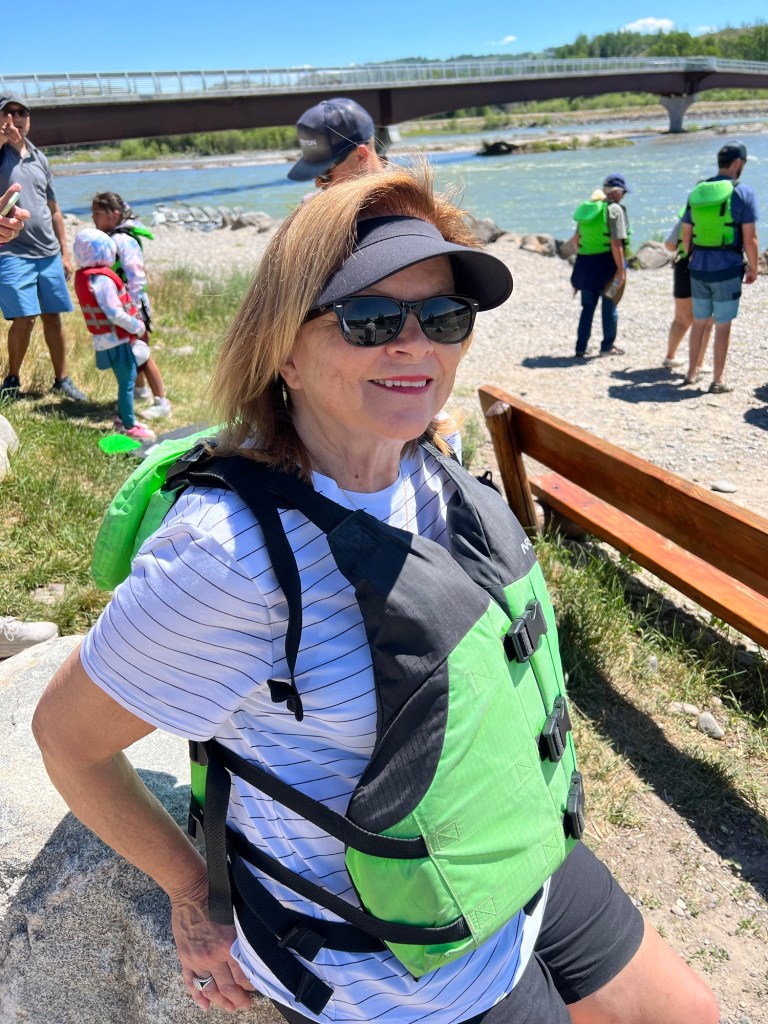
Today we went on yet another trip down memory lane, a raft trip down the Snake River. It was a raft with seats with backs, so much more comfortable than the raft trip we took with our three little girls back in 1982, where we all simply sat on the sides of the raft. I can’t remember a lot of details about that raft trip because it was 42 years ago. But I remember it fondly and I do have pictures at home of all of us on the raft that I will try to remember to post as a follow-up. Makes me wonder where all of those years went.

By the way, we were in a group with three rafts, eight people per raft. We realized after we got in our raft that they had grouped all of the senior citizens in our boat. You never think of yourself as old, but other people must notice.

Today our guide/pilot on the raft trip, Jojo, told us that we were going by Harrison Ford’s ranch, which is about 800 acres. He supposedly lives here at least part of the time. Not many people live full time in Wyoming—although it’s the 9th largest state, it’s the 50th state in population. It’s like everyone who first came here decided Wyoming was too cold and too harsh topographically and moved on to California.

Oh, and another thing Jojo mentioned was Grizzly 399. She is famous. She was born in 1996 and inhabits Grand Teton National Park. She is followed by as many as 40 wildlife photographers, has her own Facebook, Twitter and Instagram accounts. Well, a human set them up, but anyway. Her claim to fame is bearing 22 cubs and grandcubs, which is quite an accomplishment in the Grizzly world. She also often has triplets rather than twins. I am kind of sad that she has to be called 399 rather than Iris or Mary Ellen. We didn’t see her, of course, but I found a picture. She has apparently also had quadruplets.

Jackson Hole, Wyoming—June 23, 2024

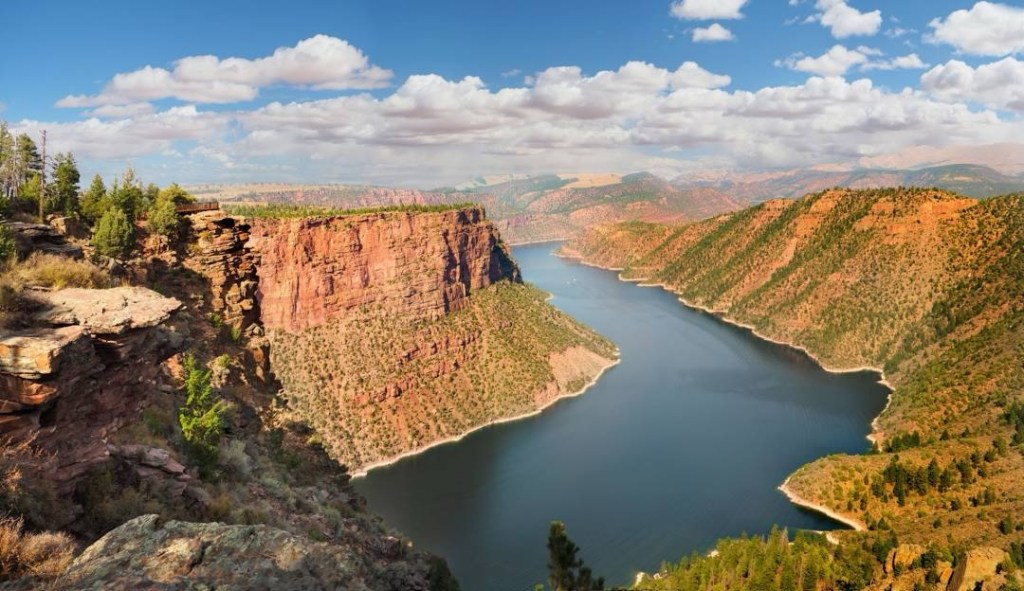
Yesterday we drove from Colorado National Monument about 170 miles northwest to Dutch John, Utah, where we camped in Mustang Ridge Campground. Mustang Ridge is on a high desert bluff above Flaming Gorge Reservoir. If you decide to peruse a map of Utah, Flaming Gorge Reservoir is at the far northeastern corner. We did take some pictures before we left Colorado National Monument yesterday morning:

Flaming Gorge in Utah

Today we drove to Jackson Hole where we have a VRBO condo rented for the next four nights. Unfortunately, when we arrived we found out the parking is very tight and oversized vehicles are not allowed (it was probably in the fine print). There was absolutely no place to park. Called the rental company and the guy who answered had zero idea of what we should do. Panic time. So, since we couldn’t park we headed back out the way we came.

As we were driving down the street we saw a woman in front of her house getting ready to take her dog for a walk. It was a cute dog—a springer spaniel, I think? All chocolate and vanilla with liquid brown eyes. Doug said, “I’m going to get out and ask her if we can offer to pay to leave this albatross in her driveway” (he did not say albatross, but that’s the word that came to my mind). I screeched, “Are you crazy? She isn’t going to let us do that!” So, I sat in the car pretending I was invisible while Doug got out and asked her. Her name was Judy and she has an interior design firm downtown. Judy said, “Sure!” She even felt sorry for us. I finally had to get out and overcome my feelings of complete and utter embarrassment at the idea of asking a complete stranger if we could park a huge white van in her driveway for four days. Heavens!

Judy was nice enough to offer to drive us downtown or anywhere we needed to go, but we decided that she had already done quite enough. So, we drove Vanna to airport, where we rented a Subaru Forester. Then we drove back to Judy’s house and parked Vanna in the big turn-around. And there Vanna sits for the next four nights while we have a lightened load with the Forester. I was completely done in after all of that, so I took a very long shower, washed and dried my hair, took two Tylenol and had to lie down for a bit.
Today driving up through Wyoming we saw several animal crossings. They are like a bridge or overpass over the highway, but they are for animals, not cars. To entice the animals to use the bridge (path?) they lay sod, plant greenery and fence the sides. On the road we were on every year thousands of Pronghorn and other animals migrate north and south a distance of about 150 miles between Grand Teton National Park and upper Green River Basin. There are animal crossings like this in several states. I didn’t know there was such a thing. Also, I have to wonder how the animals find the crossings?

So Vanna is safe and we took the Forester to town for dinner. (I’m not sure why my hand is in a fist looking like I am about to punch Doug).

Before I forget, if you are having trouble commenting, there’s place in the email you receive that tells you can reply to the email. If you do so, it both comes to me and it posts on the blog.

June 21, 2024–Colorado National Monument, Grand Junction, Colorado

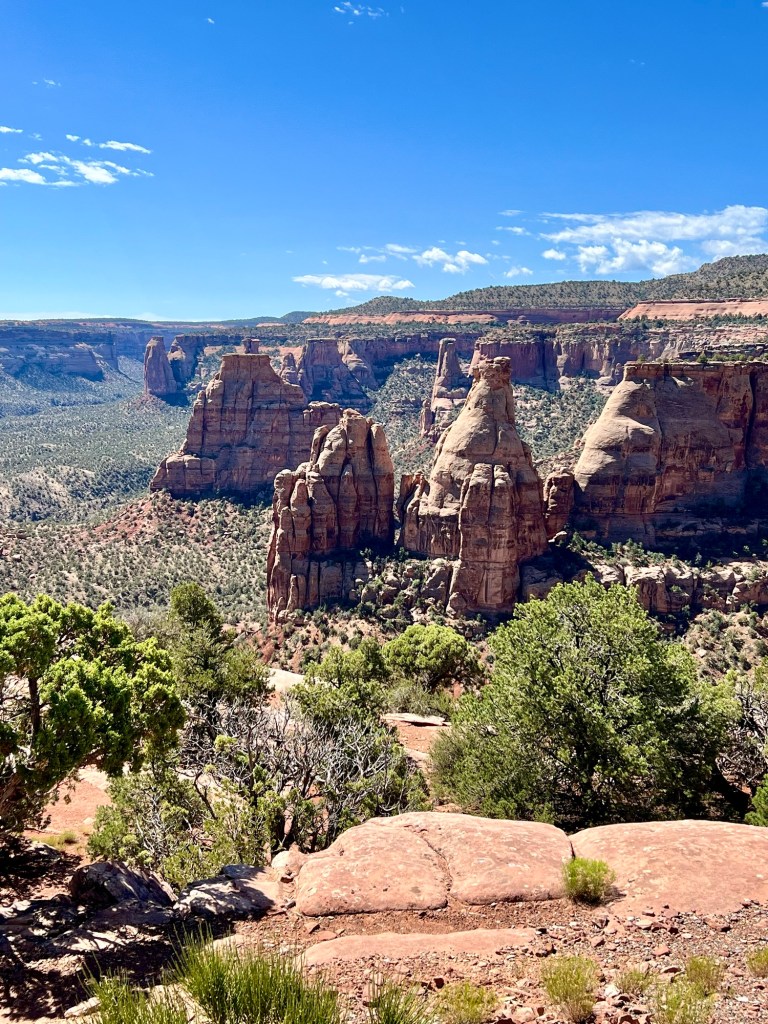
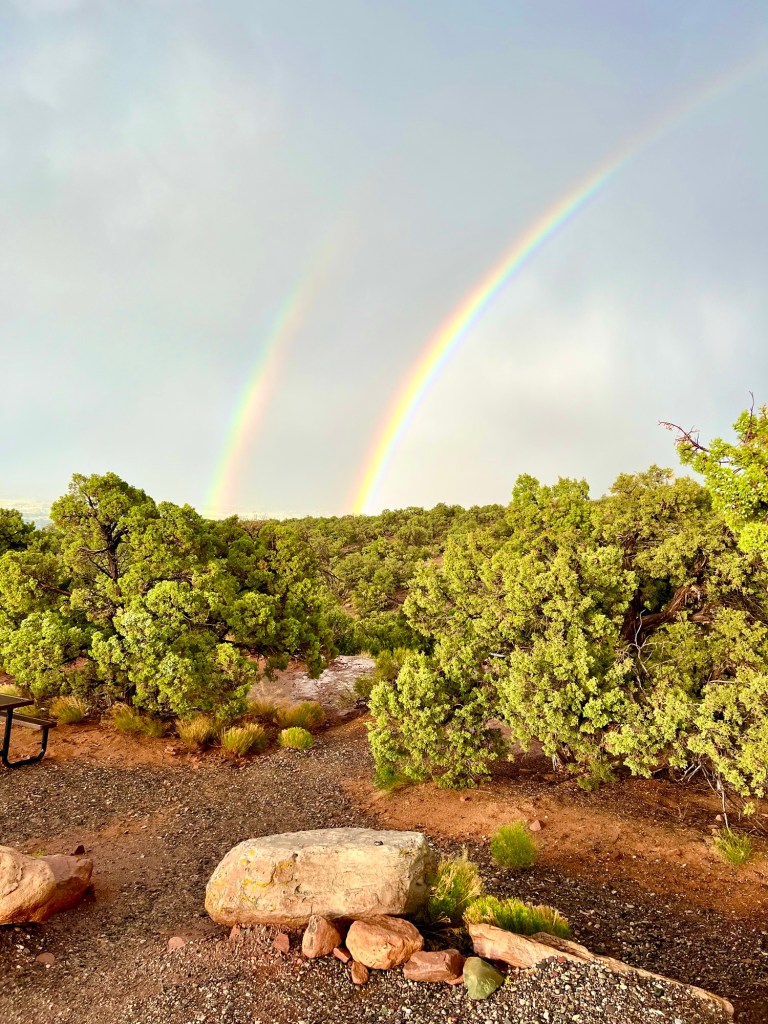
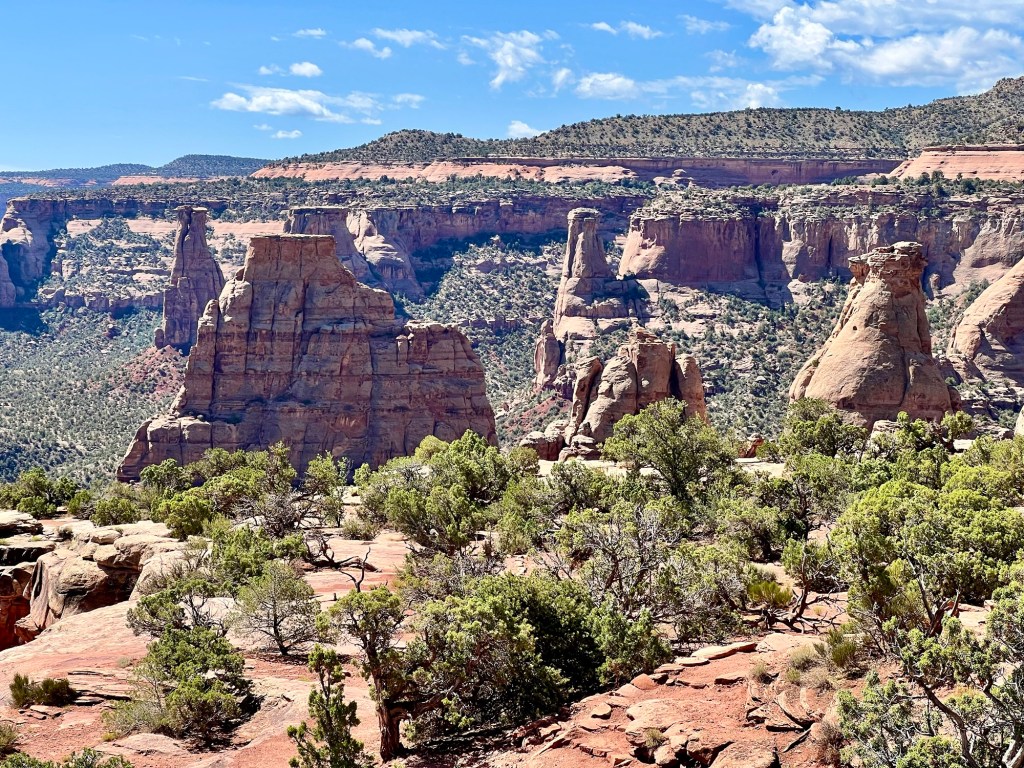
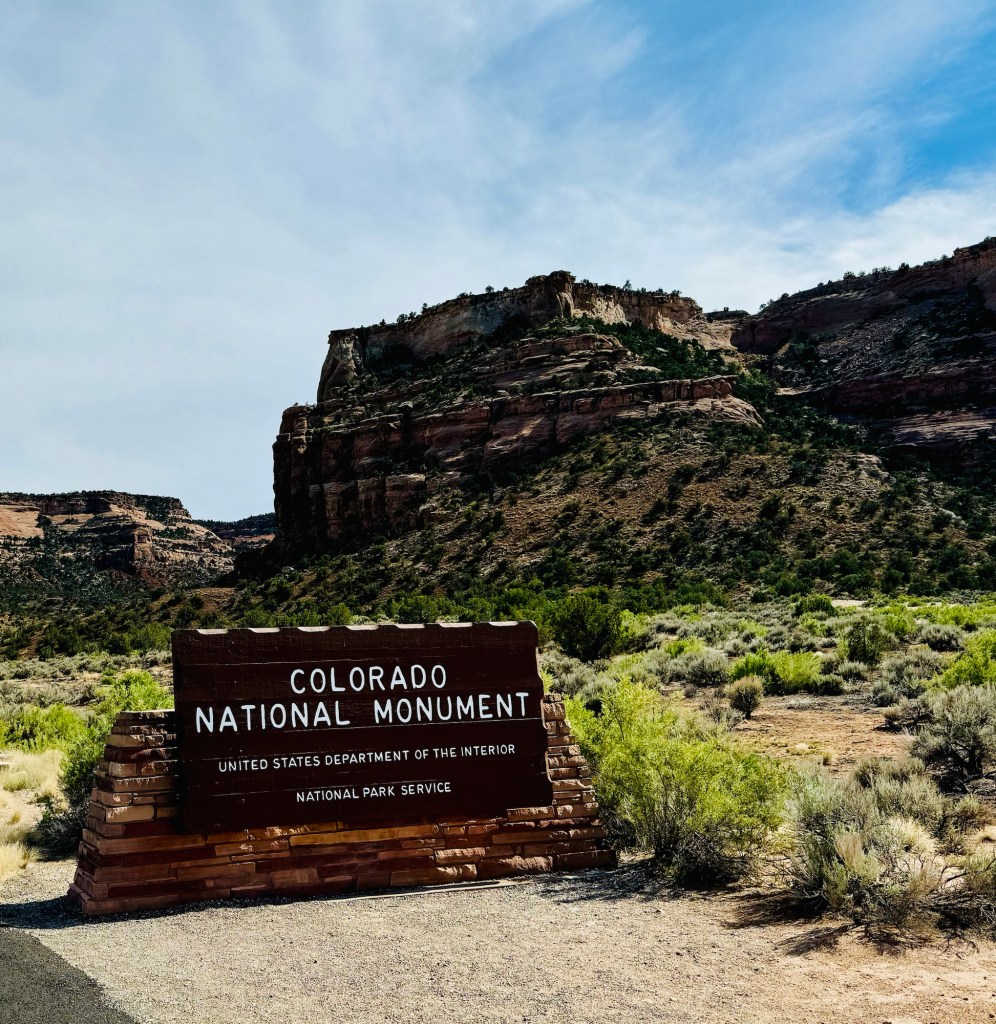
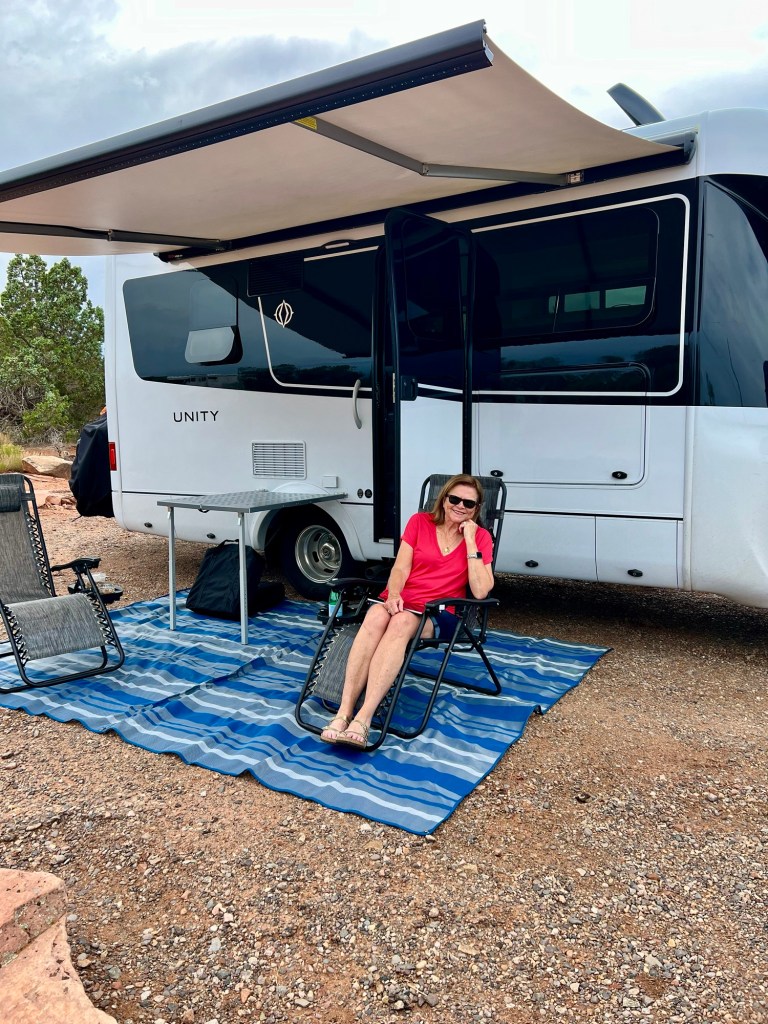
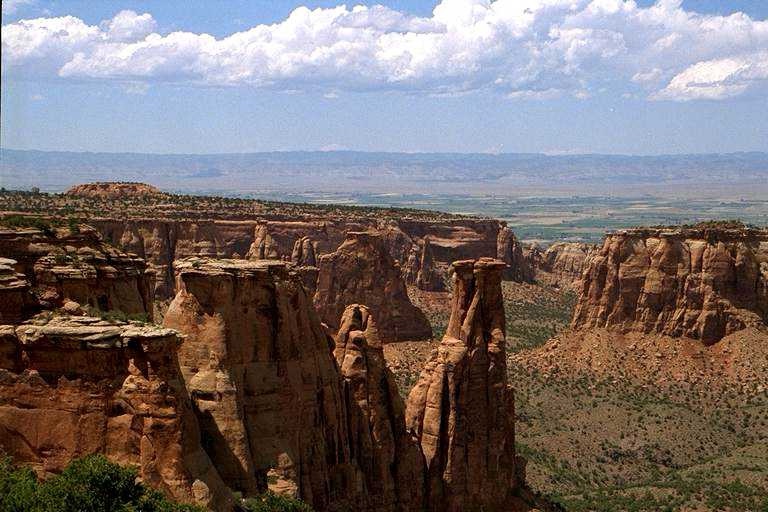
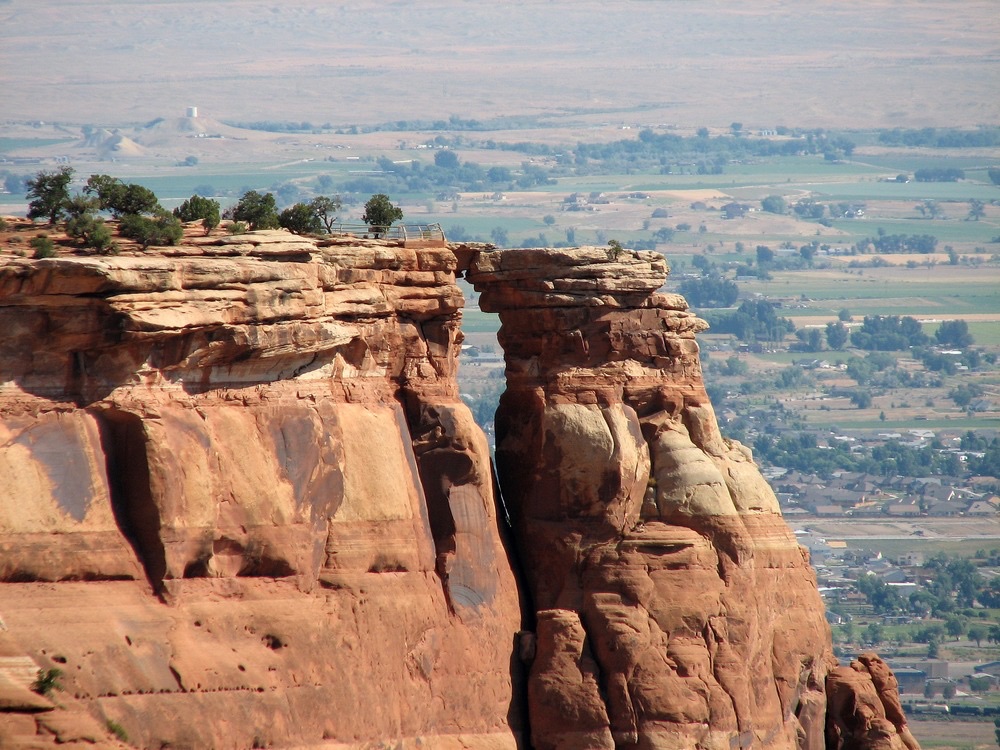
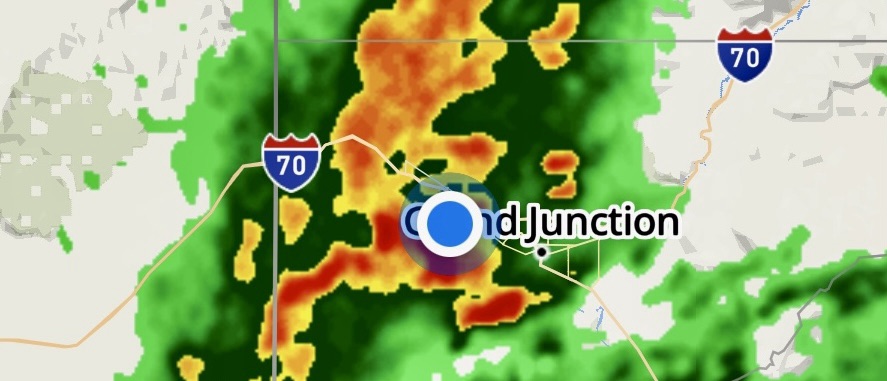
This morning we made the 180 mile drive from Durango to Grand Junction, where we are camping for the night at Saddlehorn Campground in Colorado National Monument. The area is hard to explain, but it is high desert and on a winding rim road in a series of canyons. Quite stunning. Pictures to follow (full disclosure: it is pouring down rain here, so I used a couple of stock pictures for effect). Also, we got all of our relaxation gear out just long enough to take the picture of me relaxing. After five minutes, we looked at the radar and rushed to put everything up. Not all that relaxing, after all.
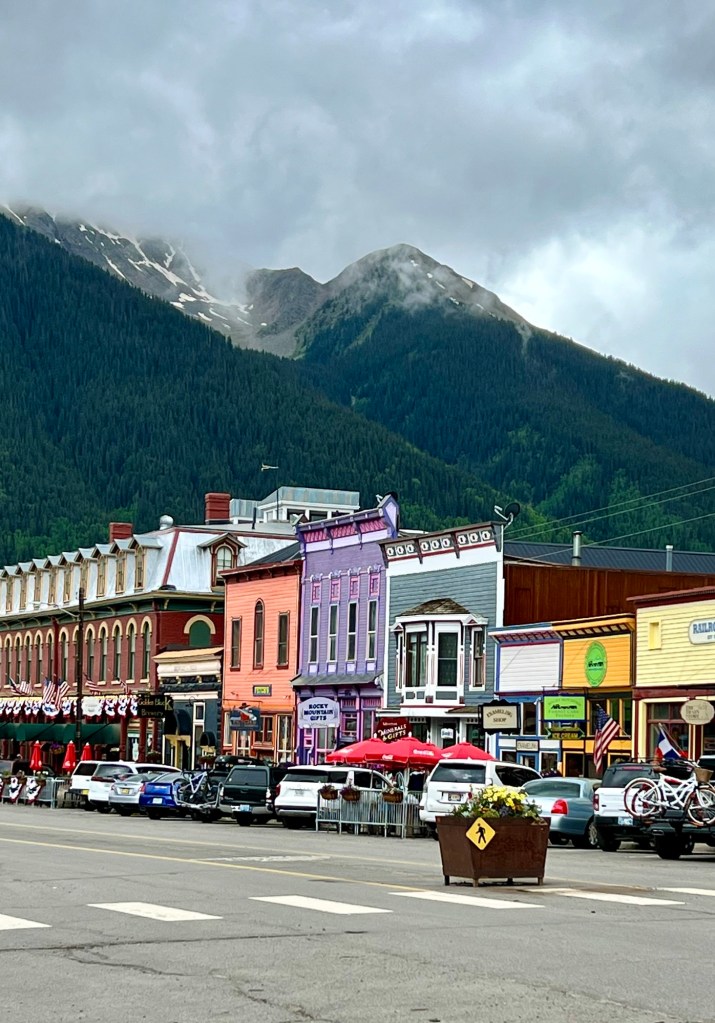
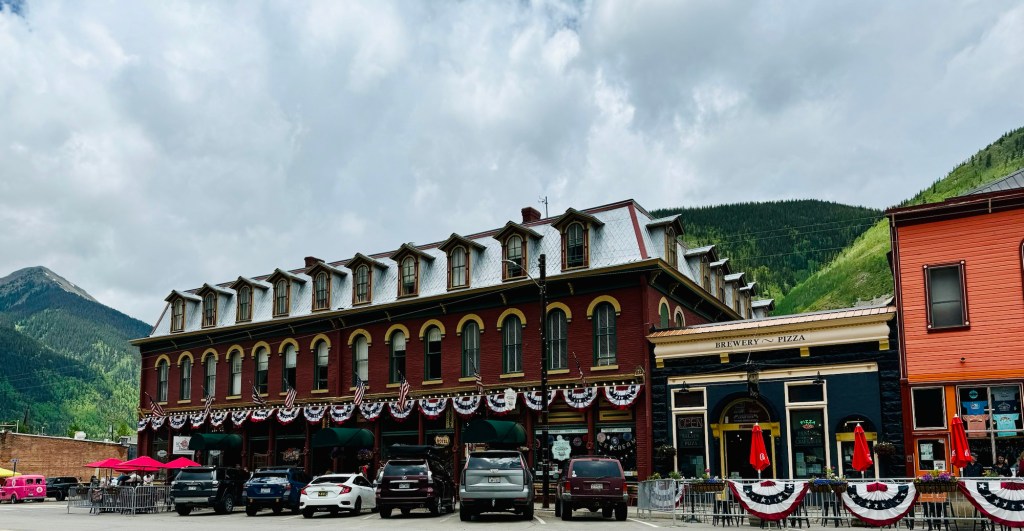
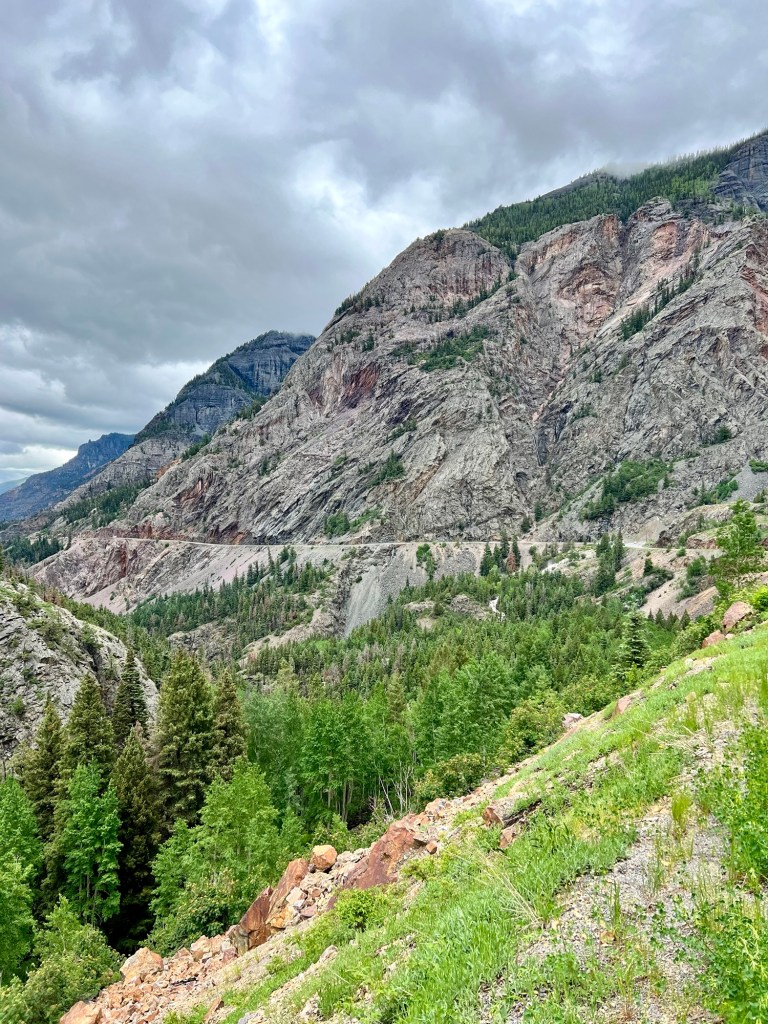
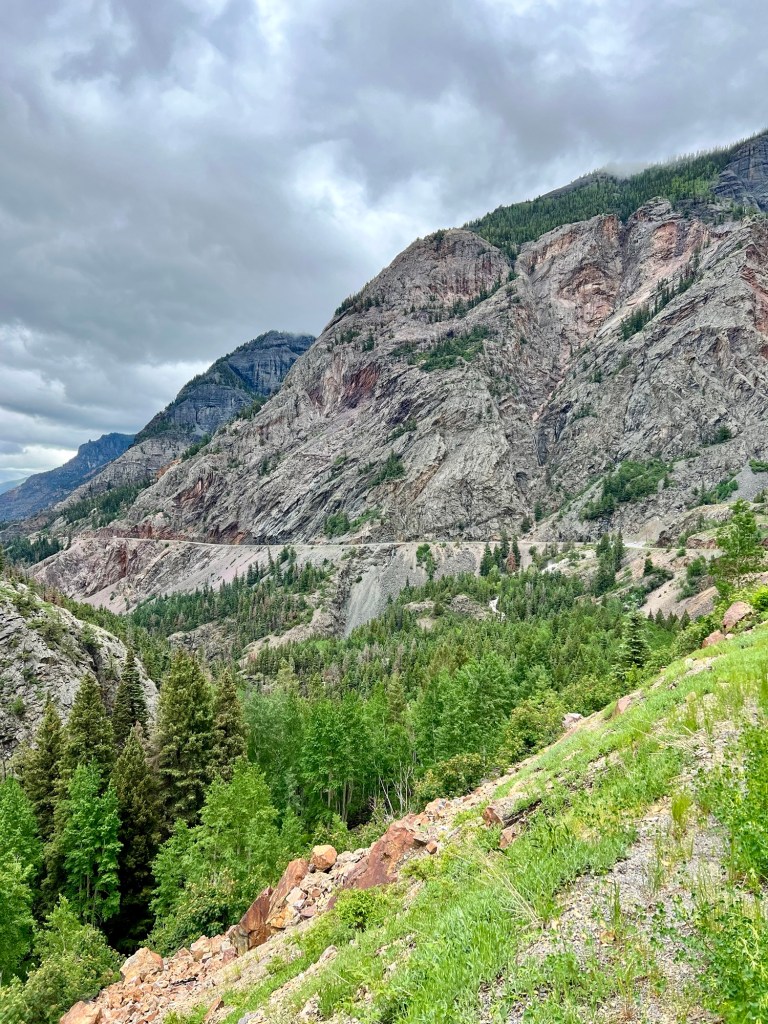
On our way up we drove through Silverton and on to Ouray via the Million Dollar Highway. Why is it called the Million Dollar Highway? Well, one of the legends is that the road was built using a million dollars worth of gold and silver, while another claims the nickname originates from an exhausted traveler who proclaimed: “I would not travel that road again for a million dollars!” Either way, the highway was completed in 1883, and it is notorious for its hair-raising twists and turns, narrow lanes, and steep drop-offs. The scenery is stunning.

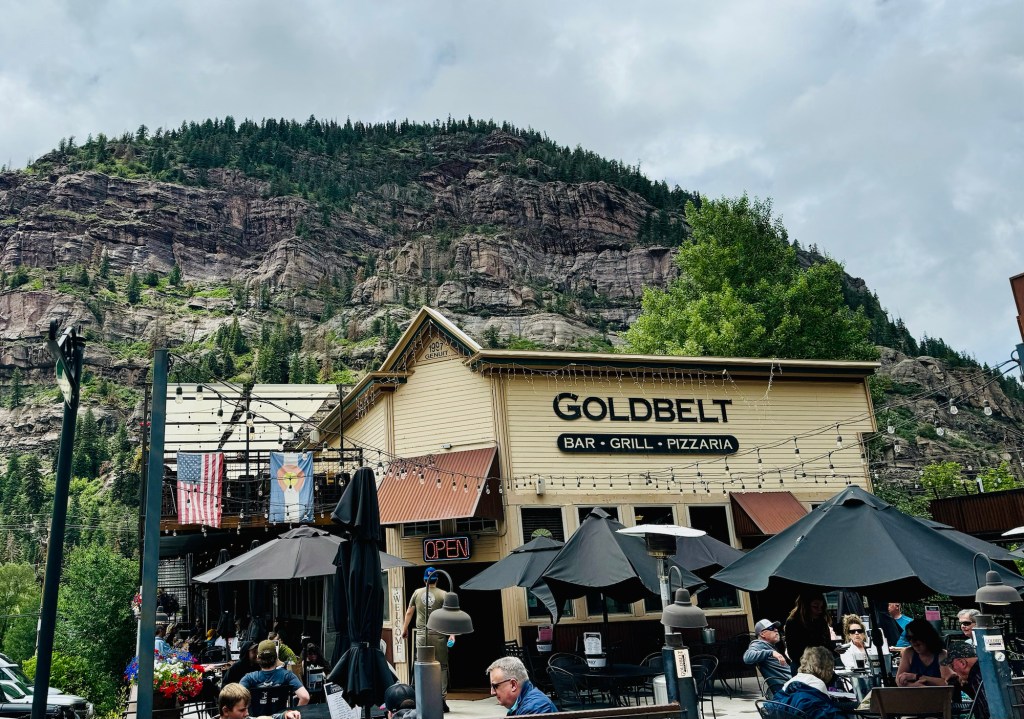
We ate lunch in Ouray at another off the grid place:

I know this is a travel blog, but we have traveled in the west extensively over the years and so many places evoke memories of past trips. So, here is today’s trip down memory lane:

About 25 years ago we met my Mom and Dad in Ouray to camp for a few days. They pulled a travel trailer out here from Missouri and we flew into Denver and rented an SUV. We were supposed to tent camp, but when we arrived in Ouray it was pouring down rain. So we had to go to plan B, which was renting a crummy hotel room (Ouray is not known for its luxury hotels). The weather wasn’t that great for the entire trip, so we never did set up that tent.

When we woke on the third day of our trip, it was a gorgeous day: bright and sunny, and crystal clear—the kind of day you only get in the low humidity, brilliantly lit west. That morning all four of us set out on a trip to Silverton on the Million Dollar Highway. It’s about 25 miles long and we had only gone about 3 miles when Mom started hyperventilating. She was petrified on that road. Doug and I were at a loss, but Dad said to Doug, “Let’s take her back.” She was happy to go back, so we dropped her off (not on the side of the road—we took her back to their campsite) and Doug, Daddy and I drove on to Silverton. It wasn’t that we didn’t want Mom there (well, maybe a little because she was a pain about heights), but it was such a nice day. We took pictures of the gorgeous scenery, we shopped for a souvenir for Mom and we had lunch and excellent pie at a little place that claimed to have the “best pie in town” (I think it was the only pie in town). By the time we got back to Ouray it had started to snow. But that day up to Silverton and back stands out in my mind as one day that could not have been more perfect in any way.

By the way, the snow was pretty deep, so the next couple of days the four of us spent hours and hours playing hand after hand of Hearts on a little shaky round dining table in our crummy hotel room. Mom was ruthless at card games, so she kicked our butts repeatedly. Maybe she was paying us back for ditching her.

Blog at WordPress.com.

Up ↑