August 20, 2025–Leaving  Newport, Rhode Island

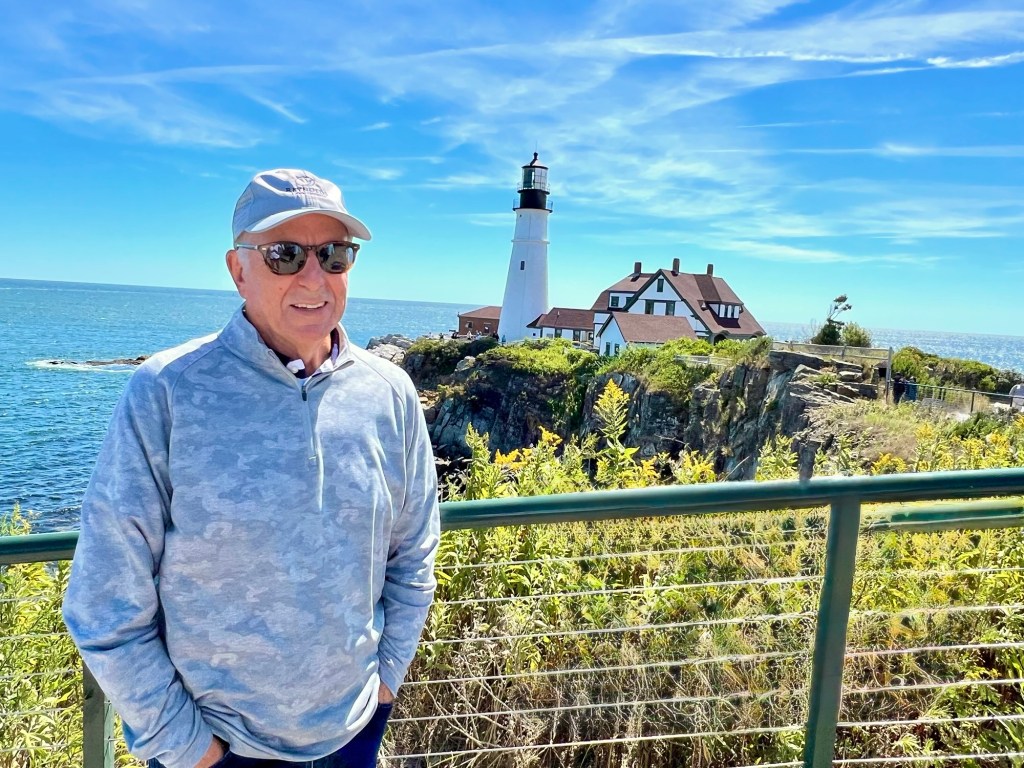
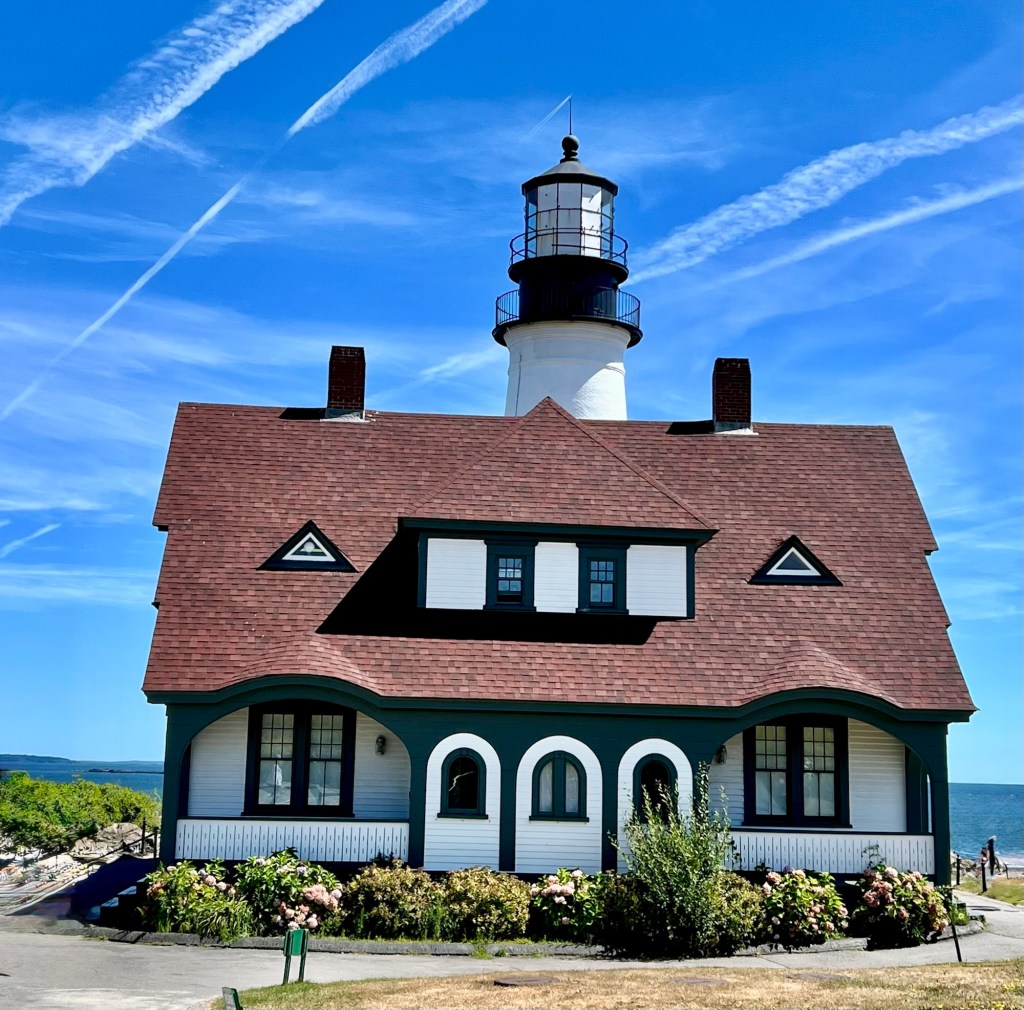
On Monday we drove from Portland, Maine down to Boston, and then on to Newport, Rhode Island, a distance of about 177 miles.  Before we left Portland we visited the Portland Head Light in Cape Elizabeth, Maine, which is a historic lighthouse that sits on a headland at the entrance of the primary shipping channel into Portland Harbor in Casco Bay, Gulf of Maine.  It was completed in 1791, and is the oldest lighthouse in Maine. 
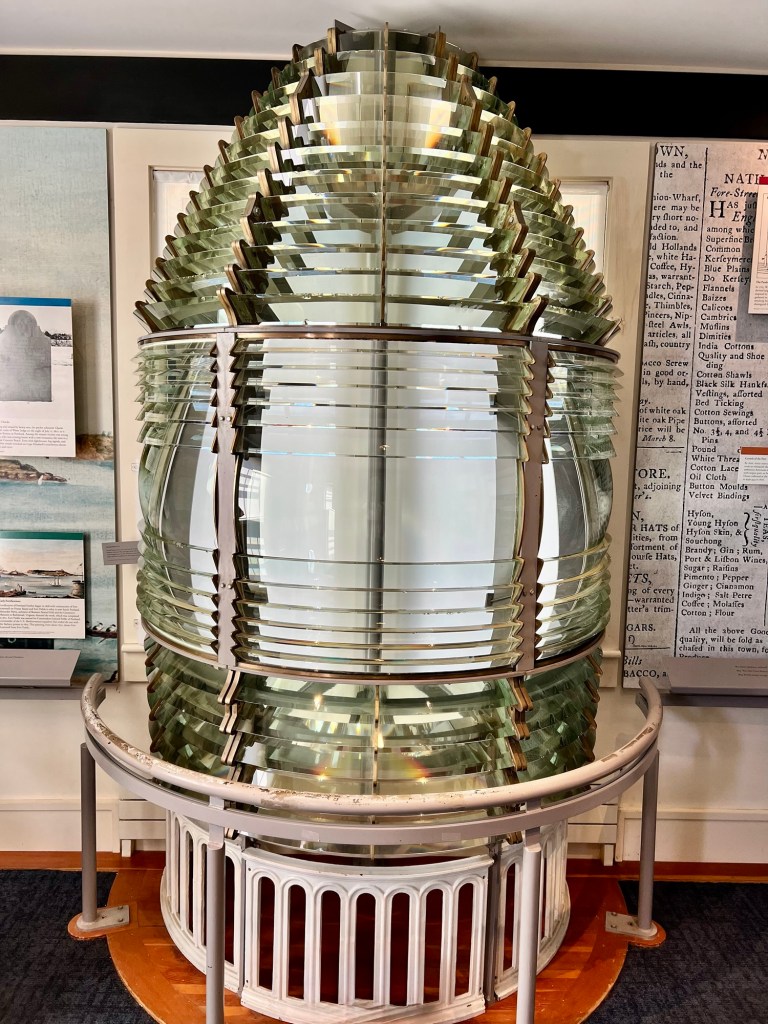
We visited the small museum there, which I was against on principle because I usually feel a pall of boredom wash over me when we go to most small museums. Like who cares? But Doug was insistent that we go because he would go to any museum, no matter how small or how lame. Surprisingly, this museum was well put together and interesting. Below is a picture of a Fresnel lens, which was a revolutionary invention that improved lighthouse illumination by using a system of prisms and lenses to focus light into a powerful beam. Pretty cool, right?
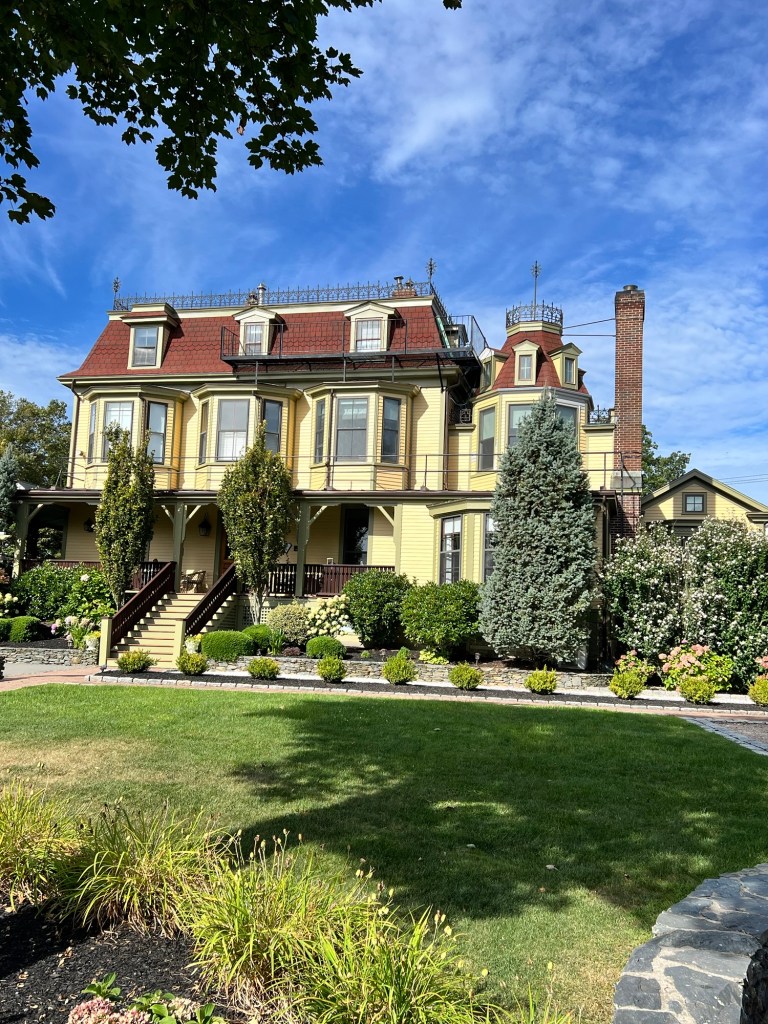
We had never been to Newport, and it was lovely surprise.  Newport is a seaside city on Aquidneck Island located on Narragansett Bay.  It is known as a New England summer resort and is famous for its historic mansions from the Gilded Age.  We stayed at the Cliffside Inn, an 1876 Victorian manor house. It’s called Cliffside because it’s right by the Newport Cliff Walk, which is a 3.5-mile public access walkway along the eastern shore of the island.  
Yesterday we walked the cliff walk about one and half miles to the Breakwaters, a Gilded Age mansion built between 1893 and 1895 as a summer residence for Cornelius Vanderbilt II.  We have toured many mansions on our travels, and this one was one of the most stunning houses I have ever seen.  The sheer opulence of it was almost unbelievable.  The largest Vanderbilt mansion is the Biltmore in Asheville at 178,926 square feet.  The Breakers mansion is 125,339 square feet.  Cornelius and George Vanderbilt (Biltmore) were brothers, so they must have had quite a serious competition going. The Biltmore is the largest house in the United States, so apparently George won.

Heading to Dover, Delaware today. Pictures of the Cliff Walk below:

August 17, 2025–Bar Harbor, Maine to Portland, Maine

On Friday we crossed back over the Canadian/US border and drove south to Bar Harbor, Maine.  The American border agent was a lot more stringent than the Canadian border agent.  He asked most of the same questions (no mention of firearms or using said firearms to shoot bears), but then he actually came inside Vanna and looked around to make sure we were telling the truth.  We had no contraband, so he gave us the go ahead.

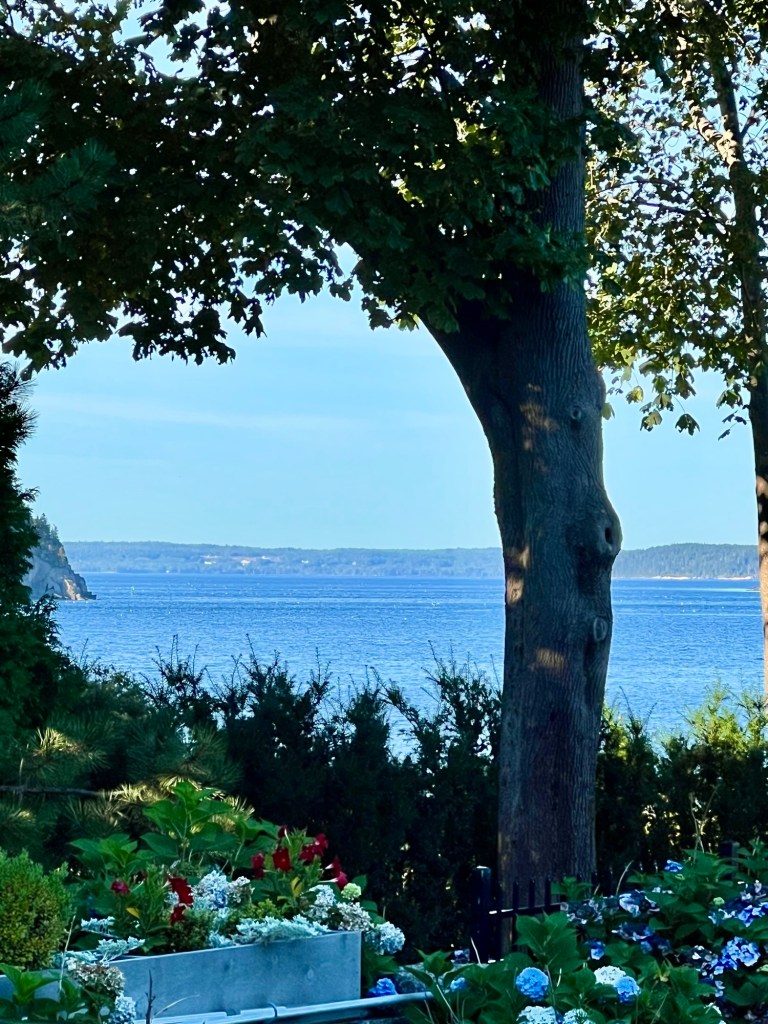
We stayed two nights in Bar Harbor at the Balance Rock Inn, a hotel that was built in 1903 as a home for a Scottish railroad tycoon.  It’s located right on the water on the coast of Frenchman Bay.  The first picture is a stock picture, so a bit blurry, but you can get a good idea of the hotel and its location.  The second picture is one we took last night of the Balance Rock in front of the hotel, which is how the original house got its name. 

We came to Bar Harbor some twenty years ago or so, but neither Doug nor I can remember much of anything but snippets about the trip.  We do remember eating lobster rolls, lobster bisque, broiled lobster, lobster salad, boiled lobster—you name it.  I never order lobster in Georgia, but it just tastes so much better in Maine. The first night at the hotel restaurant:

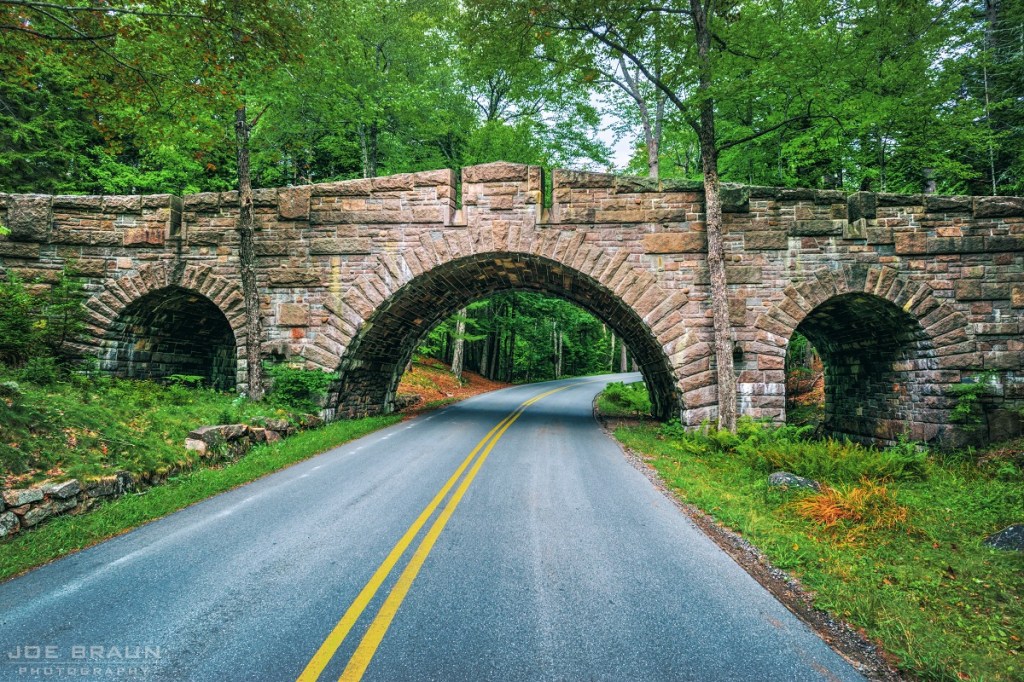
Bar Harbor is on Mount Desert Island, and in about 1890, the island became a summer resort haven for a number of wealthy families, including the Rockefellers, Carnegies, and Vanderbilts.  Between 1919 and 1931, John D. Rockefeller Jr, who was opposed to the introduction of automobiles on the island, personally oversaw the construction of a network of carriage roads, closed to motorized vehicles, on the eastern half of the island, including sixteen granite bridges and two gatehouses.  The entire project resulted in the construction of more than 50 miles of roads, sixteen bridges, and two Tudor Revival gatehouses.  47 of those miles are now in Acadia National Park.

Today we drove through the park before heading south to Portland.  Doug remembers that we visited Acadia on our first trip and climbed Cadillac Mountain, the highest peak on the Atlantic Coast.  The trail is listed as moderate, but the literature says that the trail is mostly granite, with some potential for “scrambling,” which in this case means climbing up and over big rocks.  I think my scrambling days are over.   And anyway it’s a moot point, because RVs are not allowed up Cadillac Summit Road.  The pictures below are of the Jordan Pond Gatehouse and the Stanley Brook Bridge, both part of the original Carriage Trail. They are stock pictures because the park was so busy we couldn’t find any place to park stupid Vanna. Anyway, I knew you would suss that out once you saw the brilliant orange fall leaves. Not a common sight in August.

Tonight we are staying at the Higgins Beach Inn, which the blurb online describes it as emanating the charm of a quintessentially Maine oceanfront hotel.   Meaning quirky and old school, I guess. Tomorrow we head to Newport, Rhode Island.

August 12-14, 2025–Quebec to Saint John, New Brunswick

We have been in Canada for the last five nights, and have one more night here in Saint John before we head to Bar Harbor, Maine tomorrow.  After staying in a hotel at Niagara Falls the first night, we have been camping since.  For all of you non-campers, which is probably most of you, we have found that KOA Campgrounds in the United States are a step above the others, with more trees, more privacy and nicely kept grounds.  They cost a little more, but they are usually worth it.  This is not the case in Canada.  Each night our KOA campground has been just a little more hard to take, culminating in last night’s site when we stayed on Prince Edward Island.  It seemed like we were in a wagon train of Conestogas on the prairie (read field) rounded up together, ready to fight off wild wolves or hostile natives.  

Our first night we camped in the KOA of the Quebec Redneck French Riviera.  Not really, but we were at a KOA, we we were in Quebec, and our fellow campers spoke French.  We were actually at Levis-Saint Nicole, Quebec at the KOA Holiday Campground.  Being there reminded me of Doug’s mother, Florence, who was an imaginative, fun and witty woman.  She was also quite interested (maybe a little bit too interested) in the people around her and their shenanigans.  Florence would have loved the place because there were so many people there, all from a hardcore camping background and perspective.  It was a study in humanity.  A Holiday KOA means that the place has a swimming pool, a couple of trampolines, a laundry, a community center/Cabana, plus a crappy pizza restaurant.  People who camp at Holiday KOA’s hang out at the swimming pool or by their campers all day long and then they string up a makeshift clotheslines by their campsite to hang their wet towels and bathing suits on at night. They visit each other.   I know.  You all are thinking, “Boy, Ann is a complete snob.”  Yep.  But I kind of like the camaraderie other campers have.

We drove through a little town called Alma on the coast today and had lobster rolls.

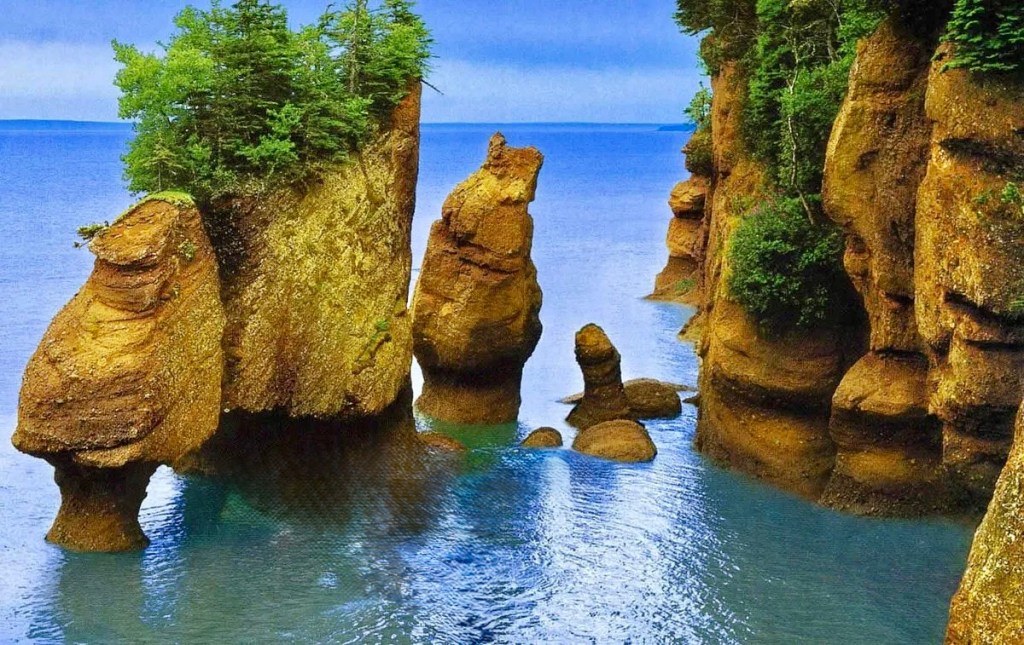
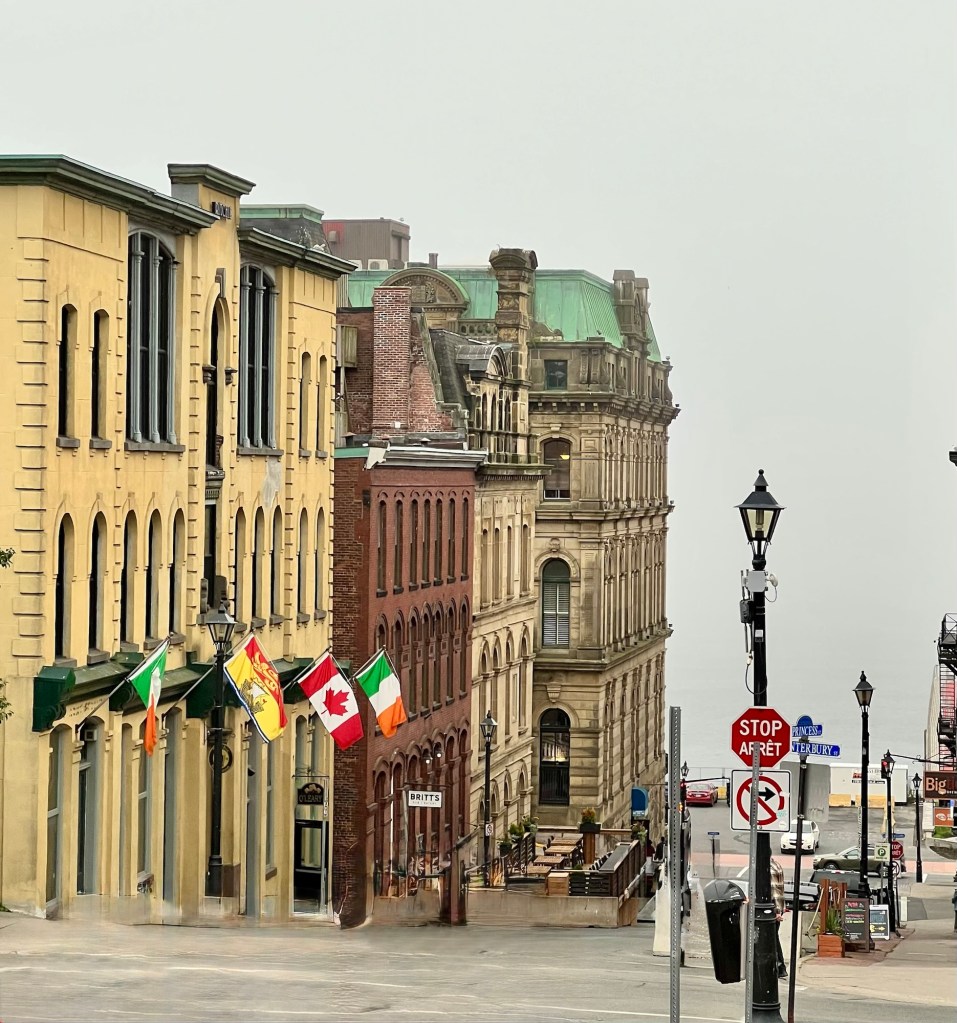
Tonight we are staying in a Hampton Inn in a beautiful little town on the coast, Saint John.  Saint John is where the Saint John River meets the Bay of Fundy.  The Bay of Fundy is a body of water between the Canadian provinces of New Brunswick and Nova Scotia. The tides have the greatest shift in the world — up to 50 feet every 6 hours and 13 minutes, higher than a four-story building.  Did we read about the Bay of Fundy in the history of the War of 1812?  Maybe, but my history buff readers will have to comment on that. First set of pictures are of the Bay of Fundy, low and high tide. Second set of pictures are in Saint John tonight.

We are headed south across the border into the United States tomorrow.

August 10, 2025–Canada: Niagara Falls, Ontario, to Cardinal, Ontario

Yesterday we drove from Erie, Pennsylvania to Niagara Falls on the Canadian side.  When we crossed over the border to Canada, the border agent asked if we had alcohol or firearms in Vanna.  (Well, she actually said RV, but I never call Vanna an RV.)  We said we have a couple of bottles of wine, but no firearms.  She said “Well people (she meant Americans) like to come up here and camp, and they bring their guns because they think they are going to shoot a bear.”  Huh?  Who tries to take firearms across a border into another country so they can shoot a bear?  Are there that many ignorant, gun-toting, wild animal killers running around in RV’s out there?  (No, I didn’t voice these questions to the agent because I didn’t want her calling the Mounties on us.)

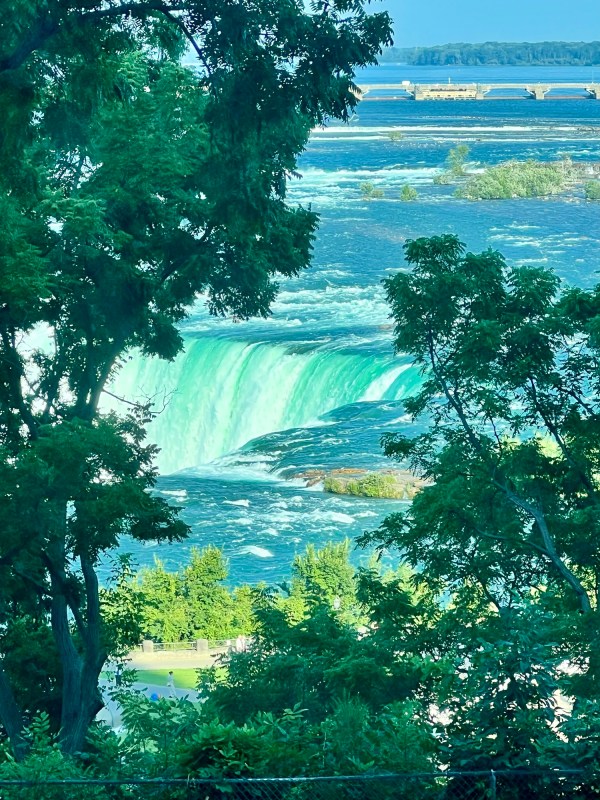
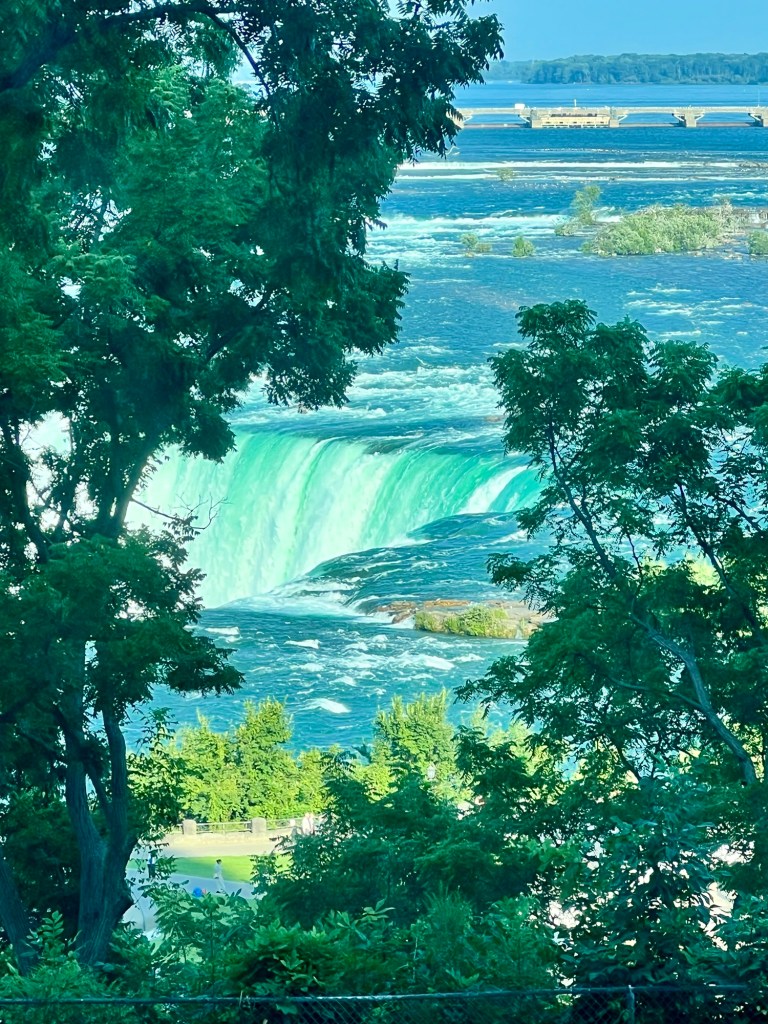
Last night we stayed at the Falls View Marriott, which did have a spectacular view of the falls.  I have always wondered why people go on honeymoons to Niagara Falls, so I looked it up, and AI (which kind of drives me nuts) says it’s still considered the honeymoon capitol of the world.  Under the caption “Early Romantic Appeal” it says, “The falls’ natural beauty and romantic ambiance attracted couples, with notable figures like Napoleon Bonaparte’s brother honeymooning there.”  You mean Napoleon Bonaparte’s younger brother, Jerome?  In 1804? Uh, gosh, that was quite a few years ago, AI.  I think we are milking that connection. The falls are astounding, awesome, and even awe-inspiring, but I did not find them romantic.  Last night from our hotel:

By the way, people have gone over the falls either purposely or accidentally in barrels, kayaks and boats with varying degrees of success. There are no real statistics, but the vast majority of the events have ended in death. Many people have walked a tightrope across the falls as well. The last person to walk a high wire over the falls was on June 15, 2012 when Nik Wallenda, a 7th generation member of “The Flying Wallendas,” crossed Horseshoe Falls. Nik walked on a 2-inch-wide steel cable that was 1,800 feet long and 200 feet above the falls.  He started from the American side, successfully crossing to the Canadian side in about 25 minutes.  He apparently presented his passport when he arrived in Canada (you know those Canadians.  They are sticklers about their border).

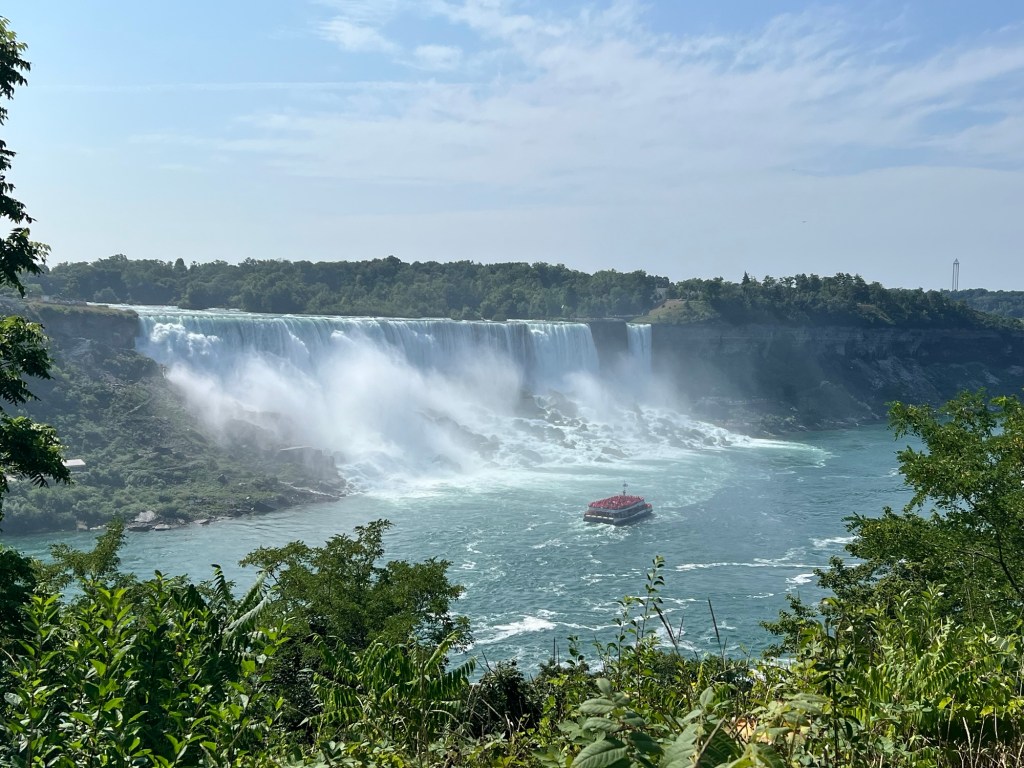
A couple of pictures from today before we headed out:

Tonight we are at a KOA campground in the tiny town of Cardinal, Ontario, close to the St. Lawrence River.  The closest American town, Ogdensburg, New York, is 11 miles away and at the northern most part of New York State.

Tomorrow we head to Quebec City, Quebec.

August 8, 2025–Charlottesville, Virginia to Erie, Pennsylvania 

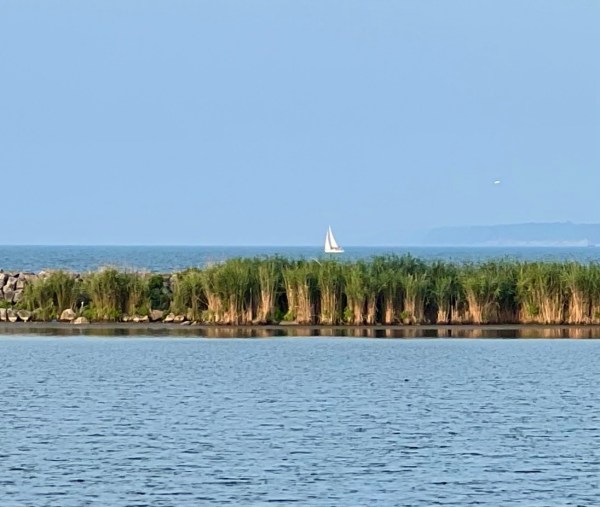
Tonight we are camping at Lampe Campground and Marina in Erie, Pennsylvania on the shore of Lake Erie.  The first picture is how it looks when you are lolling in a lounge chair by Vanna. The second picture is if you get up and walk over to the ugly chain link fence and look at the view.

We just came from Charlottesville, where we stayed for a couple of nights in a new hotel that is pretty much in the middle of the campus of University of Virginia.  In case you are wondering, we didn’t really know that our hotel was located on the campus.  We mostly look for hotels that aren’t right downtown because we have to consider Vanna’s size.  But the UVA campus was stunning, so it was a nice place to be.  

Yesterday we visited Monticello, Thomas Jefferson’s historic home.  We went on a tour of the house with our guide Elliot, who was a loud, fast talker.  Elliot raced through his spiel in an almost robotic manner.   It was kind of like being verbally assaulted for 45 minutes.  I won’t bore you with all of the details, but Jefferson began the building the house in 1768 and finished the final version in 1809.  Yes, that’s a 41 years long project.  

Another factoid is that the house is made to look like a one story structure, but it’s actually three stories.  Jefferson thought this style would be both more aesthetically pleasing and more in keeping with its natural surroundings.  This made the inside of the house kind of puzzling, if I may be so bold as to comment on such a historic and illustrious house.  Super high ceilings on the first floor, low to the floor windows on the second floor and mostly skylights on the third floor.  It has been reported that Jefferson never went upstairs, so there are two steep, treacherous staircases hidden in alcoves on each side of the house.  I guess he just didn’t want to remember that the house had an upstairs. The first picture is of the front of the house. Notice the tall windows with the smaller stacked windows above. Those are the second story windows. The second picture is a bedroom on the second floor with said low windows. The third picture is of the back of the house, which is actually prettier than the front. The fourth picture is of Jefferson’s study.

So I did end up boring you with the details after all.

August 6, 2025–Northeast Odyssey, Part 1: Greensboro, Georgia to Fancy Gap, Virginia

On Sunday, August 3rd, we began yet another exciting adventure in Vanna White beginning in Greensboro, Georgia, heading to North Carolina, Virginia, Pennsylvania, New York and on to Canada. After that we head down the eastern seaboard to Maine and points south until we reach Georgetown, South Carolina, and then on back to Greensboro. It was raining when we left, and it has rained off and on the last four days thanks to Tropical Storm Debbie.  Or is it Dexter?  Can’t remember.  Surprisingly, we get the tail end of many hurricanes and tropical depressions in the southeast, even though we are about 200 miles from any coast.   

We spent the first two nights in Asheville, North Carolina at the Grove Park Inn.  The Grove Park Inn was built in 1913 in the arts and crafts style, originally with 153 rooms, which was quite large for that time.  It has a storied history, complete with resident ghosts and visiting authors, movie stars and presidents.  F. Scott Fitzgerald spent the summers of 1935 and 1936 at the Grove Park while Zelda was in a psychiatric facility in Asheville.  Poor Zelda.  

The most famous ghost of Grove Park Inn is the “Pink Lady,” a young woman who fell from the fifth floor balcony in the 20’s and died on the Palm Court Floor.  The “Pink Lady” ghost version is often described as a blonde woman in a pink sequined dress, sometimes enveloped in a pink mist or glow.  She is said to be friendly and may offer assistance, particularly to children. Sometimes she plays harmless pranks, like turning lights and electronics on and off, rearranging items and tickling people’s feet. Her room was #545.  We stayed in room #546. 

If you ever visit Asheville, you just have to see the Biltmore Mansion and Gardens.   The house is a Chateau style mansion built for George Washington Vanderbilt II between 1889 and 1895.  It is the largest privately owned house in the United States at 178,926 sq ft of floor space and 135,280 sq ft of living area.  It is still owned by George Vanderbilt’s descendants and is one of the most prominent examples of the Gilded Age Mansions.  We did not go in the house this time because it’s huge, exhausting and we have already seen it several times.  But it is impressive. We did walk the gardens and visit the winery.  

In case you are wondering, the after effects of Helene from September 27th, 2024 are still quite evident in and around Asheville.  For instance, Biltmore Village, which is close to the Biltmore House, is a sweet little historic area with an old village church, historic buildings, and locally owned shops and restaurants.  Helene just completely wiped the town out.  All of the buildings are still there but they are now empty.  The cobblestone streets are empty.  It’s like a ghost town. So sad.  

Last night we spent the night in Vanna at the Fancy Gap KOA campground in Fancy Gap, Virginia right off the Blue Ridge Parkway. As a side note, Fancy Gap is not all that fancy. We planned to take the Parkway from Asheville to Fancy Gap, but there was a lot of damage to the Parkway from Helene and most of the Parkway is closed in North Carolina. A section of it will open this fall, but a large part won’t be repaired for at least another year.

Next stop: Charlottesville, Virginia.

January 18, 2025–Aruba to Fort Lauderdale

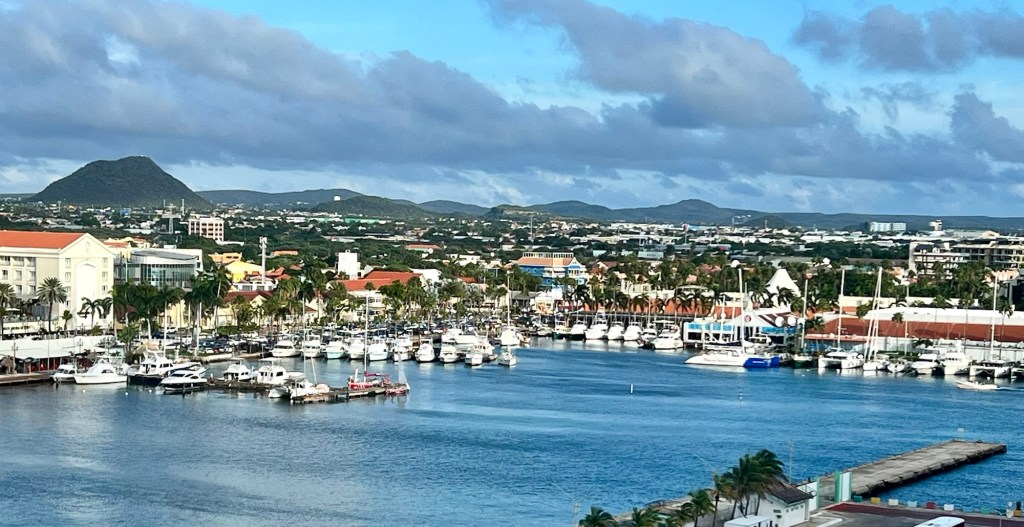
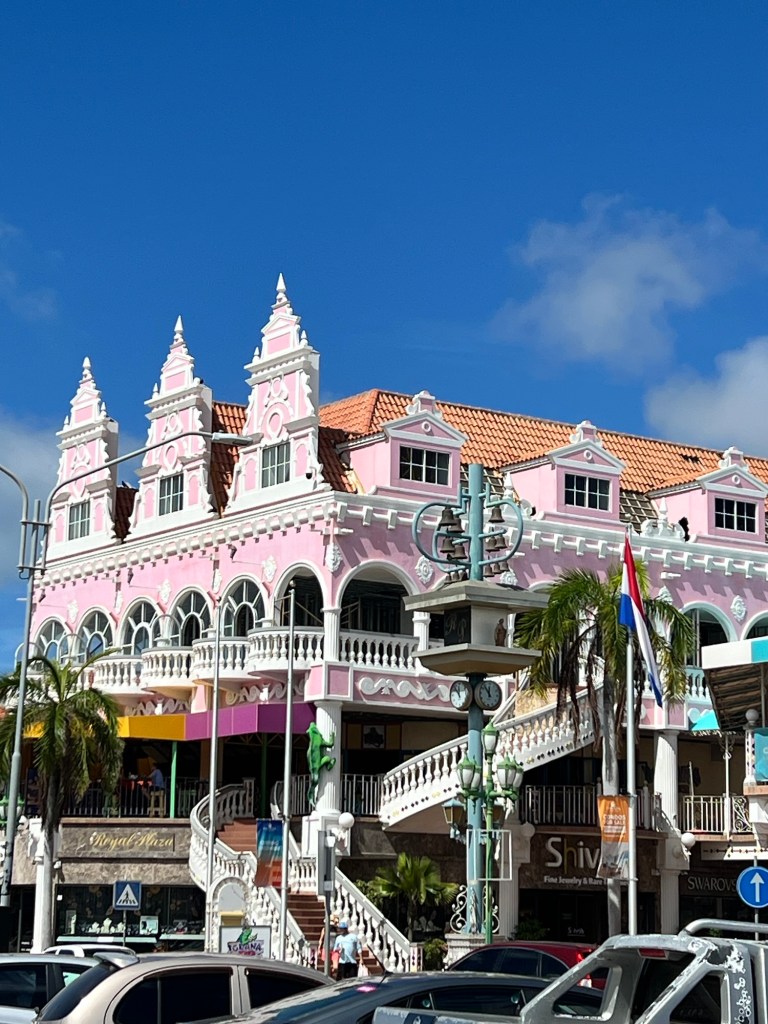
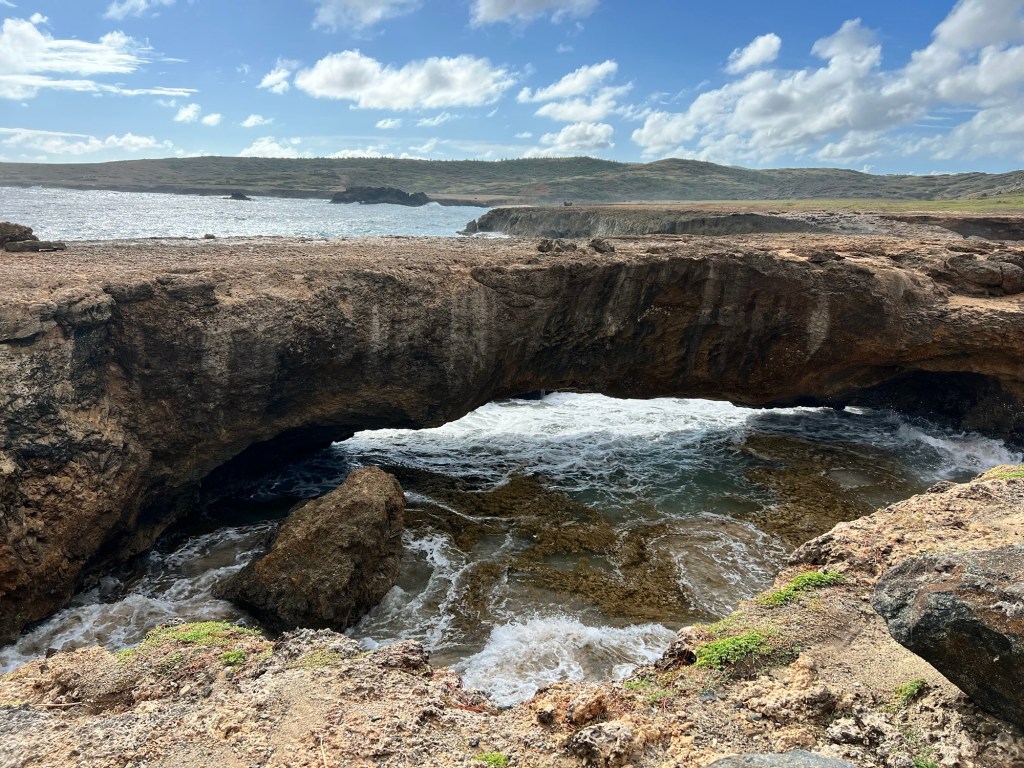
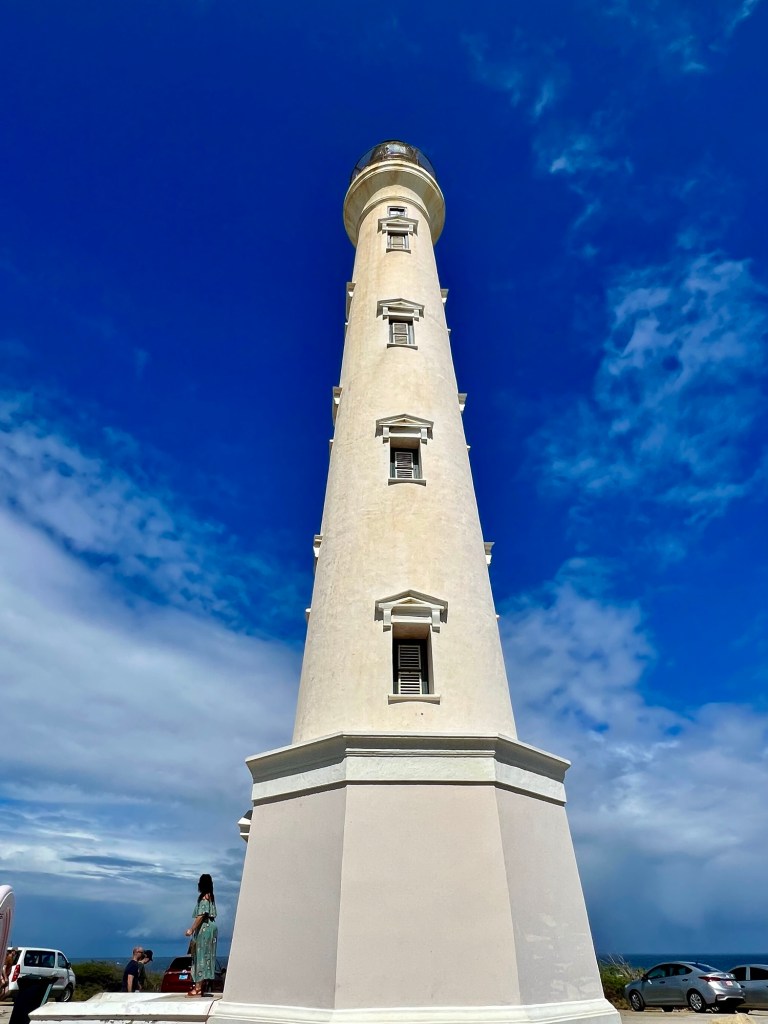
On Wednesday we were in Aruba, a Caribbean island that is part of the Kingdom of the Netherlands.  Unlike many Caribbean islands which are lush and mountainous, Aruba is flat and desert like. And Aruba is also tiny—only about 6 miles wide and 20 miles long, with a population of about 108,000 people.  Geographically, it’s about 18 miles off the coast of Venezuela.  The official language of Aruba is Dutch, but the local people speak Creole or English.  The major industry is tourism, so the beaches are lined with hotels and restaurants.  I think the biggest draw is the beach and water sports.  

We went on our usual tour of the history of Aruba and truthfully, I didn’t absorb much.  In a nutshell, it was the same old story of the Spanish conquistadors marauding the island, enslaving the natives, and sending all of the gold they found back to Spain.  Later on, the Dutch ended up occupying Aruba.  

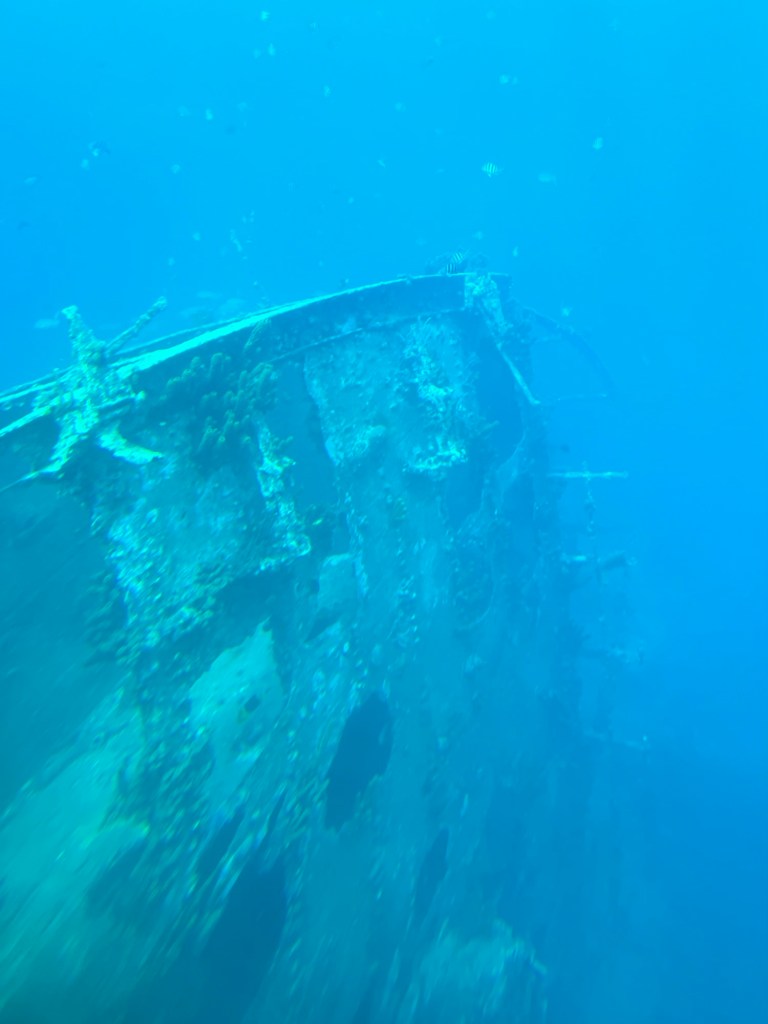
The “highlight” of our tour was a ride in a semi-submarine to look at the shipwreck of a German cargo ship, the ES Antilla, which sank off the coast of Aruba in 1940.  The ship was in the harbor on May 10 when Germany invaded the Netherlands, so the Dutch government ordered the seizure of all German ships in the Dutch Antilles.  The Germans didn’t want the ship to fall into enemy hands, so the crew scuttled the ship by opening the seacocks and setting it on fire in several places.  (It isn’t often that one gets to use the word scuttle.)  The German crew of 35 men were sent to Jamaica and interned for the remainder of the war.  

I had to look up all of this information about the shipwreck, because the tour guide on the semi sub was too involved in performing a standup comedy routine directed at an elementary school audience. She actually told the “Why are fish smart?” joke.  And then she told some super hilarious jokes about the movie “Jaws” set to the music from “Jaws.”  It was so dumb that I felt like booing or throwing rotten tomatoes at her.  Anyway, you are probably wondering if the semi sub was claustrophobic and a little eerie.  Why, yes, it was.  I wasn’t a huge fan.  The pictures below illustrate why.

We saw Heather at lunch and she informed us that she played bridge this morning and was off to play again this afternoon.  The woman is obsessed with bridge.  I’m not even sure she has gotten off the ship since Lima.  Apparently, a lot of cruise lines offer bridge programs on ships, including beginner and intermediate lessons, along with supervised games.  It seems to me there would be cheaper options than going on a two week cruise to play bridge, but maybe I don’t understand the obsession.  

Tonight we met all of the Machu Picchu people at 6:30 in one of the bars on the ship, and then went to dinner together. Actually, there were 14 of the original 22 people there. We don’t have each other’s phone numbers, so it was all word of mouth—you just had to tell people when and if we saw them around the ship.  I know I claim to be an introvert, but dinner was fun. We all agreed that the Machu Picchu trip was the best ever. By the way, when I saw Heather earlier today, she was in such a hurry I forgot to tell her about the meeting tonight.

January 15, 2025–Romancing the Stone: Cartagena

Remember the movie, “Romancing the Stone?”  Kathleen Turner got a message that her sister had been kidnapped in Cartagena, so she went there to rescue her?  When she gets there, she hooks up with Michael Douglas, a brash mercenary, and they have numerous run ins with the bad guy, Danny Devito. Before we visited Cartagena, my knowledge pretty much began and ended with that one movie.  

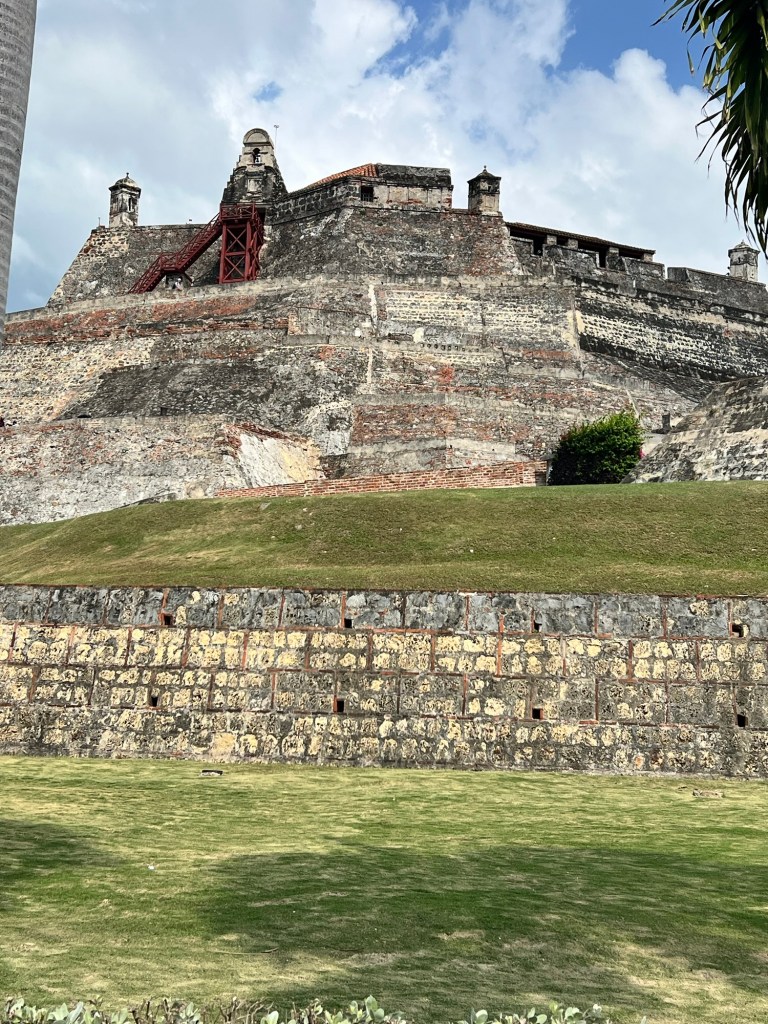
So on Monday, we went on a tour about the history of Cartagena and the first place we visited was the Castillo de San Felipe de Barajas, which is located just outside of the historic walled city.  When our tour guide, Daily (her real name), pointed out they filmed one of the final action scenes for “Romancing the Stone” there I thought, “I remember that scene!”  Alas, when I looked it up I found that although the movie was set in Cartagena, it was shot in Mexico and Zion National Park in Utah. So the fort in the movie is actually San Juan de Ulúa in Veracruz, Mexico. Daily wasn’t completely honest with us, but I guess it made for a better story.  

Castillo de San Felipe in Cartagena, Where no Filming Took Place

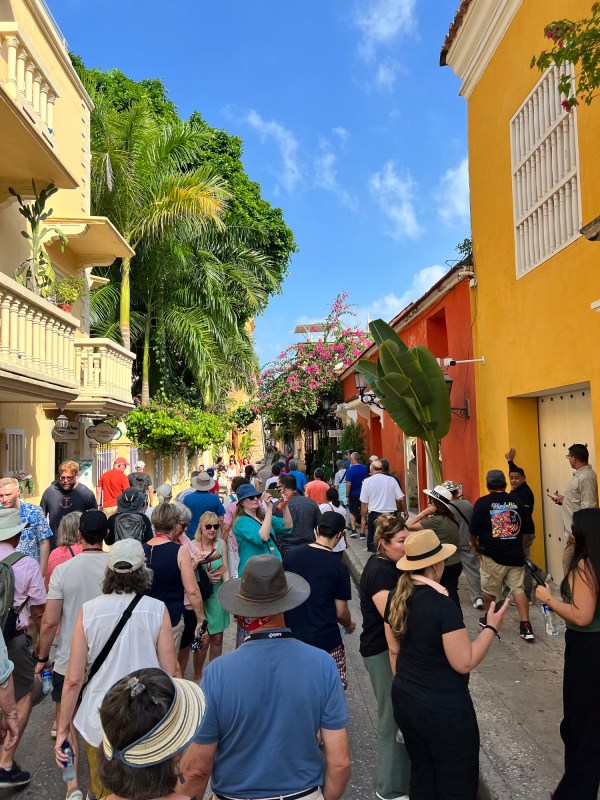
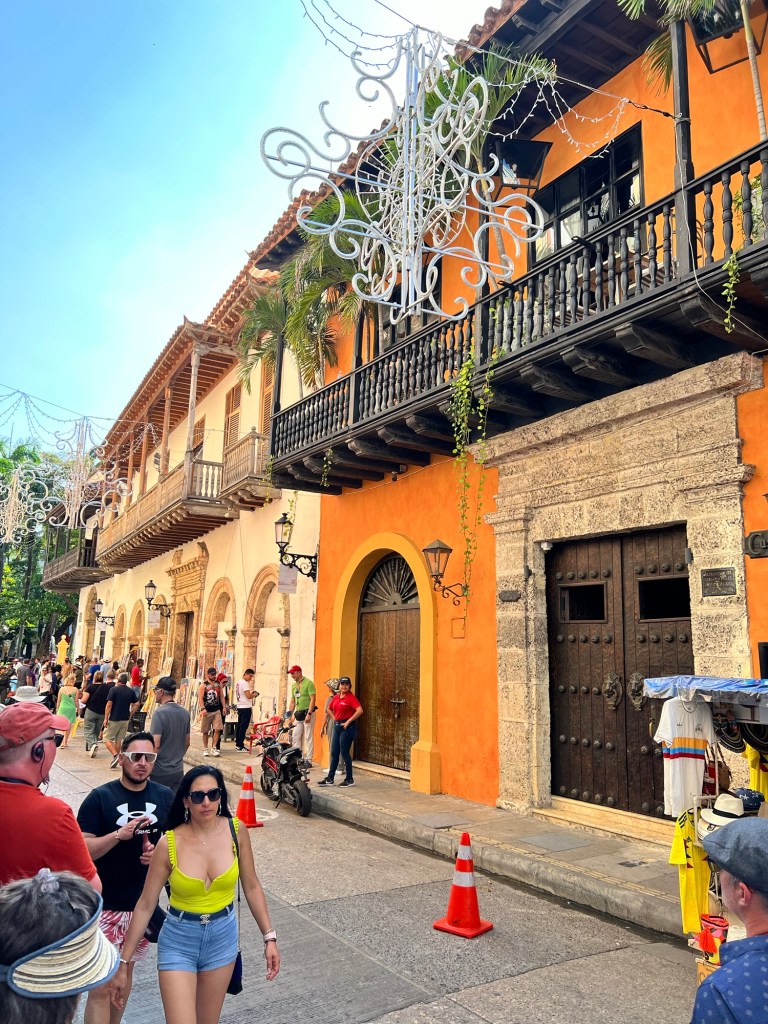
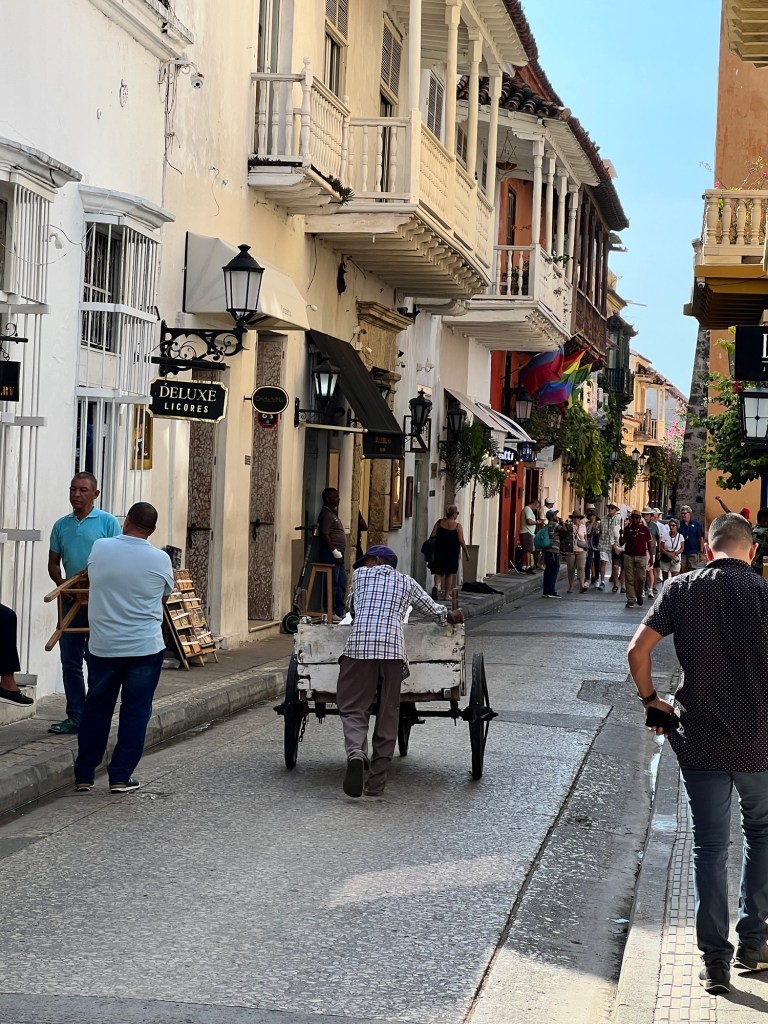
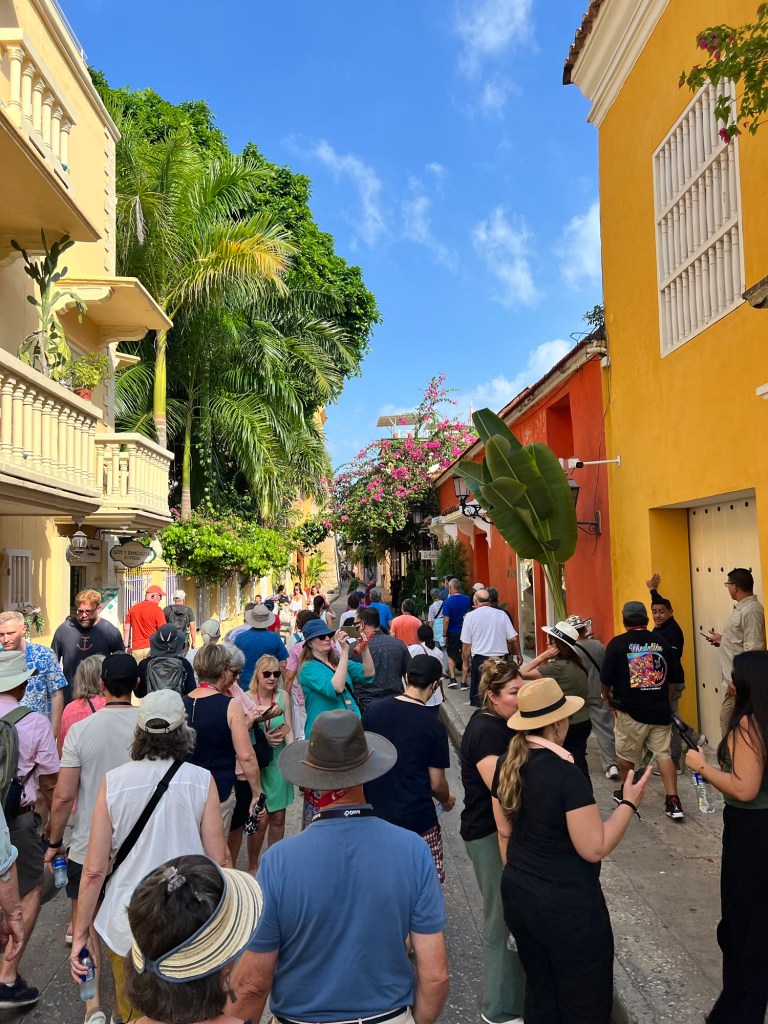
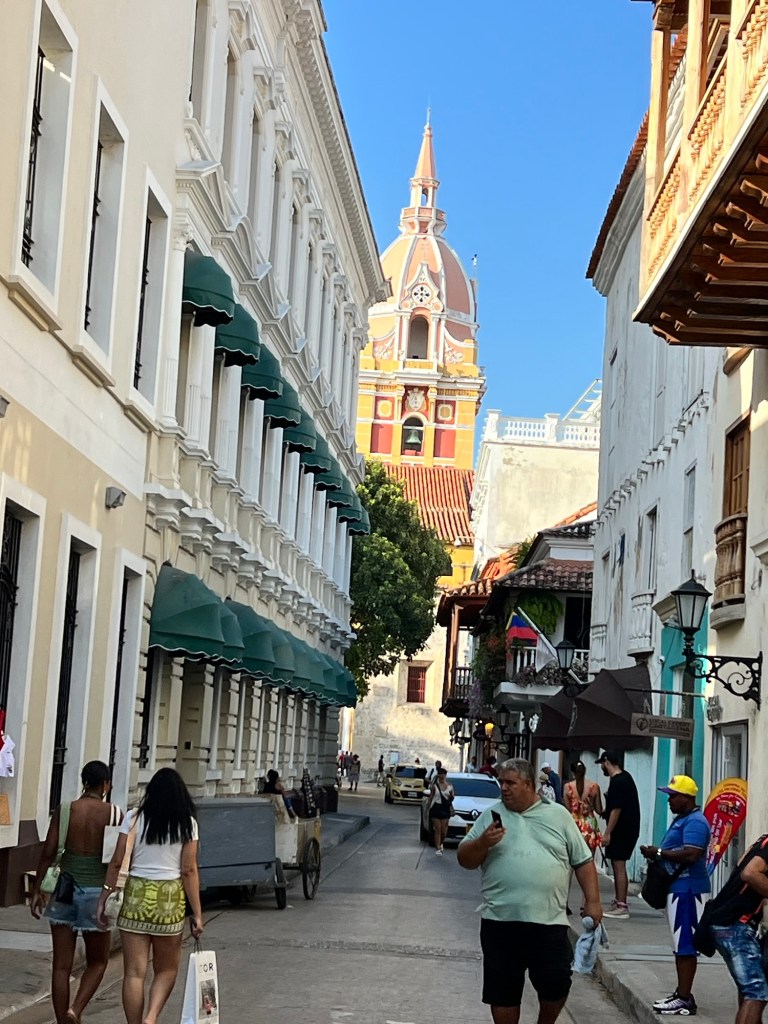
We walked around the old town for a bit and the city was really beautiful and quite colorful, but it was so hot and crowded. The year round temperatures hover around 90 degrees, and the humidity is at least 80%.  Another place we visited was the Palace of the Inquisition, an eighteenth-century seat of the Holy Office of the Inquisition. The museum displays replicas of torture equipment used on witches and infidels during the Spanish inquisition.   Pretty brutal looking, so no pictures of the torture devices, but some pictures of the old town.

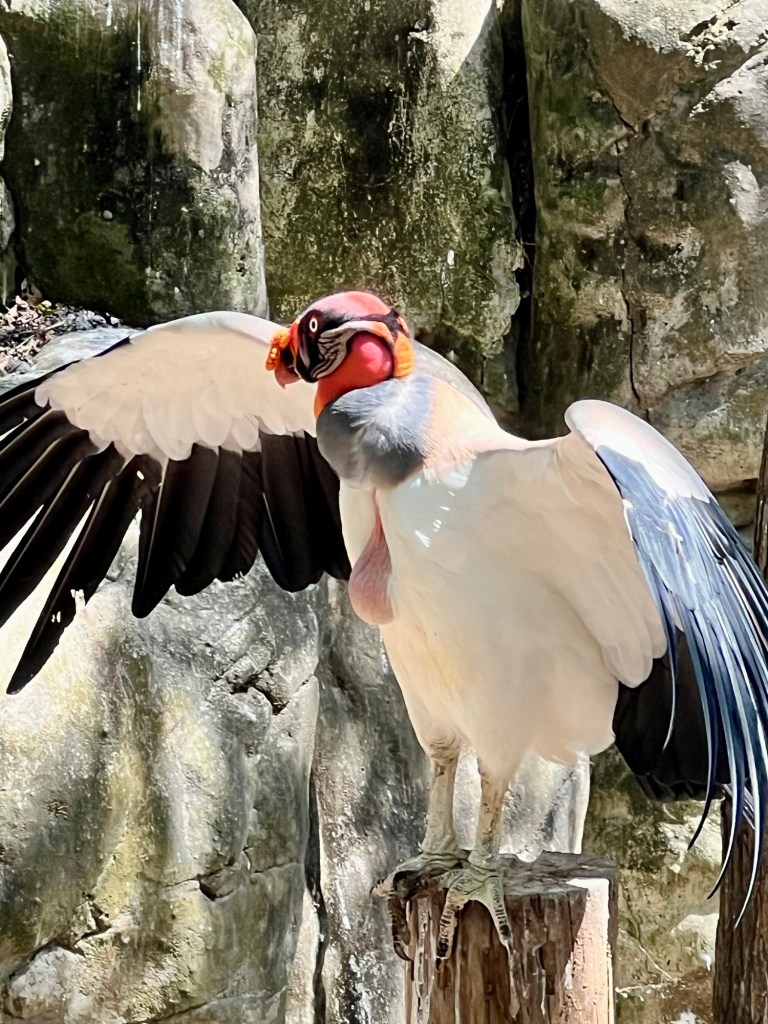
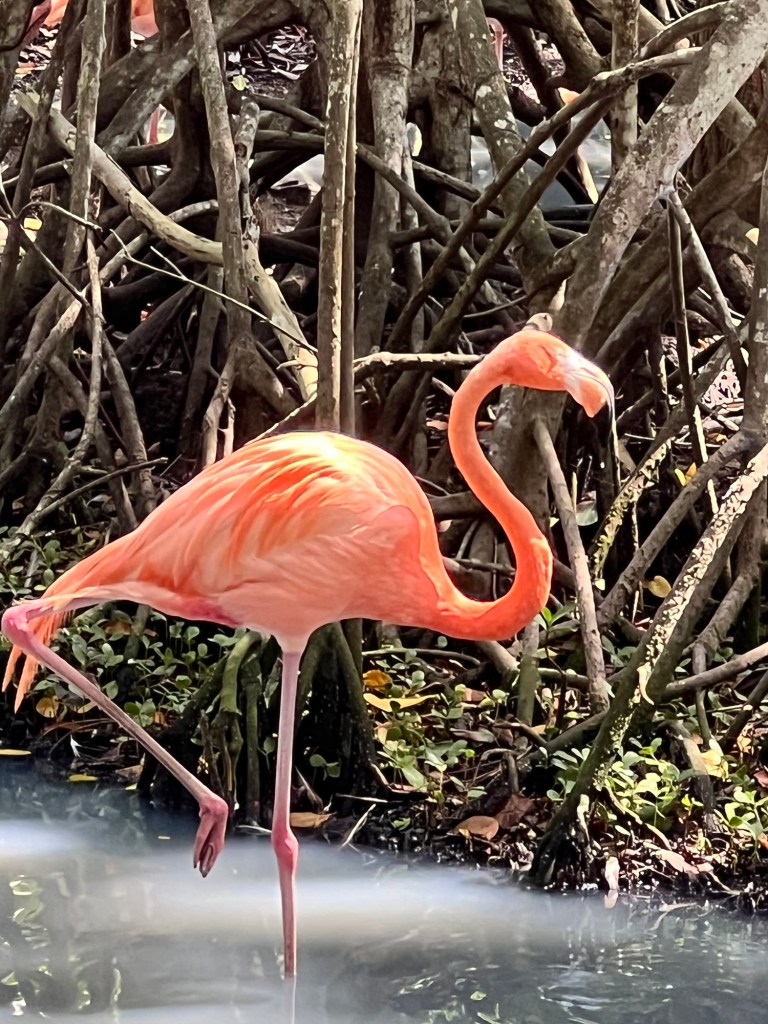
Yesterday, we took another tour to the National Aviary of Colombia, located on the Isla Baru, about an hour outside of Cartagena.  The 17 acre facility is the biggest in the Americas and the 6th biggest in the world, and counts more than 1,800 birds from more than 138 distinct species. Sounds impressive, right?  The problem is that aviaries really creep me out.  The birds are cool, but I don’t want them flying around me, ready to peck at me or crap on my head at a moment’s notice.  Yuck.

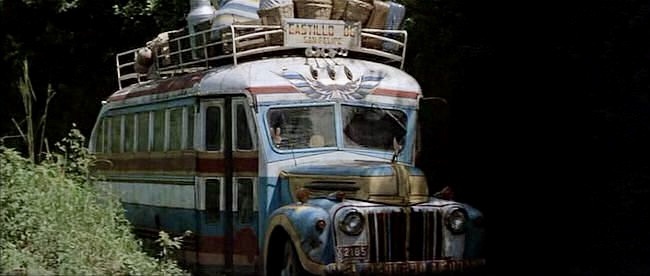
To get to the Aviary, we had to take the bus ride from hell from the Port of Cartagena.  The streets and roads are narrow, crowded and have huge potholes.  No one drives on their side of the road.  A lot of stretches aren’t even paved, so dust boils up everywhere.  A million motorcyclists zip in and out of traffic, defying death or a permanent maiming.  The shock absorbers on the bus were gone. It was pretty much like the bus ride Kathleen Turner took in the movie except there were no pigs or chickens.  

Not Our Bus, But Close

On the trip there our poor tour guide, Carlos, had to point out the scenery of a concrete factory, a petroleum processing plant, a huge fuel station where truckers refuel, and a plastics manufacturing plant.  No wonder he seemed dispirited.  But maybe Carlos just didn’t give a rip about anything. When we got to Aviary, he only knew the names of the most common birds, like flamingos.  He said there were too many species to learn the names.  Guess what, Carlos?  Tour guides are supposed to learn stuff.

Trivia question of the day: Do you remember what the stone is in “Romancing the Stone?”

January 13, 2025–At Port in Cartagena, Columbia After Navigating the Panama Canal

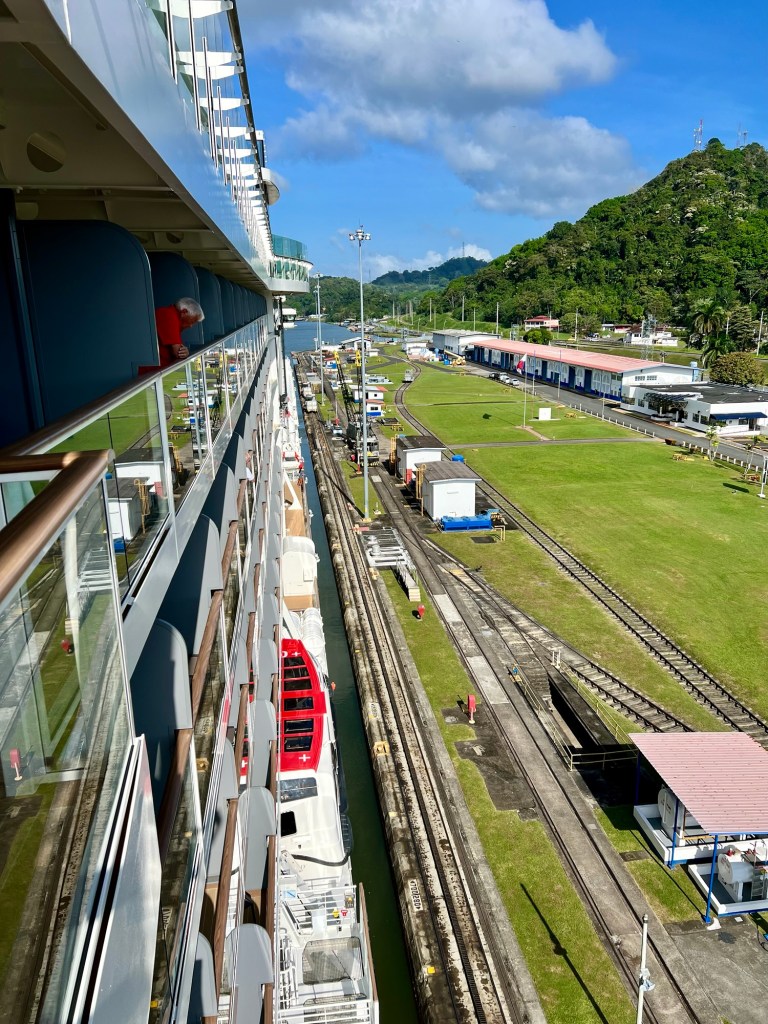
As you know, we traversed the Panama Canal yesterday.  It took most of the day and it was pretty amazing. We didn’t sit and watch the entire day, but we watched as we were going through the locks. The bridge in the background of the first picture is the Centennial Bridge, which was finished in 2004. It was built to supplement the overcrowded Bridge of the Americas (in the second picture) that the United States built in 1959-1962 at the cost of about 20 million dollars. The Centennial Bridge is on the Atlantic side. The Bridge of the Americas is on the Pacific side. The next pictures are of the locks and what the the side of our ship looked like when we were crossing through.

Also, when we had finally navigated the locks on the Atlantic side, we took a picture of a lighthouse to send to my brother, Don.  If you know Don, you know that one of his hobbies is visiting and photographing historic lighthouses.  Actually, there were 46 lighthouses built on the Canal, 36 of which are still standing.  The first one was built by the French in 1881.  The one we saw was the Atlantic Entrance Range Middle Lighthouse, which was built in 1914.  The lighthouses were built to assist the pilots through the canal.  About 1959, lighting was installed along the Canal, and the lighthouses were no longer as important. After the lighting was added, the Canal could operate 24/7 instead of just in daylight hours.  

After we left the Canal, we saw this freighter, which is indicative of most of the ships that use the Canal. For perspective, each of the cubes on this ship is a full semi load, so you can imagine how huge as this was.

We keep running into Machu Picchu people. Nancy and Don from Australia seem to be on almost every tour we take. When we go to a bar on the ship, Sylvie and Phillip from Belgium are there. When we go up to the pool deck, Stuart and Maxine from Boston are there. When we go to one of the entertainment venues, Melissa and Mike from California are there. When we play bridge, Heather is there. No wait, we don’t play bridge. We only see Heather (sometimes she is with her husband Bill) when she is rushing off for another rubber of contract bridge. Or whatever you call it. Dearest Heather.

January 8, 2025–Guayaquil, Ecuador

Yes, we are in Ecuador, not Uruguay. My post from yesterday said we were headed to Uruguay, which is about 5,000 nautical miles from here, and would probably take about 23 days to reach on this ship. So, my apologies. I do know better, but I usually write my blogs at night when I’m tired, and sometimes my proofreading skills are sketchy then. The arrow marks our location on the map below.

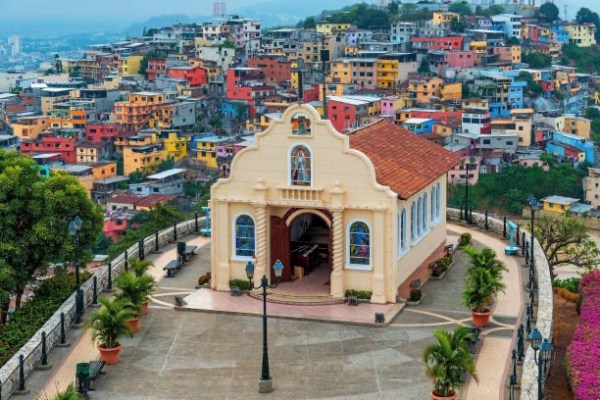
Guayaquil (Spanish pronunciation: gwajakil) is the largest city in Ecuador and also the nation’s economic capital and main port. The city is located on the west bank of the Guayas River, which is where we are at port. Guayaquil was founded on 25 July 1538 by Spanish conqueror Francisco de Orellana.

Ecuador is located barely 125 miles from the Pacific Ring of Fire, the most seismically and volcanically active zone in the world. Earthquakes are a constant threat here. In 2016 Ecuador was rocked by a 7.8 magnitude earthquake that killed at least 676 people and injured 16,500 others. Over 250 buildings in Guayaquil were damaged and power and water supply to the city were disrupted.

Today we were supposed to go on a beach and lunch excursion, but when we looked at our excursion tickets last night, there were none in the envelope for today. Apparently, they cancelled our excursion and failed to let us know. By the time we looked, all of the other excursions were either full or for weird things like erotic art museums or bird watching tours. (Just kidding about the erotic art museums.) So, we were thinking about taking a shuttle bus into town, but what I read about Guayaquil was a bit off-putting. Something like “The murder rate in Guayaquil is very high, but it’s mainly gang-related.” Well, gosh that makes me feel a lot better. Also, we were warned to be particularly cautious in Guayaquil city centre, southern parts of the city and port areas. Plus, we needed to watch out for pickpockets. All in all, getting out in 92 degree heat with the sun blazing and tromping around, all the while worrying about pickpockets and gang shootings just didn’t seem very appealing. I’m not even sure why we stopped here, but I’m guessing that it’s just so they can fuel up and load on supplies before heading to the Panama Canal tomorrow.

It’s blog light today.

Blog at WordPress.com.

Up ↑