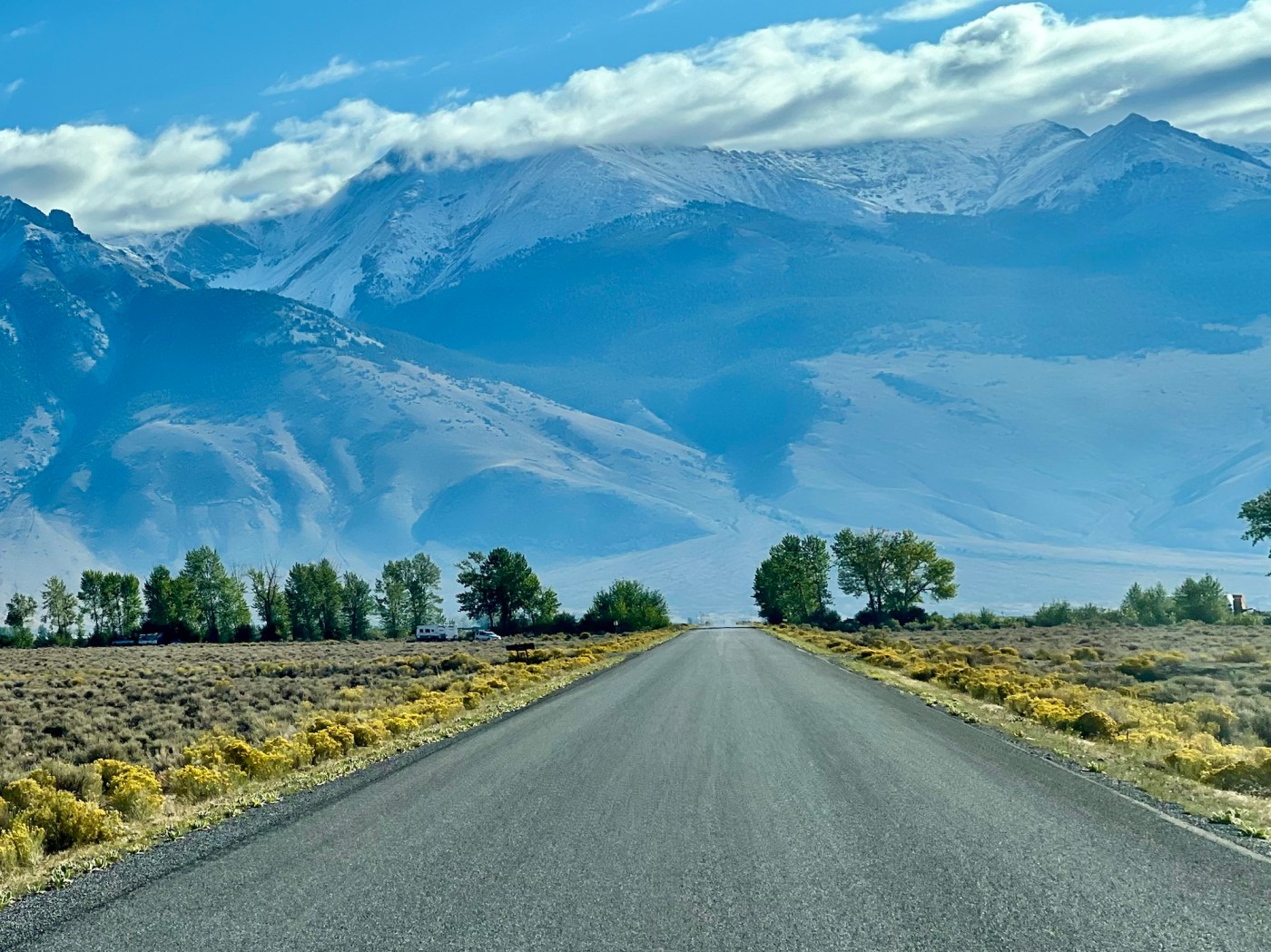
For the last couple of days we have been driving south through Idaho towards Utah. We haven’t had a signal for a major part of the trip, so we have been using Vanna’s GPS. Yesterday, on our way to a campground near Ketchum, the GPS took us on a “shortcut” which included an unpaved road. Initially, we were lulled into a false sense of security, because the first 20 miles or so were paved. When we hit the unpaved section, we should have turned back immediately, but wishful thinking told us that our GPS wouldn’t take us on a wild goose chase (and remember, one of us has a strict no backtracking policy). After a long time on the gravel road, we came to a sign that said, “Stop! Narrow steep road! No trailers past this point, you stupid morons!” Or something very similar.
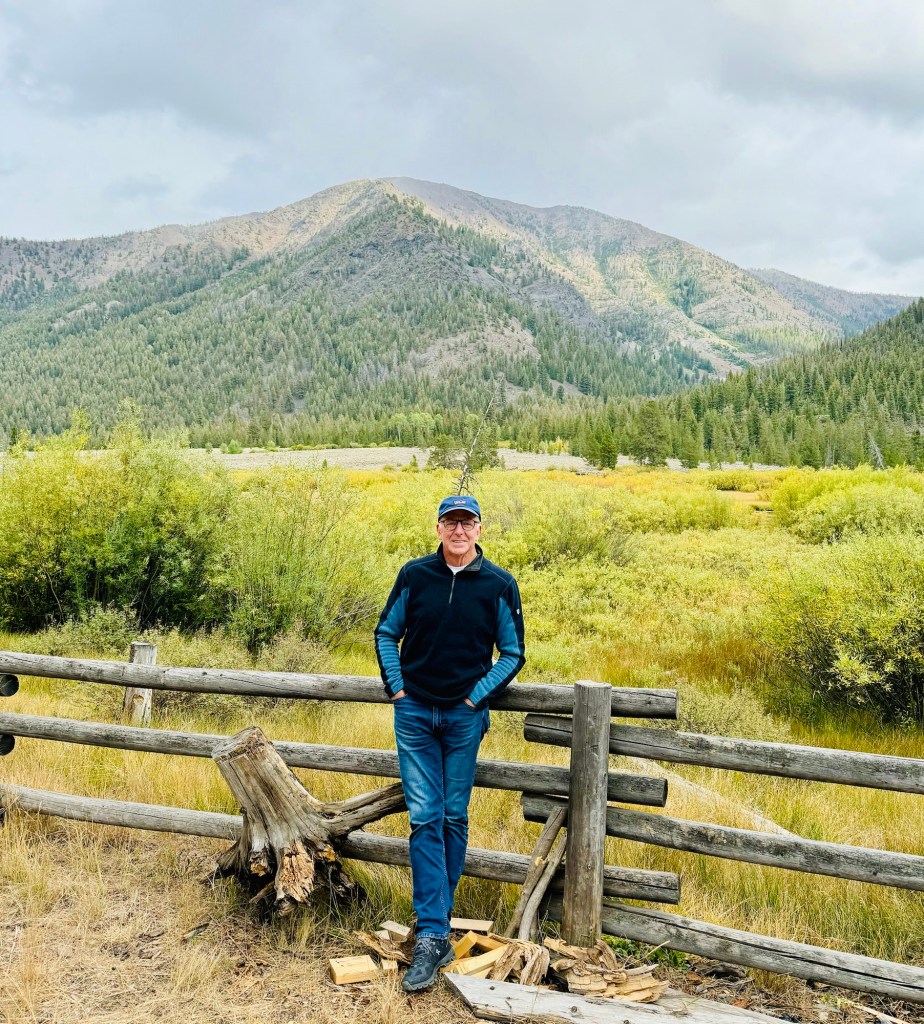
So, we had to turn around and backtrack on the same washboard road several miles. We were still on said horrible road when we noticed a campground along the way called Phi Kappa. (I know, it’s a weird name for a campground.) We had no earthly idea where we were, but we were tired and pretty much over the entire day. We never made it to Ketchum, but Phi Kappa was beautiful. Pictures follow of our campsite. If you notice, Vanna’s front tires are in the air because there is an automatic leveling system.

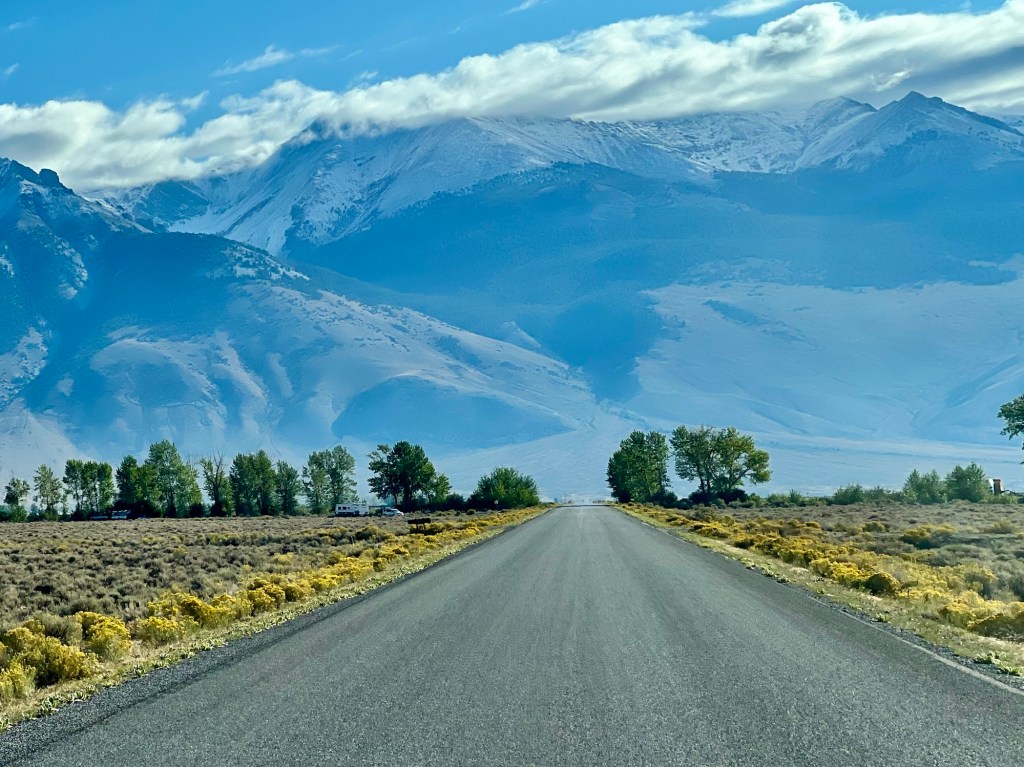
If you think this sounds like a dumb, disorganized travel story, wait for it. We actually have a nice Rand McNally Road Atlas (large print version) in the van specifically for situations just like yesterday. We brought it because signals are sparse out here and a GPS can give you really sketchy information. When we finally looked at it yesterday afternoon, Doug had neatly pre-highlighted the correct route. Why didn’t we look at it earlier? I do not have a plausible answer. However, the entire mishap was almost worth it for the view driving out this morning.
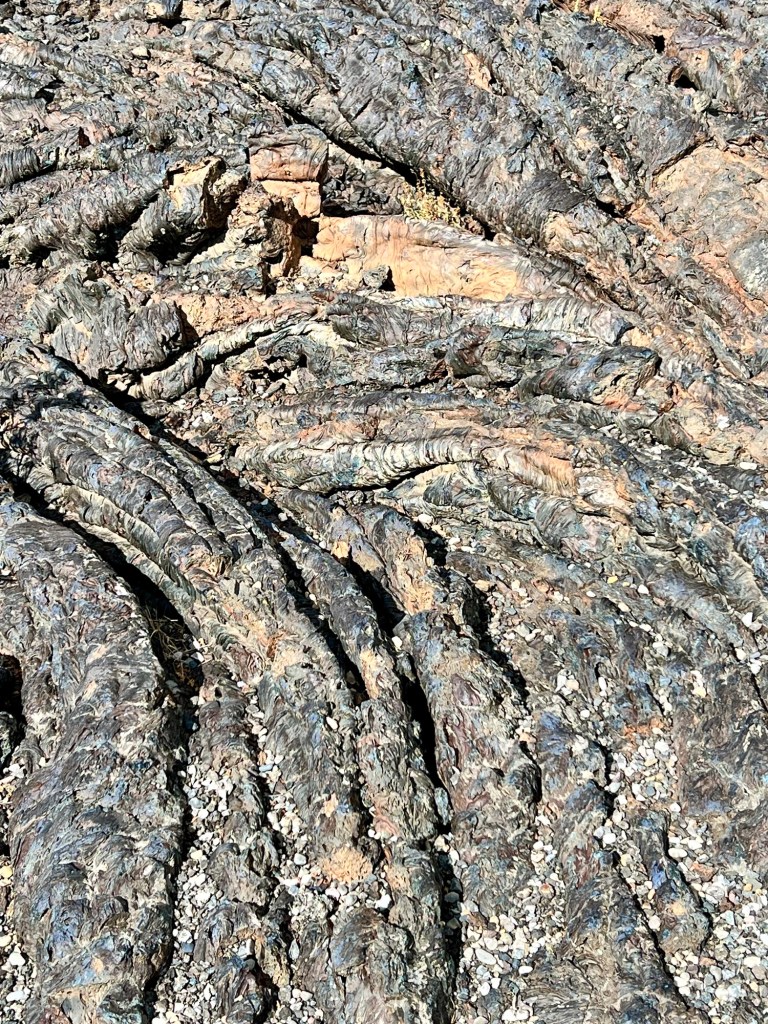
After leaving the wilds of the back of nowhere, we drove south to Craters of the Moon National Monument and Preserve near Arco, Idaho. The Monument and Preserve encompass three major lava fields which lie along the Great Rift of Idaho, a 62 mile long fissure zone that arcs across the eastern Snake River Plain. This is, of course, an extremely simplistic description of a major geological feature, but it was cool, so I took some pictures.


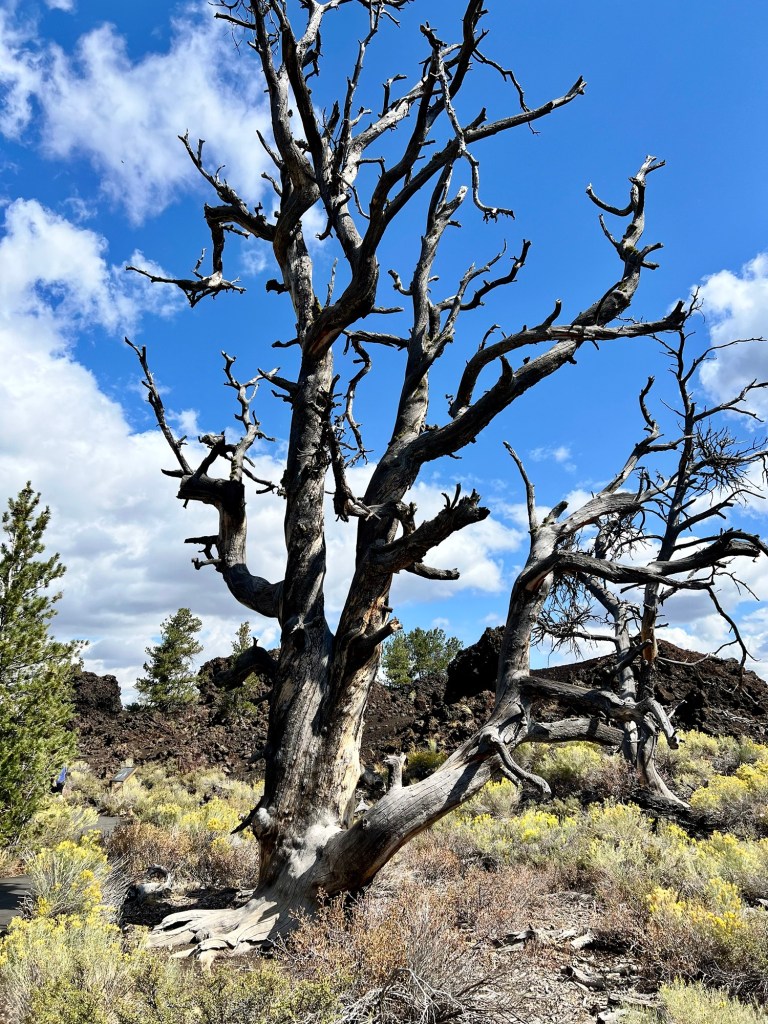
If you are wondering about the dead tree, there are many of them scattered across the landscape. Apparently in the 1960s, park managers cut and poisoned more than 6,000 trees at Craters of the Moon. The trees were not invasive species and they posed no threat to visitor safety, but The National Park Service justified this management as a way to protect forest health. These trees were resilient enough to grow in a lava field and then some idiots came along and killed them. Pretty sad.

I was wondering today why some places in the United States are designated as monuments, so I looked it up. The Antiquities Act of 1906 gives presidents the power to proclaim national monuments through executive action. President Theodore Roosevelt used the act to declare Devils Tower in Wyoming as the first U.S. national monument. President Calvin Coolidge established Craters of the Moon National Monument in 1924, preserving “a weird and scenic landscape, peculiar to itself.” There are 134 national monuments in the U.S. Some of the most famous of these are the Statue of Liberty, Mount Rushmore, the Liberty Bell and the Lincoln Memorial.
Tonight we are in Pocatello, Idaho, home of Idaho State University and also the United States Smile Capital. Apparently, there is some archaic ordinance in Pocatello that makes it illegal not to smile. Strange.
Note: A small correction for my September 12th blog: I called the ranch in “Yellowstone” both Sutton and Dutton. It’s Dutton. Apologies to all of you “Yellowstone” fans.
 A. Roam of My Own: Travels With Annie
So glad the harrowing shortcut worked out! That picture of the mountain is really pretty.
LikeLike
It was quite a distance out of our way, but we tried to work with it and stay calm! 😅
LikeLike
The view on the drive looks incredible!
LikeLiked by 1 person
It’s the real thing!
LikeLike