
On Monday we drove from the Many Glacier Hotel on the east side of Glacier National Park to Lake McDonald Lodge on the west side of the park where we spent the night. Glacier Park is a lot more undeveloped and rugged than Yellowstone, so there is only one road that traverses the park, Going-to-the-Sun Road. A short road goes into Many Glacier, but all of the other roads are on the edge of the park. Since the park itself is roughly the size of Rhode Island, the interior is largely inaccessible. To use Going-to-the-Sun Road you must have a reservation, plus they don’t allow RV’s. Vanna is often ostracized in this manner. (I guess Vanna must be getting used to being ostracized by now.)
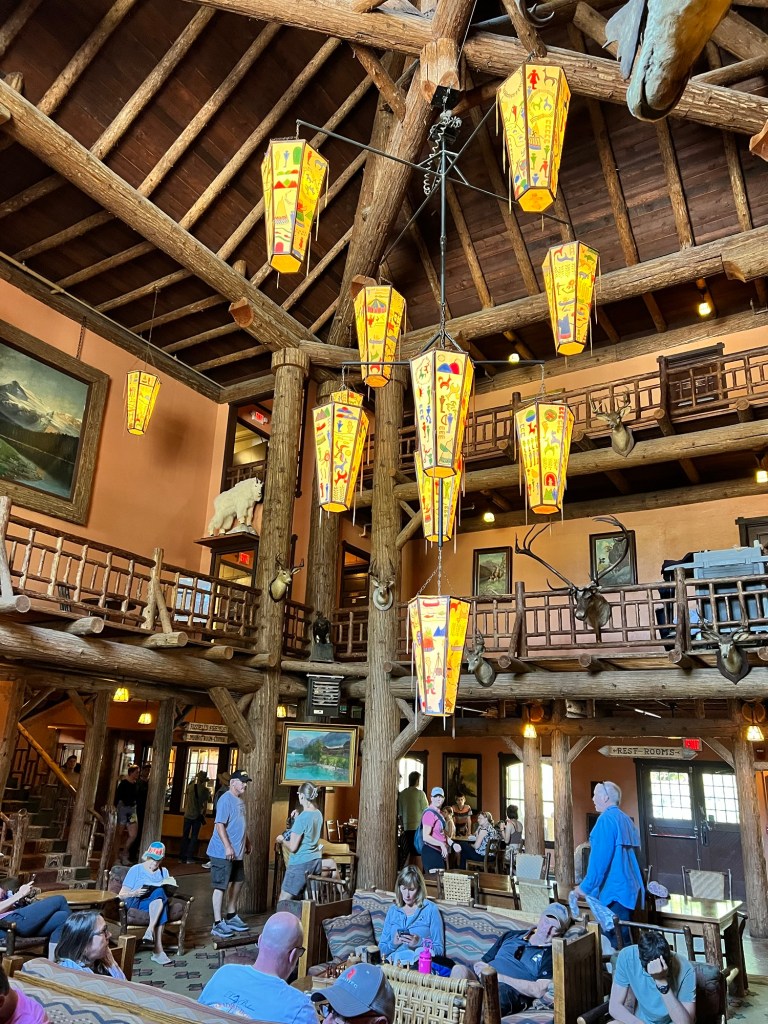
Lake McDonald Lodge was built in 1913 in the same Swiss Chalet style of the other two lodges we have visited. It’s fittingly located right next to Lake McDonald. However, this lodge was not built by the Great Northern Railway like the other two, but rather by a private developer named John Lewis. At the beginning of the Great Depression, Great Northern Railway took over the hotel and added several wings. The public areas at Lake McDonald are smaller than the other lodges, but are still quite stunning. Also, the rooms seemed more spacious and well appointed (at least our room), so that’s a plus.


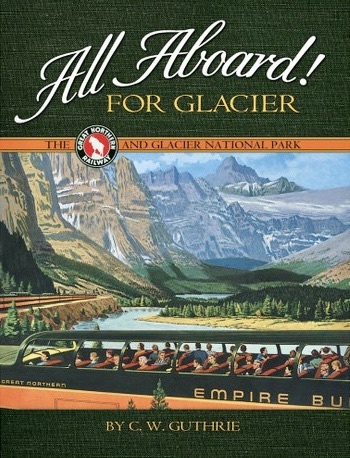
I wondered why the railway built so many hotels in Glacier and apparently, the movement was part of a trend by railways during that time to build destination resorts in areas of exceptional scenic value. For instance, the Santa Fe Railway built El Tovar Lodge in the Grand Canyon. Also what I didn’t realize was that railways played a big part in establishing and promoting national parks in general, particularly Yellowstone, Glacier, Grand Canyon, Yosemite, Bryce, Zion and others. They wanted to entice people to travel out west, so they had a monetary interest, but it also helped the parks. There are even several books about the subject.
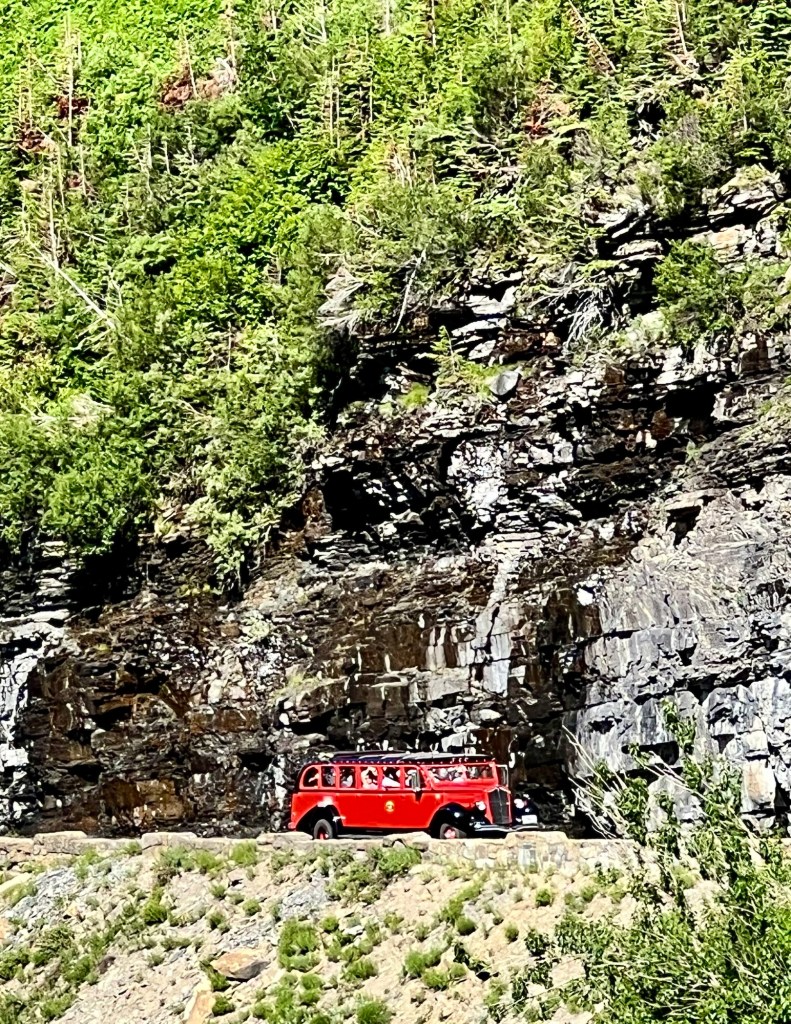
Yesterday before we left Glacier we took the Western Alpine Red Bus tour up to Logan Pass. I could totally see why Vanna couldn’t go up there because the road is narrow, winding and goes right up against a sheer rock face at times. We rode in a 1937 touring bus with John as our driver and tour guide. There are 35 of these buses that were built by the White Motor Company in the early 30’s especially for Glacier. They were originally owned by a private company, but by 2000 were in grave disrepair. In 2000, Ford Motor Company spent 6 million dollars refurbishing the touring buses—new motors, chassis, driveshafts, etc. They did it as a charitable contribution and the deal was that they had to be deeded to the National Park Service. So, now the NPS keeps them restored. They are really cool.
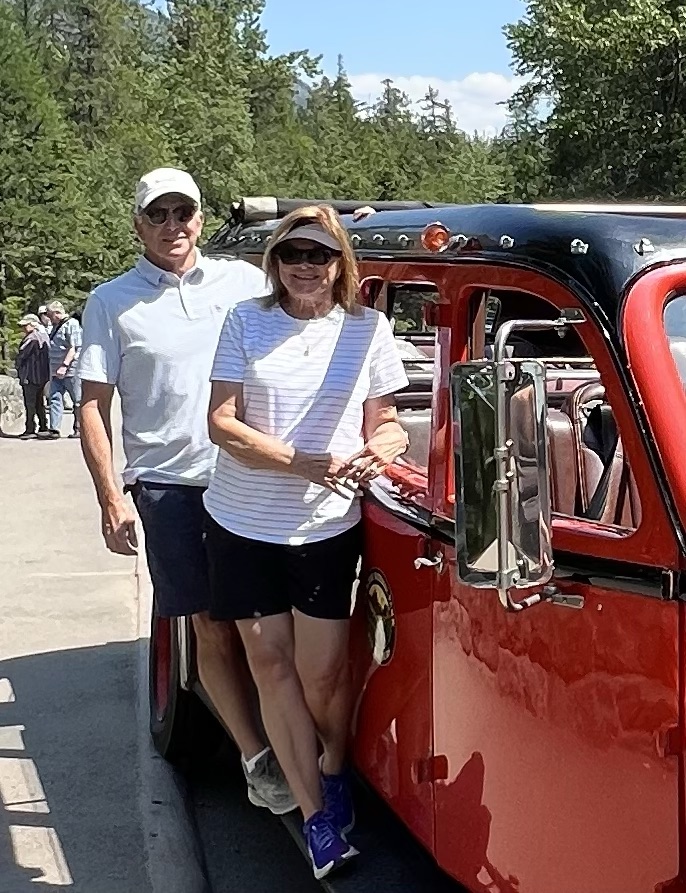

John, our tour guide/driver was a retired landscaper from central Illinois who decided to come here this summer and be a tour director. So far, it seems that there are basically three types of people who work in the parks: the large percentage are college students who are looking for a summer adventure out west; the second group are retirees like John who also want to try something fun for the summer; the third group are called “Parkies,” people who work in parks all year round, but are seasonal—for instance, they are at Glacier for the summer and the Grand Canyon in the winter.
I liked John. He had a headset for commentary, but instead of a non-stop serious commentary about the park, he had a lot of opinions. He couldn’t understand why the National Park Service didn’t replace the faded and bent-up sign at Logan’s Pass. Agreed. And he consistently talked to other drivers as in, “Hey, buddy, can’t you read the no parking sign?” Or, “Are you kidding me about pulling over there by that sheer wall?” My favorite was, “Wait, I’m going to blast my horn right at the moment we go by the guy parked by the sheer wall. That way it will really give him a start.” And he did blast his horn.
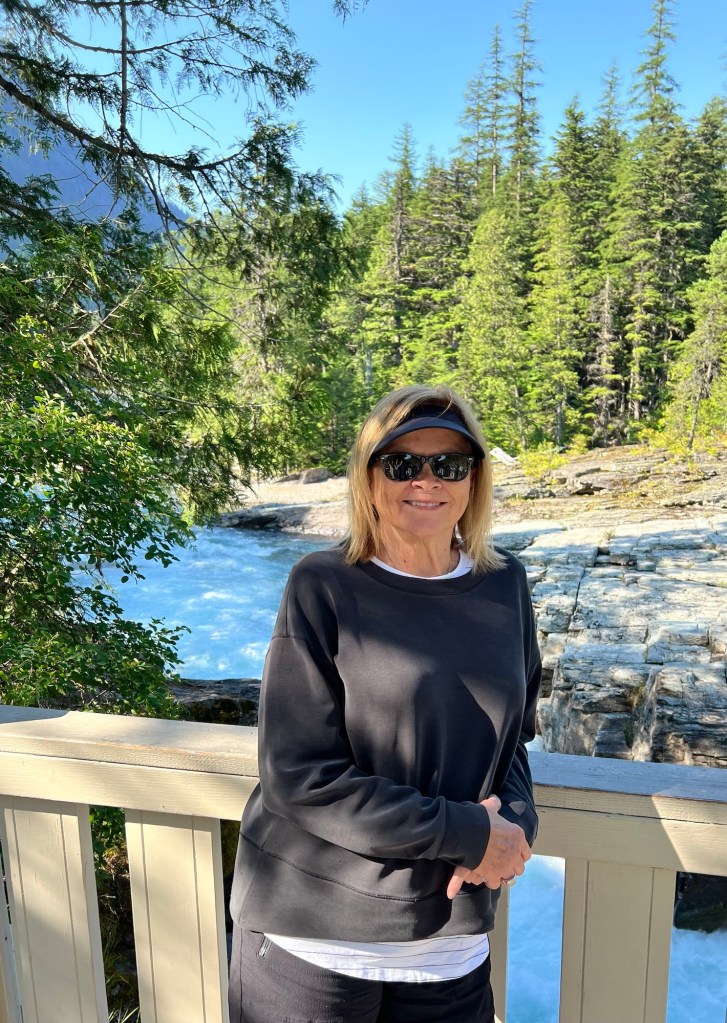
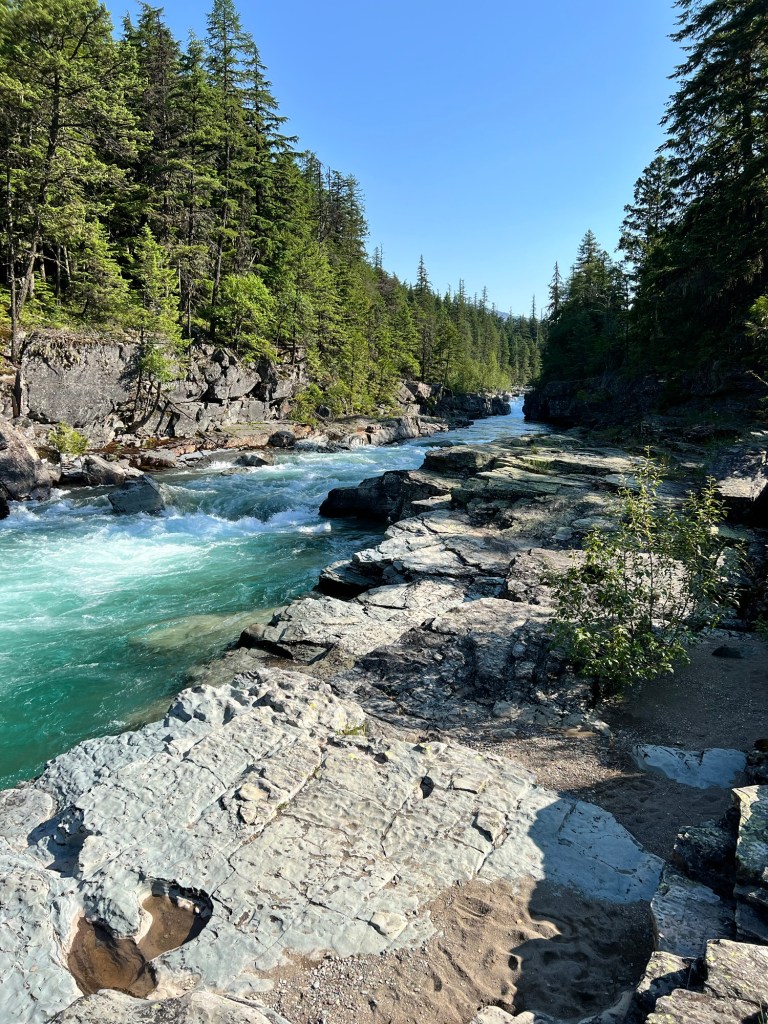
The streams and lakes in Glacier are the most startling color of aqua green to turquoise imaginable. The turquoise blue of the lakes in Glacier are caused by ground up bits of rock and sediment called “glacial flour.” The “flour” is produced by movement as the nearby glaciers erode the bedrock. The flour doesn’t sink or float, but rather remains suspended in the water, thus producing the bright color. Pictures do not really capture the color.
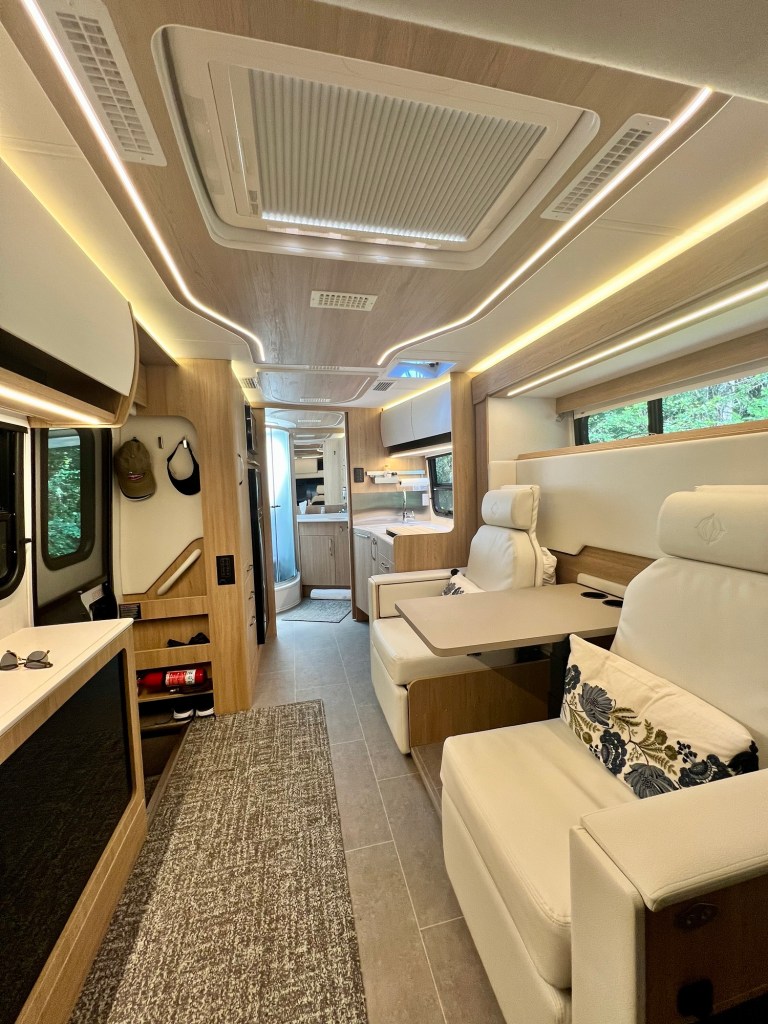
Last night we camped for one more night at Swan Lake. It was hot. We had maybe one or two cool days in Wyoming, but the rest of this trip has been hot. Not hot like humid Georgia, but a hot with no air-conditioning hot that finally gets okay by four AM when you have almost given up on getting any decent sleep for the night. For those of you who haven’t seen Vanna, this is a picture of the interior (it’s really not as spacious as it looks—it’s a wide angle shot). The two chairs are recliners, and they fold down and the table lowers for the Murphy bed that drops down from the wall behind them. The television on the left pops up out of the cabinet.
Tonight we are in Missoula, Montana. When we arrived the thermometer reading was 100 degrees. We left Vanna at Jellystone Park RV and Boat Storage where she will languish until mid September when we come back for the second part of our great western adventure. Tomorrow morning we fly out of Missoula to Atlanta. Nice trip, but it is high time we go home for a bit.
 A. Roam of My Own: Travels With Annie
Ann and Doug
What an Amazing trip and thank you for sharing your journey out west with all of us. I enjoyed your blog and the many beautiful and scenic photos. You must be exhausted and I am sure you will rest up for part 2 of your journey out west. #Can hardly wait for more! Blessings, Penney
LikeLike
So glad you guys were able to do this trip! The pictures are so pretty but I’m sure they don’t do it justice. Love you both ❤️
LikeLike
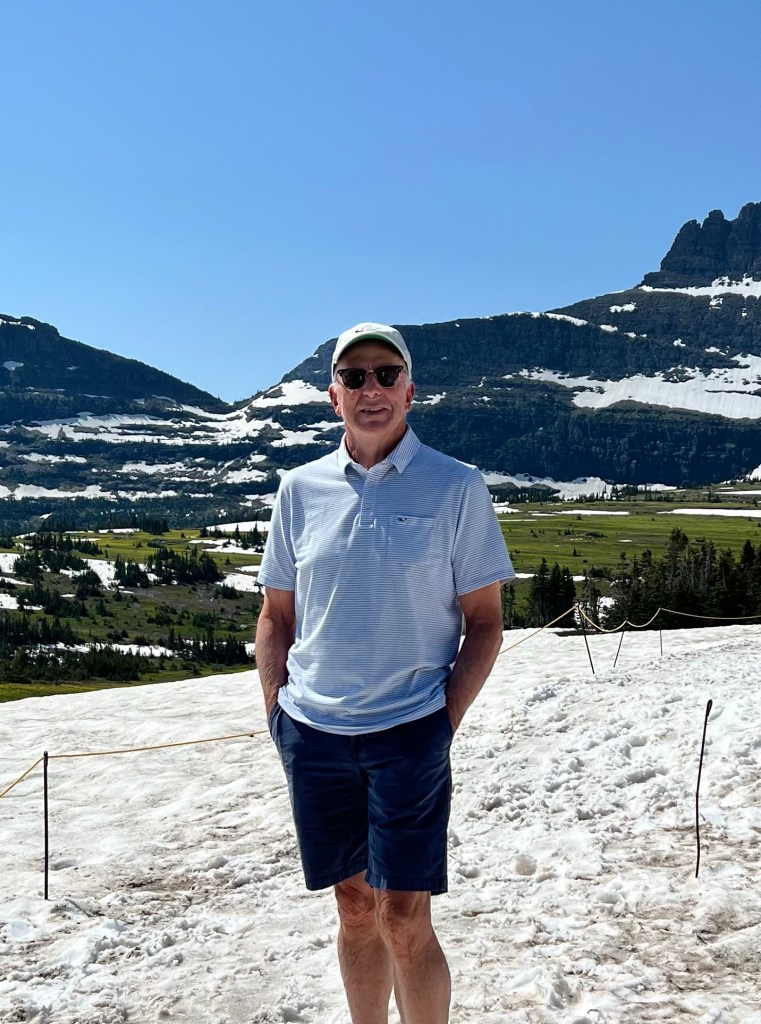
PS, is Dad wearing shorts in the snow? 😲
LikeLike